Alaska Senate Panel Advances Youth Suicide Prevention Bill
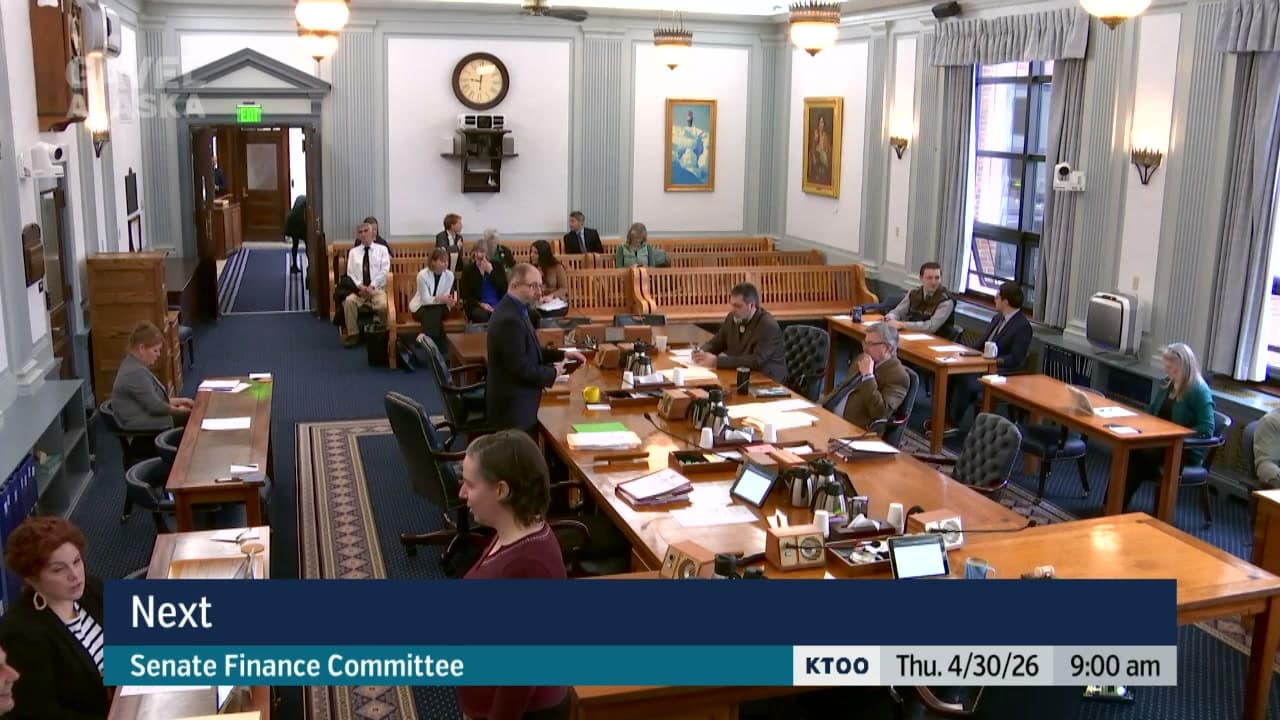
The Alaska Senate Finance Committee heard testimony Thursday on legislation that would establish guidelines for schools that choose to notify parents when a student is bullied, harassed, or expresses suicidal thoughts and create a grant fund to provide safe storage devices to families on a voluntary basis.
Senate Bill 206 would establish evidence-based guidelines for schools that choose to notify parents when children express suicidal thoughts or are bullied. The bill also creates a firearm safe storage grant fund within the general fund in the Department of Administration to accept grants and donations for purchasing storage devices. Sen. Lukey Gail Tobin, the bill's prime sponsor, said Alaska has been number one in youth suicide.
Alaska News previously reported that advocates and youth called on lawmakers in March to support House Bill 138 and Senate Bill 196, which would fund suicide prevention programs through phone surcharges, but those bills have not advanced from committee.
Tobin told the committee the legislation offers children time to survive moments of crisis. "10 minutes. 10 Minutes from when a child thinks about taking their life or inflicting self-harm to action," Tobin said. "Storing your medication and storing your firearm will give our children time."
The bill requires school districts that adopt parental notification plans to include three elements: evidence-based information for parents, recognition that parents should store medications and firearms safely, and resources for referral and support. School districts would not be required to adopt such plans. Parents would not be required to accept storage devices offered to them during notification.
"One in five young Alaskans have seriously considered suicide," Tobin said. "Now we know that every 11 minutes, one child in this nation takes their life. 80 percent use a firearm."
The bill also authorizes the Alaska Statewide Council on Suicide Prevention to advise school districts on appropriate resource materials for parents.
Claire Schmitt, a research specialist working on suicide prevention in Alaska, provided invited testimony that research shows impulsivity plays a major role in youth suicide attempts. Studies have shown that up to 50 percent of suicide attempters spend less than an hour contemplating suicide before an attempt. Twenty-five percent think about it for 10 minutes or less, Schmitt said.
"When a highly lethal method of suicide like firearm is easily accessible, these attempts are far more likely to result in death," Schmitt said. "When the same method is not accessible, when firearms are safely stored, locked, and in a separate location from ammunition, the odds of firearm-related death decreases by about 80 percent."
Schmitt said that in the state of Alaska, firearms are responsible for 68 percent of the suicide deaths.
Robert Hadley, a Lutheran pastor in Shishmaref and retired emergency room nurse, provided invited testimony in support of the bill. He described responding to a 15-year-old boy in Shishmaref who took his life earlier this year after being bullied at school. The boy had access to firearms in the home as the subsistence provider for his grandparents.
"Recently in the village of Shishmaref, just the first of the year, we had a 15-year-old boy committed suicide. He did have weapons in the home. He was actually the subsistence provider for his grandfather and grandmother and had been bullied that day at school and came home and took his life," Hadley said.
Hadley said matching suicide awareness with gun safety is common sense. "I think by matching suicide awareness with gun safety and gun violence prevention, it's common sense," he said.
Tobin told the committee the bill was modeled after legislation in Utah that saw a 12 percent decline in youth suicide after implementation. Communities in Louisville and military bases in Massachusetts, as well as the state of Michigan, have adopted similar policies providing safe storage devices to families through schools.
One senator asked whether the state has data on suicide methods specific to Alaska, noting that most homes he is aware of have firearms and many families teach children firearm safety at early ages. Tobin said national data shows 80 percent of young people use a firearm when attempting to take their life. Alaska-specific data was included in materials provided to the committee, she said.
Another senator questioned whether the bill was necessary, noting that school districts already have the authority to notify parents about harassment. Tobin responded that while districts may currently adopt notification plans, state statutes are silent on the matter. The bill provides evidence-based guidelines about what those plans should include to ensure parents receive resources for intervention.
During discussion of the bill's structure, one senator asked why the grant fund is placed in the Department of Administration rather than another agency. Louie Flora, staff to Sen. Tobin, said the department was chosen because of its procurement expertise. She noted the bill also added hunter safety as an option for use for the safe storage devices, which could potentially access Pittman-Robertson funds in addition to other grants.
One senator noted that devices could range from cable locks to safes, which could create variability in costs depending on what is chosen.
In closing remarks, Tobin said the bill does not impact legal gun ownership and only offers a tool if a parent chooses to accept it when their child is in crisis.
The committee did not take public testimony Thursday. The bill was heard and held, with no vote taken. Two fiscal notes were submitted: the Department of Public Safety submitted a fiscal note indicating a fiscal impact, and the Department of Education and Early Development submitted a zero fiscal note. A fiscal note from the Department of Administration, which would administer the grant fund, was still pending.
SB 206 previously passed the Senate Health and Social Services Committee on March 10 with a divided recommendation. Senators Tobin and Giessel recommended the bill pass, while Senators Dunbar and Myers gave no recommendation. The bill was referred to the Senate Finance Committee on March 11.
The grant fund could accept grants and donations to purchase storage devices, which may include lockboxes, safes, cable locks or other devices, for distribution through schools.
This article is based on a public meeting — Alaska Legislature: Senate Finance - April 30, 2026 9:00am ().
AI-assisted. How we use AI Transcript byLucas Brown
Stay informed. Support what matters.
Free, permanent access to local news you can verify. Subscribe to support Alaska News and go ad-free.
Related Coverage
House Finance Advances Mental Health Education Guidelines for Schools
Alaska News · 5mo ago
Alaska Advances Mental Health Education Guidelines Without Mandates
Alaska News · 5mo ago
Senate panel advances behavioral health crisis surcharge bill
Alaska News · 4mo ago
Alaska Senate Panel Advances Social Media Ban for Minors Under 16
Alaska News · 5mo ago
Senate approves mental health education bill after six-year push
Alaska News · 4mo ago
Comments
Sign in to leave a comment.
No comments yet. Be the first to share your thoughts.