
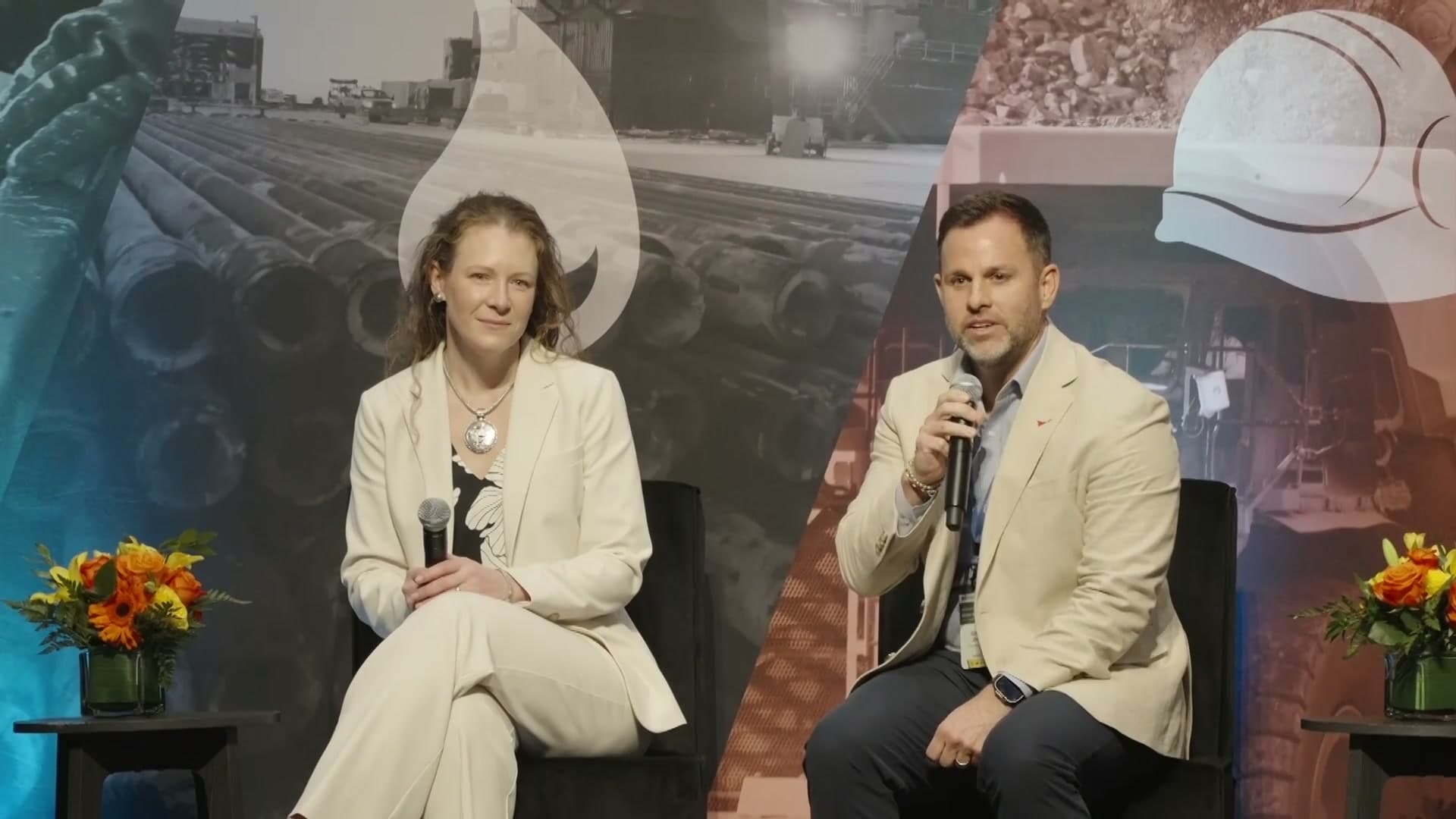
Frame from "RDC: Seafood Industry Panel.mp4" · Photo source
Alaska seafood leaders say Russia's $4 billion buildout is undercutting them
Alaska seafood leaders say Russia is beating them on price around the world, and they told a business conference last week that they need federal policy changes to compete.
By value, about 70% of the roughly 5 billion pounds of seafood Alaska catches each year is sold overseas, said Jeremy Woodrow, executive director of the Alaska Seafood Marketing Institute. The industry's economic output averaged $5.2 billion over the last two years, he said, and "those were the lowest 2 years in this industry's last 50 years."
They spoke on a panel at the Resource Development Council's Alaska Resources Conference on Nov. 11, according to a recording. The council is a business group that promotes resource industries.
Trident Seafoods executive Stefanie Moreland dated the squeeze to late 2023, when competing regions began "selling products below our operational costs." Russia, she said, has spent $4 billion modernizing its seafood sector, including 48 large new vessels and 30 new processing plants, and Europe and Japan now lean more on Russian fish of the species Alaska catches.
She read what she said was a statement from the head of a large Russian seafood company: low prices are "no good for anyone," but Russian companies "can survive for as long as it takes."
Julie Decker, president of the Pacific Seafood Processors Association, said Russia, China and North Korea have spent hundreds of millions of dollars over about a decade on roads, rail links and plants in China. The goal, she said, is to process Russian fish there with North Korean workers. She said the effort is called the Golden Channel and "basically produces the lowest-cost seafood on the planet."
The United States restricted Russian seafood imports in 2022 and 2023, but that fish "still competes with us internationally," Decker said. In March, the Alaska Legislature unanimously passed a resolution backing the ban.
NOAA's 2024 snapshot of the downturn lists international competition alongside lower prices, higher costs, trade barriers, a stronger dollar, climate change and plant closures. "There are things within our control that we can do," Moreland said.
Fish and Game Commissioner Doug Vincent-Lang, who has led the department for about eight years, said Alaska also needs to look at whether its own fisheries are set up right. In Bristol Bay, he said, sailboats gave way to boats with 1,800 horsepower dragging longer nets, and the fishery "may need to have an optimization look." Abroad, he wants competitors held to Alaska's standards: "We need fair and equitable treatment moving forward."
Panelists pointed to new federal help, including a U.S. Department of Agriculture Office of Seafood created in April and the Trump administration's America First Seafood Strategy, which offers $5 billion in loan guarantees for meat and seafood processing.
Vincent-Lang added a caution: When the federal government steps in, he said, it too often takes control, and Alaska has to be an equal partner. "Just remember," he said, "we fought statehood over fishery issues."
What did you make of this story? (no account needed)
Made by our human newsroom with AI. Reviewed by Cale Green. How humans and AI work here · Grow with our newsroom · Transcript byWalter AlaskaNews
Keep Alaska News free for everyone.
No paywall, ever. Members pay so everyone can read the meetings and records Alaska News covers.
Get Alaska News in your inbox
Create your free account and get the day’s top stories around 6 each morning, in a few minutes’ read.
Top stories, around 6 each morning.
Stories on what you follow, on Sundays.
This article is based on a public meeting of Resource Development Council for Alaska — RDC: Seafood Industry Panel.mp4 ().
Watch key moments from the source meeting. Click to expand.










Comments
Sign in to leave a comment.
No comments yet. Be the first to share your thoughts.