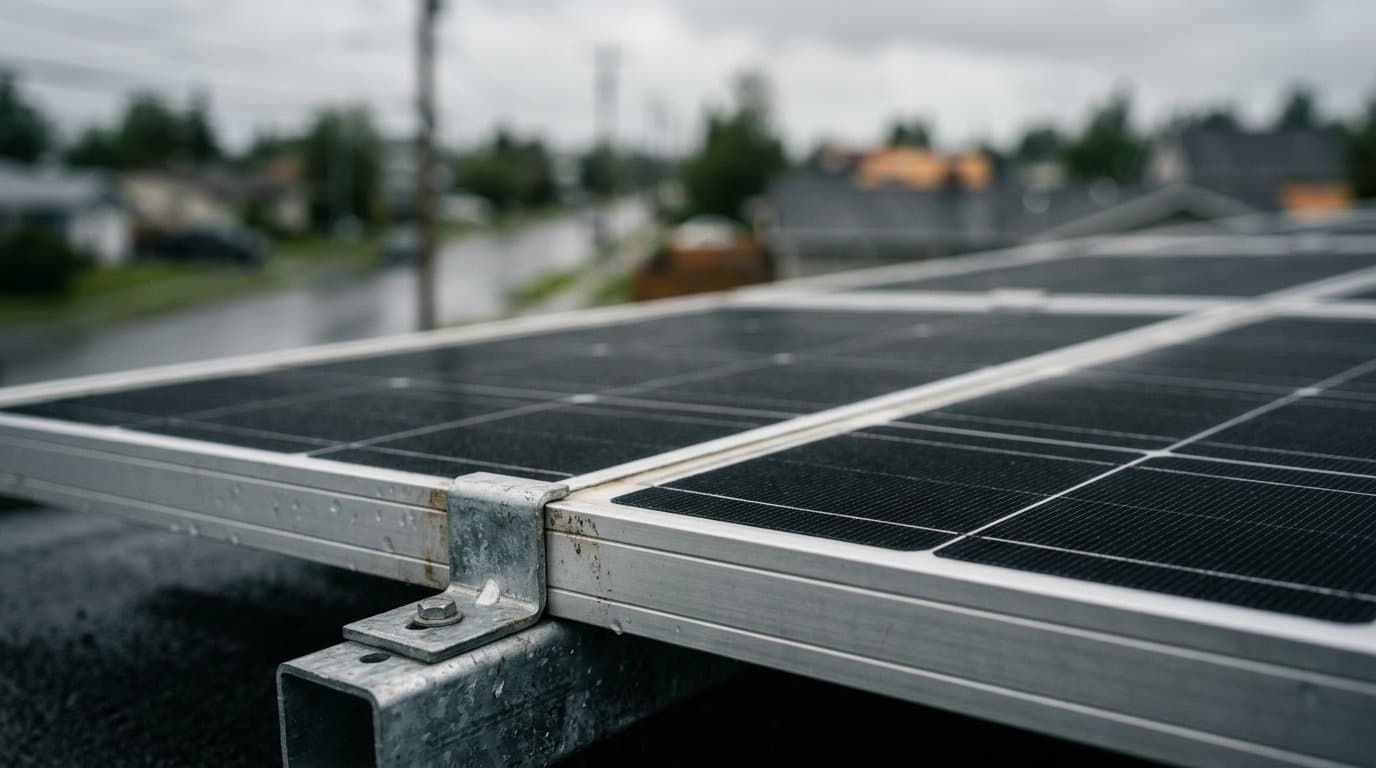
AI image
Alaska regulators may open the grid to far more home and community solar
Alaska could give households and community solar projects far more room to put their own power onto the electric grid, under a change state regulators are set to take up next week — one that has sat waiting nearly two years since public comment closed.
The Regulatory Commission of Alaska has proposed raising the ceiling on "net metering," the arrangement that lets customers who generate their own electricity, usually with rooftop or community solar, feed it back to the utility and get credit for it. Today, a utility can turn away new net metering customers once the total on its system reaches 1.5 percent of its average demand. The proposal would lift that ceiling to 20 percent — more than a thirteenfold increase, and enough headroom that the limit would stop being a practical barrier for most utilities anytime soon.
The current cap has become a real constraint as home and community solar has grown. Homer Electric Association was the first Alaska utility to bump up against its limit and raised its own to 3 percent in 2019; Chugach Electric asked the commission to raise its cap to 5 percent in 2022. The commission's rules, first adopted in 2010, cover systems of 25 kilowatts or less and haven't been substantially reopened since 2013.
Where the interested parties stand is still partly a matter of record not yet public. Homer Electric has said it supports raising the cap, but only "under conditions that it not impact reliability and stability of the electric delivery system or result in increased cross-subsidization across the membership" — that is, so long as the change doesn't strain the grid or shift costs onto members who don't have their own generation. That tension, between opening the grid to more customer-owned power and protecting reliability and other ratepayers, is the heart of what the commission has to weigh.
The item is on the commission's agenda for next Wednesday, but only as a discussion item, not for a vote — as is every other substantive matter on that agenda. The docket carries a statutory deadline of Sept. 25, which gives the commission a reason to take it up now. The agenda gives no indication of whether the commission intends to adopt, amend or drop the increase, or whether it will seek further comment.
Source: Regulatory Commission of Alaska, Alaska regulators want to raise the net metering cap from 1.5 percent to 20 percent, and the proposal has been sitting for nearly two years.
AI-assisted. How we use AI
Stay informed. Support what matters.
Free, permanent access to local news you can verify. Subscribe to support Walter AlaskaNews and go ad-free.
Related Coverage
Four Railbelt utilities file shared-solar tariffs in two days
Alaska News · 3mo ago
Homer's co-op is opening the door to community solar — with a fee and a six-month wait
Alaska News · 3mo ago
Golden Valley Electric has rules for community solar and no community solar
Alaska News · 1mo ago
Homer Electric members will be able to buy into shared solar starting in February
Alaska News · 1mo ago
An Alaska village will own its solar power — and sell it back to the utility
Alaska News · 3mo ago
Comments
Sign in to leave a comment.
No comments yet. Be the first to share your thoughts.