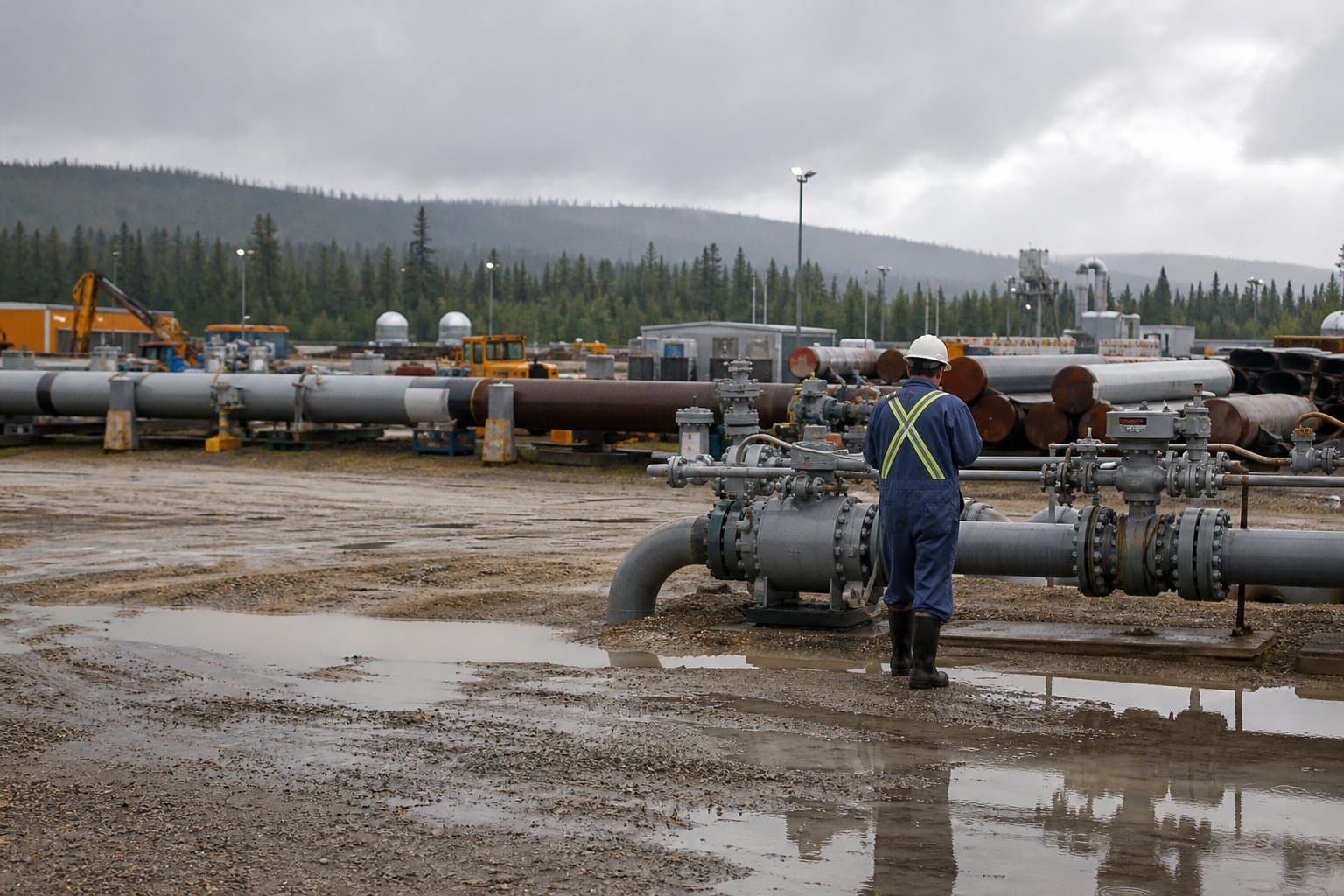
Alaska LNG tax abatement hinges on Fairbanks spur line commitment
The Alaska LNG project's path to a temporary property tax abatement and alternative volumetric tax regime runs through Fairbanks. A Senate Finance Committee work draft of HB 381, circulated Saturday during the special legislative session, makes those tax provisions conditional on developer Glenfarne meeting three commitments before any relief takes effect.
Glenfarne must pay the state $40 million within 60 days after a phase one final investment decision, and contractually agree to pay an additional $40 million within 60 days after a phase two final investment decision, with those funds directed to a municipal impact grant fund. The developer must also sign a project labor agreement and formally commit to building a spur line connecting the main pipeline to Fairbanks and the Fairbanks North Star Borough. The Commissioner of Revenue must certify all three conditions are met before the tax provisions take effect.
Spur Line and Price Protections
The spur line must be in service within approximately two years of the main pipeline's commercial operations date. Its costs spread across all Regulatory Commission of Alaska-regulated consumers statewide rather than falling solely on Interior ratepayers. Fairbanks North Star Borough Mayor Grier Hopkins told the House Finance Committee in May that the borough's Interior Gas Utility currently pays between $24 and $26 per thousand cubic feet for trucked North Slope gas. "We don't need more gas, we need affordable gas," Hopkins said. The bill bars the Regulatory Commission of Alaska from approving gas supply contracts that obligate a public utility to pay more than $16 per million BTUs, a price cap subject to annual inflation adjustment, and bars utilities from passing construction cost overruns to ratepayers.
Deadlines and Conditions
The bill sets hard outer deadlines. A phase one final investment decision must occur before January 1, 2028. Pipeline construction must be complete by December 31, 2032. At least one major project component must reach commercial operations by January 1, 2037, or the tax benefits terminate and standard property taxes apply.
A Senate Finance slide deck presented June 16 summarized Glenfarne's position: the company is "advancing this project at our own risk and expense, funding development, engineering, and advancement activities ourselves," with no reimbursement from the state if the project does not move forward.
Beyond the tax framework, the work draft also addresses Alaska Gasline Development Corporation governance, confidentiality restrictions, bond approval requirements, school funding formulas, and a new Alaska affordable heating fuel fund, reflecting the bill's broader scope.
Sources
Based on: View Transcript
AI-assisted, reviewed by editors. Spot an error?
Comments
Sign in to leave a comment.
No comments yet. Be the first to share your thoughts.