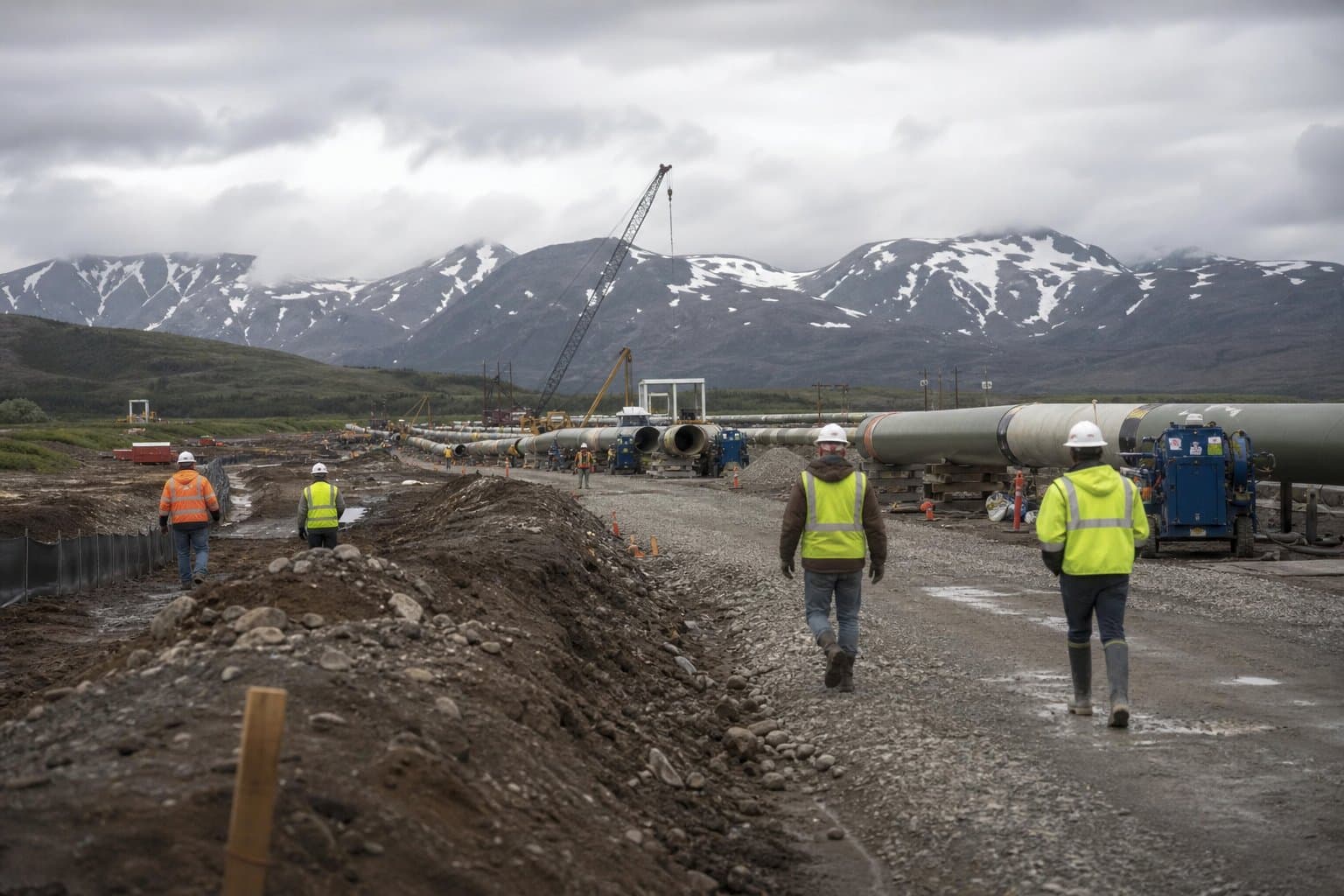
Alaska LNG tax conference opens with House, Senate versions far apart
A conference committee met Friday and Saturday to reconcile sharply different versions of Alaska's natural gas pipeline tax bill. Presentations from the Department of Revenue and the Alaska Gasline Development Corporation showed how far apart the House and Senate versions remain on rates, revenue allocation, and a new income tax that could affect Alaska's oil and gas tax code even if the LNG project does not proceed.
The three versions of HB 381 set materially different rate structures. The House version weights the alternative volumetric tax by capital expenditures per component. The Senate Finance and Senate floor versions fix a single project-wide rate starting at $0.062 per thousand cubic feet, stepping to $0.106 after first gas, and reaching $0.424 by 2060.
All three versions include a temporary tax abatement period during which project property is exempt from state, municipal, and AVT taxes. That abatement ends at the earlier of 500 million cubic feet per day of throughput based on a 30-day rolling average, or five years after Phase 1 commercial operations begin.
Department of Revenue Chief Economist Dan Stickel presented revenue modeling showing total state and municipal AVT revenue at $42 million in 2031, rising to $1 billion in 2060. The state's unrestricted general fund share stays as low as 5 percent in the mid-period before jumping to 52 percent after the 2060 step-up, meaning borough budgets carry the bulk of AVT revenue for decades.
The Senate floor version adds a new income tax on oil and gas pass-through entities, effective Jan. 1, 2028. The Department of Revenue estimated a range of $0 to $100 million per year in additional revenue from a tax of this type, incremental to the published baseline oil and gas revenue forecast and separate from modeled AKLNG project revenues. Stickel told the committee the provision "would have material revenue and economic impacts regardless of if the project proceeds." Gov. Mike Dunleavy listed the tax among items he described as bad for the project developer, and critics in the legislature argued the language was incomplete and poorly drafted.
The tax framework takes effect only if the Commissioner of Revenue determines that the developer has paid $40 million into a municipal impact grant fund within 60 days of the Phase 1 final investment decision and committed contractually to a further $40 million for Phase 2, entered into a project labor agreement, and committed to construct a spur line serving Fairbanks and the Fairbanks North Star Borough. The fund, capped at $80 million, is administered by the Department of Commerce, Community, and Economic Development and covers verified or reasonably expected costs of pipeline construction impacts on six named municipalities.
The bill also caps natural gas supply contracts with public utilities at $16 per million British thermal units, adjusted annually for inflation, and prohibits the Regulatory Commission of Alaska from approving contracts that require customers to assume cost overruns or allow rates to rise if throughput falls.
AI-assisted, reviewed by editors. Spot an error?
Comments
Sign in to leave a comment.
No comments yet. Be the first to share your thoughts.