Alaska lawmakers debate farm tax break for horses, flowers
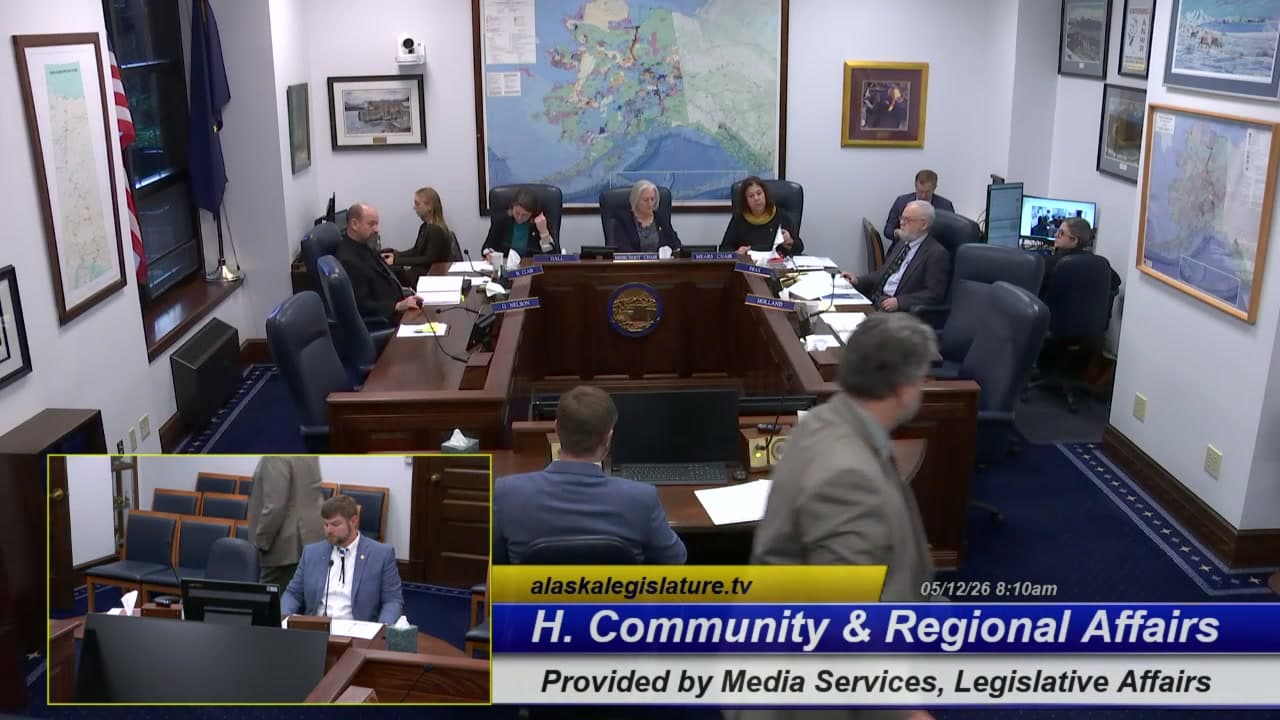
The Alaska House Community and Regional Affairs Committee adopted a narrower version of a farm tax bill Tuesday, removing horses from the livestock definition and limiting farm use to products for human consumption or livestock management.
Senate Bill 200, sponsored by Senator Jesse Bjorkman, would restore tax deferments for floriculture and horse operations that were removed in 2024 legislation. Bjorkman called the exclusion an unintended consequence of last session's farm bill. The committee substitute adopted Tuesday in the bill's first hearing narrows eligibility in ways Bjorkman said would leave out peony and horse-related operations he sought to help.
Alaska News previously reported that the Senate advanced a farm tax bill last session that carved out an Anchorage exemption. That 2024 legislation updated farm-use statutes in response to the 2023 Alaska Food Strategy Task Force, streamlining applications and including farm structures like barns. But it also removed horses and flowers from the definition of qualifying agricultural uses, a change to language that had been in place since 1967.
Rita Jo Schultz, who operates a peony farm in Homer, testified the 2024 change cost her operation about $7,000. She said her family is now considering abandoning farming for farm-stay cabins instead.
"We are actually thinking about doing more like farm stays," Schultz said. "We are thinking about building cabins on the property for that type of use."
Supporters of the broader bill argued Alaska should support the entire agricultural ecosystem rather than narrowly prioritizing food security. Amy Seitz, policy director for the Alaska Farm Bureau, said removing non-food farms creates an artificial divide in the industry.
"A vibrant agriculture industry is an ecosystem," Seitz said. "Our non-food farms are integral to the success of food-producing farms."
Seitz pointed to hay farmers who sell to horse owners as an example. Bjorkman said farmers have raised concerns that under current practice, they must track which hay goes to which animals to determine eligibility for the farm-use rate.
"If you grow hay and you feed it to a cow or you feed it to a goat, and then someone eats the cow or drinks the cow's milk or eats the goat or drinks the goat's milk, you get a special farm use rate for your taxes," Bjorkman said. "But if a horse eats that hay you are out of luck. This creates a rather onerous process in our tax code."
Peony farmers face similar complications. Many grow both flowers and vegetables on the same ground to diversify revenue, Bjorkman said. Excluding peonies from the farm-use rate forces assessors to divide parcels by crop type.
"Many people who are growing peonies are also growing vegetables on the very same ground that they are growing peonies as a way to diversify their crop production, as a way to increase revenue from their farms," Bjorkman said. "And if we are to allow a special farm use rate for vegetables and not for peonies, again, we continue to complicate the system."
The stakes extend beyond individual farms. Schultz testified that 320 acres of Homer farmland recently converted to housing subdivisions. Margaret Atsutt, lands coordinator for the Alaska Farmland Trust, said the Mat-Su Borough alone has lost more than 3,000 acres of farmland over the past decade.
"Once farmland is converted, it is extremely difficult and expensive to bring back into production," Atsutt said.
The farm-use program provides a property tax deferment, not an exemption. Farmers who convert land to non-agricultural use must repay seven years of deferred taxes. That structure incentivizes keeping land in production while allowing flexibility for future generations. The current program provides $802,773 in annual tax relief to 404 parcels covering 10,753 acres. SB 200 is projected to add $160,000 to $240,000 more relief.
The committee substitute also addresses S corporations, which were inadvertently excluded from the 2024 changes. Many Alaska farms organize as S corporations for tax purposes but file IRS Schedule F forms showing farm income. The new language allows those operations to qualify using equivalent documentation.
Co-Chair Donna Mears said the committee substitute rolls back to direct consumption and food security issues, but left the door open for amendments. Representative Garrett Nelson objected to the narrower definition, arguing that removing animal consumption language excludes legitimate agricultural businesses that use horses extensively.
"A lot of hay that is bought in Alaska is for horses, and humans are not consuming them in Alaska," Nelson said.
The committee also discussed a provision allowing land in approved soil conservation plans to qualify for the deferment. Representative Kai Holland asked whether data was available on how many such plans exist. Seitz said farmers work with local soil and water conservation districts to develop the plans, which can include buffer zones between fields and waterways.
The committee adopted the substitute version on a four-to-one vote, with Nelson voting no. Co-Chair Rebecca Himschoot set a noon Wednesday deadline for amendments and scheduled a second hearing for Thursday.
Bjorkman said he does not support the committee substitute because it removes flowers and hay for horses that had been included in the definition since 1967.
"I made a mistake when I wrote them out of the bill that passed in Senate Bill 179 in the last legislature," Bjorkman said. "The operation here is that we have a system right now that is very difficult to manage because it requires separate appropriation and attribution of the farm tax deferment based on very small divisions of ground that grow peonies versus vegetables and hay that feeds horses versus hay that feeds sheep."
The committee will take up amendments Thursday morning. The bill must pass the House before the end of the legislative session.
This article is based on a public meeting — HCRA-260512-0800 ().
AI-assisted. How we use AI Transcript byLucas Brown
Stay informed. Support what matters.
Free, permanent access to local news you can verify. Subscribe to support Alaska News and go ad-free.
Related Coverage
Alaska House panel expands farm tax breaks to flowers, hay
Alaska News · 4mo ago
Senate advances farm tax bill, carves out Anchorage exemption
Alaska News · 4mo ago
House panel hears bill to ease farmland leasing, lower costs for Alaska growers
Alaska News · 4mo ago
Senate Finance Advances Agricultural Leasing Reform After Farmer Cites $9,000 Annual Fee
Alaska News · 5mo ago
Senate committee holds Senate Bill 259 on property tax caps
Alaska News · 5mo ago
Comments
Sign in to leave a comment.
No comments yet. Be the first to share your thoughts.