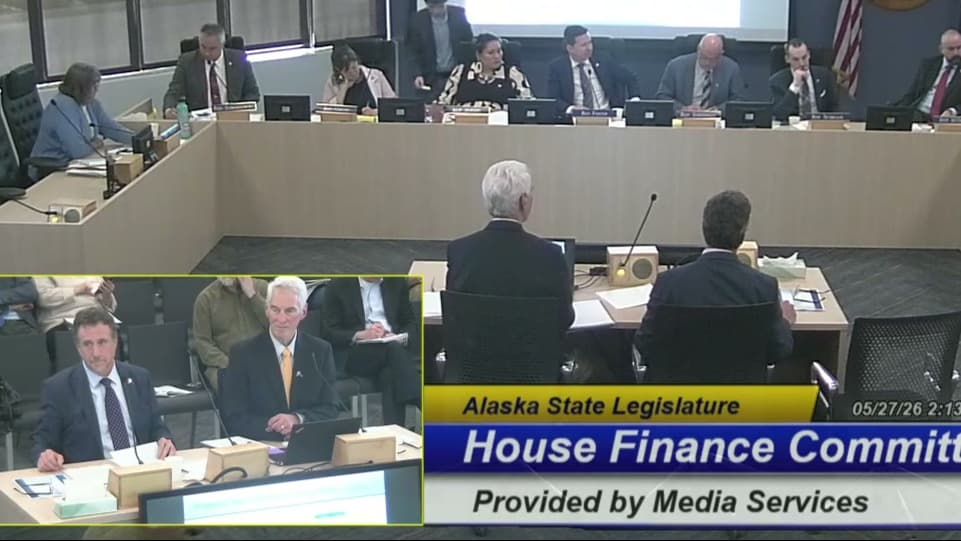
Frame from "HFIN-260527-1330" · Source
AGDC tells House Finance that property tax is largest barrier to Alaska LNG competitiveness
Alaska Gasline Development Corporation officials testified Wednesday that Alaska's property tax structure, potentially exceeding $800 million annually, is the largest single impact on the Alaska LNG project's economics aside from capital costs, presenting studies showing the state's rates are 10 times higher than comparable jurisdictions.
AGDC has been aware of property tax as a major issue since 2020 economic stage gate analysis but delayed bringing legislation forward until late March 2026, according to testimony before the House Finance Committee. The volumetric tax structure now proposed came from borough negotiations that began in the fall, rather than AGDC initiative.
Alaska News previously covered an energy consultant's testimony in today's Senate Finance Committee meeting that property tax makes Alaska LNG unfinanceable. Gov. Mike Dunleavy's 2026 legislation (SB 280/HB 381) proposes to replace the existing 20-mill oil and gas property tax on the Alaska LNG Project with an alternative tax based on the volume of gas moving through the pipeline rather than the assessed value of the infrastructure. According to the Dunleavy administration's figures, applying the existing 20-mill property tax to the Alaska LNG Project's last public cost estimate of $44 billion would yield about $880 million in annual property tax revenue statewide.
Matt Kissinger, AGDC's commercial director, told the committee that in 2020 the corporation identified three major optimization opportunities: federal loan guarantees, lower gas prices, and property tax reform. Wood Mackenzie analysis showed property tax as the largest single impact on project economics aside from capital costs. Comparable projects in Maryland and Canada pay $50 million and $27 million annually; Alaska's statutory rate would exceed $800 million.
Representative Will Stapp questioned why AGDC did not bring legislation forward earlier. Frank Richards, AGDC president, said the volumetric approach now under discussion came out of discussions with the boroughs that began in the fall and acknowledged AGDC should have been more proactive. Richards added that the corporation was simultaneously courting investors during the period when it should have been addressing the tax structure.
The committee recessed after slide 23 of AGDC's presentation and will continue Thursday at 1:30 p.m. with invited testimony from the Fairbanks North Star Borough, Matanuska-Susitna Borough, and Kenai Peninsula Borough. The boroughs will present their perspectives on the proposed volumetric tax structure and its impact on local government revenues. Notably absent from the lisst of proposed speakers is the North Slope Borough.
This article was drafted with AI assistance and reviewed by editors before publishing. Every claim can be verified against the original transcript. If you spot an error, let us know.
Watch key moments from the source meeting. Click to expand.
Related Coverage
Energy consultant tells House Finance that property tax makes Alaska LNG unfinanceable
Alaska News · 18h ago · 26 views · 92% match
House Finance begins review of Alaska LNG tax bill with competing rate proposals
Alaska News · 2w ago · 6 views · 90% match
House panel hears tax proposal for Alaska LNG project
Alaska News · 3w ago · 2 views · 89% match
Energy consultant: Alaska LNG tax bill could cut delivered cost by 20 cents
Alaska News · 3w ago · 7 views · 87% match
Alaska gas line faces economic challenge even with tax breaks
Alaska News · 6d ago · 7 views · 87% match
Comments
Sign in to leave a comment.
No comments yet. Be the first to share your thoughts.