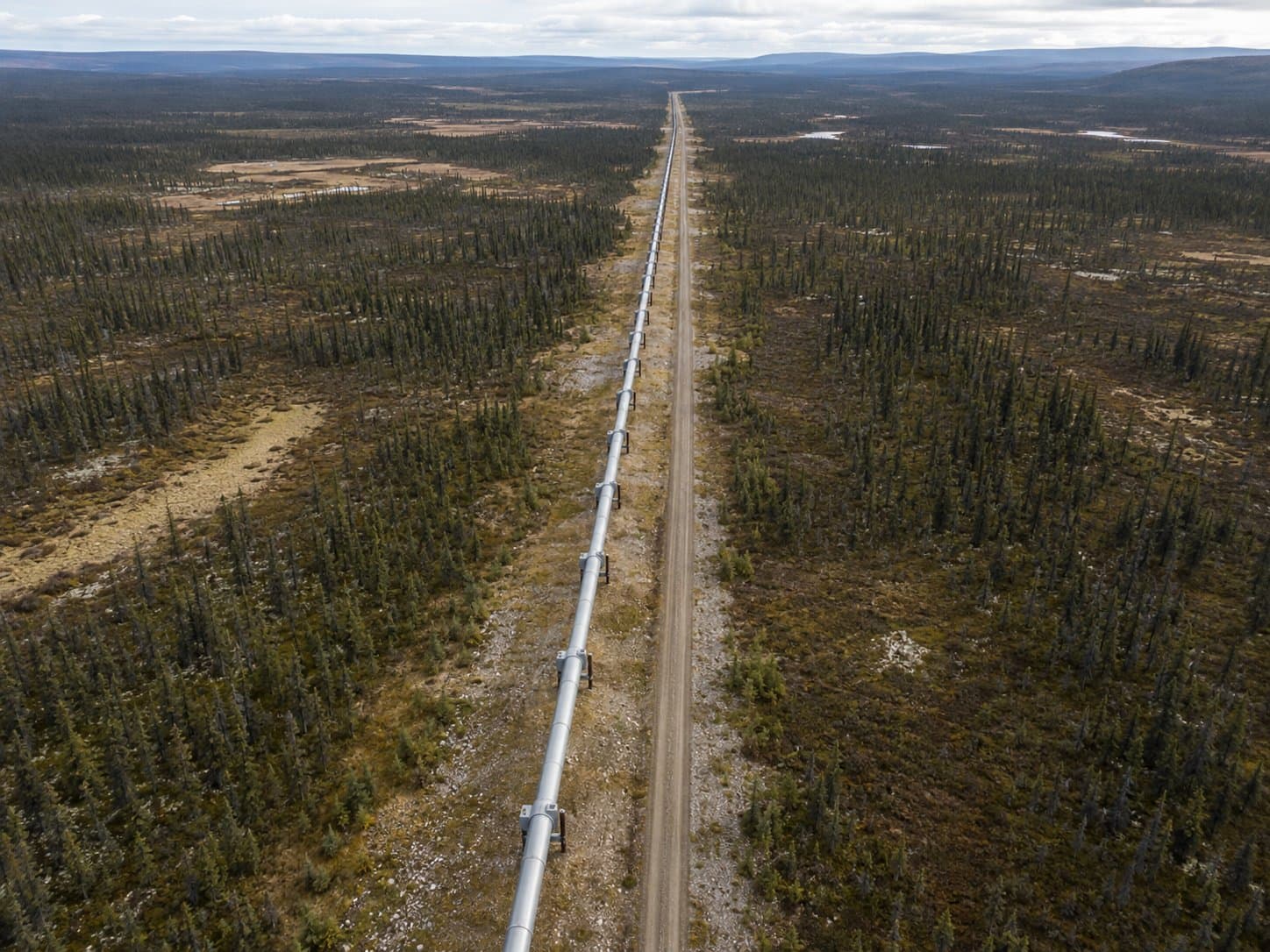
Photo by Cale Green
Energy consultant tells House Finance that property tax makes Alaska LNG unfinanceable
An international energy consultant told the Alaska House Finance Committee on Tuesday that Alaska's current property tax structure creates three critical problems that make the Alaska LNG project unfinanceable: the magnitude of the tax burden, its timing at the project's weakest cash-flow years, and its unpredictability for lenders.
Nicholas Fulford, senior director of gas, LNG, and energy transition at GaffneyCline, testified that the existing 20-mill property tax would impose roughly $600 million in annual taxes in the early years of operation, according to Department of Revenue modeling. That hits exactly when debt service of about $2 billion per year leaves the project with little headroom. Under Governor Mike Dunleavy's proposed six-cent volumetric tax tied to gas throughput, that burden would drop to roughly $68 million per year at planned volumes once the pipeline reaches at least 1 billion cubic feet per day, scaling up only as production ramps.
Tax choice determines viability window
Using a breakeven matrix from the Alaska Department of Revenue, Fulford illustrated how the tax choice affects the project's viability under different capital cost and gas price assumptions. Under the existing property tax, the project is profitable only at roughly $70 to $75 per barrel oil at base capital expenditure. Under a six-cent volumetric tax, that window widens to $65 to $70 per barrel, and the project can tolerate up to 40 percent cost overruns instead of 20 percent.
Fulford explained that the first ten years of an LNG project's economics are make-or-break for financing. Property tax front-loads costs when cash flow is weakest; a volumetric tax defers the burden until gas is flowing and revenue is coming in. He pointed to Texas and Louisiana LNG projects, where ten-year property tax holidays are standard, as evidence that alleviating the tax burden for that first decade matters far more than what happens after.
Unpredictability raises cost of capital
From a fiscal stability point of view and being able to predict what will happen five, ten, twenty years down the road, that is the other problem with property tax, Fulford testified. You do not really know what that tax is going to be. As lenders look at that degree of unpredictability, they will assign a risk to it and the cost of capital will be higher and the project will be less competitive.
The administration chose six cents per thousand cubic feet as the proposed rate because it represents the sweet spot for making the project happen, according to previous statements by Dunleavy. He has cautioned that if the Legislature sets the rate much higher, the project may not attract financing.
The proposal has drawn concern from local governments on the North Slope and Kenai Peninsula, which have warned that exempting the project from property taxes in favor of a state-level volumetric tax could significantly reduce or delay revenue streams that would otherwise support local services and infrastructure in their communities.
This article is based on a public meeting — House Finance, 5/26/26, 1:30pm ().
Made by our human newsroom with AI. How humans and AI work here · Grow with our newsroom Transcript byLucas Brown
Watch key moments from the source meeting. Click to expand.
Stay informed. Support what matters.
Free, permanent access to local news you can verify. Subscribe to support Bill AlaskaNews and go ad-free.
Related Coverage
House Finance begins review of Alaska LNG tax bill with competing rate proposals
Alaska News · 5mo ago
AGDC tells House Finance that Alaska property tax is 10 times higher than competing LNG projects
Alaska News · 4mo ago
Energy consultant: Alaska LNG tax bill could cut delivered cost by 20 cents
Alaska News · 5mo ago
Alaska LNG Tax Bill Stalls as Lawmakers Demand Project Cost Data
Alaska News · 5mo ago
House panel hears tax proposal for Alaska LNG project
Alaska News · 5mo ago
Comments
Sign in to leave a comment.
No comments yet. Be the first to share your thoughts.