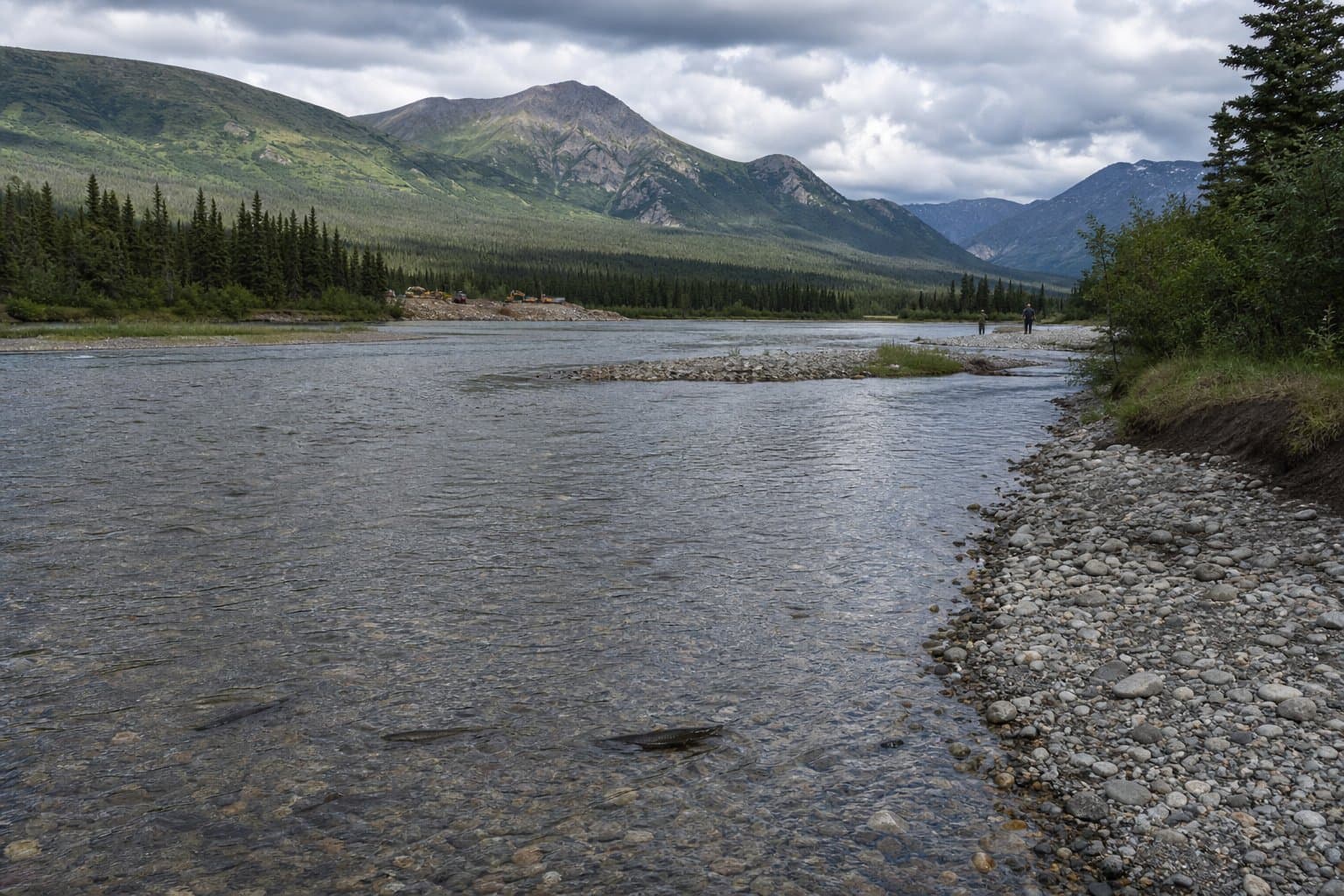
AI image
A federal rule will stop habitat destruction from counting as "harm" to listed species
A federal rule taking effect Sept. 14 will stop habitat modification from counting as "harm" to a threatened or endangered species. In Alaska that reaches Cook Inlet beluga whales, Steller sea lions, polar bears, spectacled and Steller's eiders and the rest of the state's federally listed species. It does not reach salmon. No Alaska salmon run is listed under the Endangered Species Act, and NOAA Fisheries found in May that listing Gulf of Alaska Chinook was not warranted.
Federal protection for threatened and endangered fish has for decades extended to actions that alter spawning beds, block migration, or degrade the water a listed run depends on. The rescission narrows the prohibition to direct killing or injury.
The U.S. Fish and Wildlife Service and NOAA Fisheries published the final rule July 14. The existing definition of "harm," which includes habitat modification, "runs contrary to the best meaning of the statutory term 'take,'" the two agencies wrote.
Opposition runs through the record. The Swinomish Indian Tribal Community and the Squaxin Island Tribe filed a complaint in federal district court in Western Washington arguing that habitat degradation is a primary driver of the decline of listed Puget Sound salmon stocks, and that removing habitat protection would injure the tribes and their treaty-reserved fishing rights. During the comment period, Earthjustice and co-commenters argued the rule would improperly weaken endangered-species protections because habitat modification is a real form of harm, especially for salmon.
Source: Department of the Interior, Department of the Interior: Regulatory Agenda.
AI-assisted. How we use AI
Stay informed. Support what matters.
Free, permanent access to local news you can verify. Subscribe to support Maggie AlaskaNews and go ad-free.
Related Coverage
Federal rule changes loosen protections for Alaska's listed species
Alaska News · 2mo ago
EPA Rule Would Drop Discharge Permits for 65 Alaska Trawlers
Alaska News · 3w ago
Trump Wildlife Pick Wants Fewer ESA Lawsuits — Alaska Is Ground Zero
Alaska News · 3mo ago
Alaska is quietly making it harder to keep water in its rivers for salmon
Alaska News · 3mo ago
Fish and Game plans to cut about 50 of its own rules by year's end
Alaska News · 1mo ago
Comments
Sign in to leave a comment.
No comments yet. Be the first to share your thoughts.