Aandaxjoon Allen
28:26 - 28:43
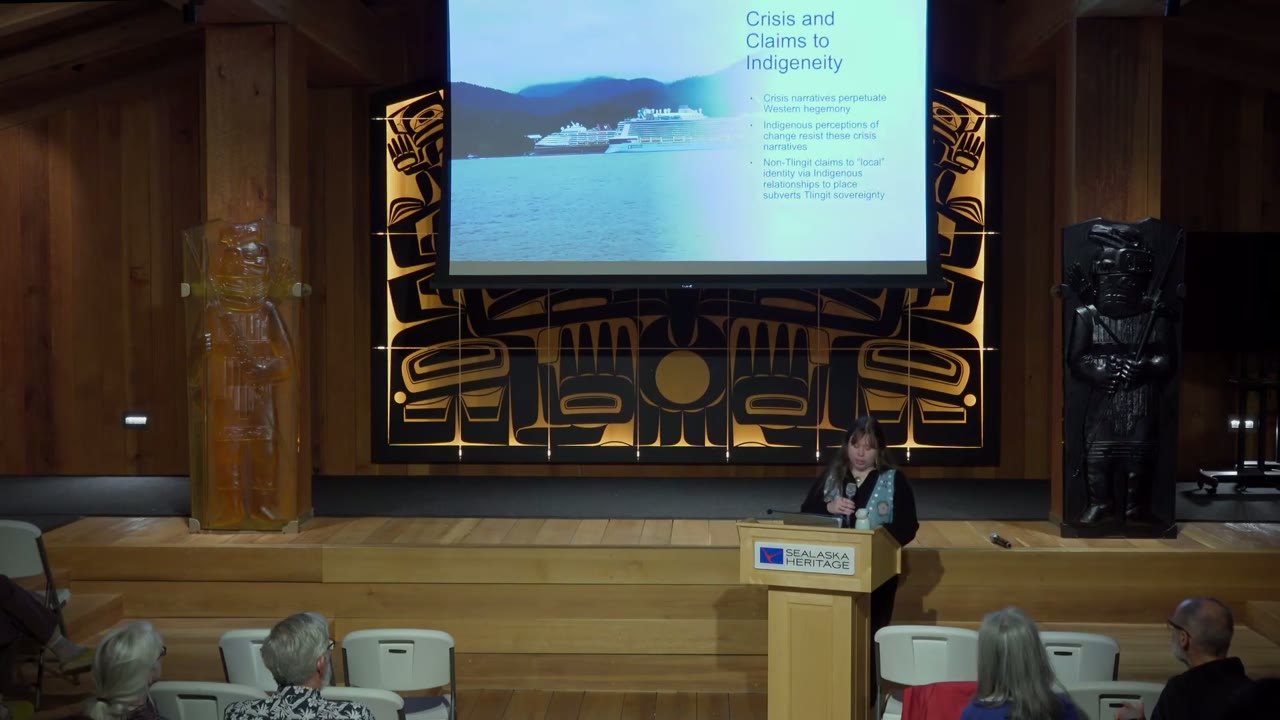
“I'm really interested in the way that indigeneity was coming into these conversations. Especially into anti-tourism conversations from non-Indigenous people who were evoking this Indigenous identity in the arguments that they were making.”
- Speaker
- Aandaxjoon Allen
- Timestamp
- 28:26 – 28:43
- Community
- Alaska News
- Captured at
From the transcript
So various forms of Native art that people were collecting. This has been kind of a, a form of economic investment for Tlingit people for a long time, and that continues to this day. So there are various tribes who are engaged in tourism, Alaska Native corporations, and then of course artists who also often rely on this industry. And so because of these complex relationships, I'm really interested in the way that indigeneity was coming into these conversations. Especially into anti-tourism conversations from non-Indigenous people who were evoking this Indigenous identity in the arguments that they were making.
Related Coverage
Tlingit scholar says Southeast climate adaptation should rest on Tlingit knowledge
A Tlingit scholar argued in Juneau that Southeast should face climate change mainly at a local and regional scale, grounded in Tlingit knowledge.