Aandaxjoon Allen
32:00 - 32:57
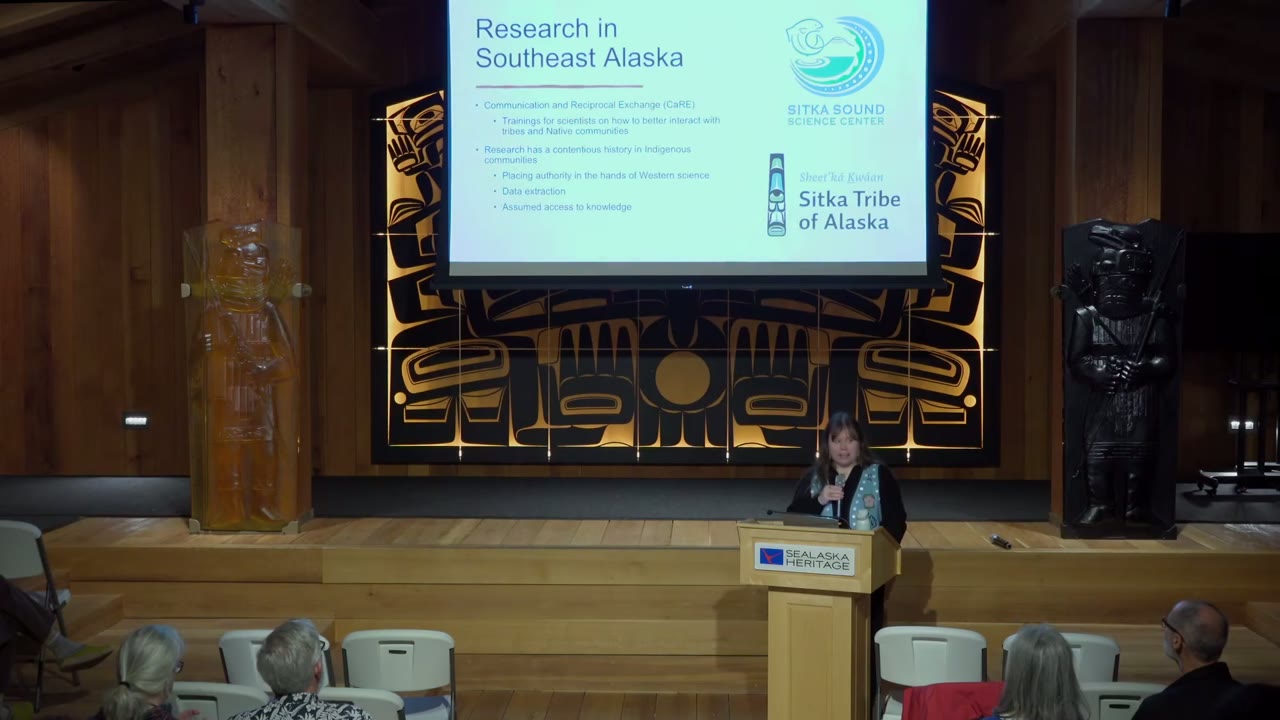
“it is called the Communication and Reciprocal Exchange, or CARE, Initiative. And this initiative includes trainings for scientists on how to better interact with Indigenous communities. So people who are coming in from outside of the region, from other universities, and may not know cultural protocols or how to kind of best present themselves in these situations.”
- Speaker
- Aandaxjoon Allen
- Timestamp
- 32:00 – 32:57
- Community
- Alaska News
- Captured at
From the transcript
And it is called the Communication and Reciprocal Exchange, or CARE, Initiative. And this initiative includes trainings for scientists on how to better interact with Indigenous communities. So people who are coming in from outside of the region, from other universities, and may not know cultural protocols or how to kind of best present themselves in these situations. And this is necessary partially because research has such a contentious history in Indigenous communities, and oftentimes in these relationships, authority is placed in the hands of Western with science, and power imbalances emerge from this, um, wherein Indigenous knowledge is often treated as lesser. And there is work that certainly attempts to address this, but because these issues are so systematic, it can be very difficult to kind of root them out in that work.
Related Coverage
Tlingit scholar says Southeast climate adaptation should rest on Tlingit knowledge
A Tlingit scholar argued in Juneau that Southeast should face climate change mainly at a local and regional scale, grounded in Tlingit knowledge.