Aandaxjoon Allen
42:10 - 43:00
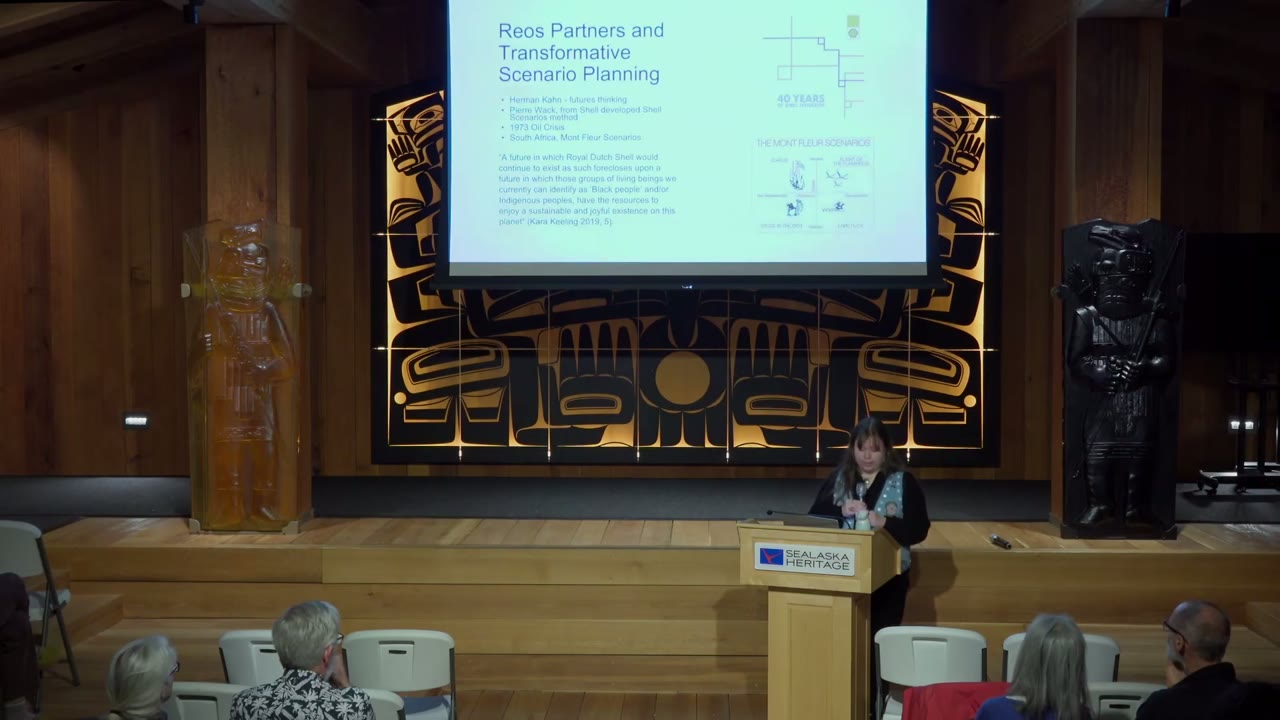
“we're going to pivot back to the possible futures for Southeast Alaska scenario planning process and think about how Cliket futures did not necessarily fit within these scenarios. So throughout this process, I was asking myself, whose future are we imagining?”
- Speaker
- Aandaxjoon Allen
- Timestamp
- 42:10 – 43:00
- Community
- Alaska News
- Captured at
From the transcript
So with this in mind, we're going to pivot back to the possible futures for Southeast Alaska scenario planning process and think about how Cliket futures did not necessarily fit within these scenarios. So throughout this process, I was asking myself, whose future are we imagining? And in the process of writing the scenarios as a group, it was initially very difficult to define where Native people were fitting into these scenarios. And this was partially because there were a lot of people involved who were non-Indigenous, and a lot of them did not have knowledge of how tribal governments function, how Alaska Native corporations function. And so it was very easy for them to kind of forget this and move on from it when thinking about these futures and how they would function and how everything would fit together.
Related Coverage
Tlingit scholar says Southeast climate adaptation should rest on Tlingit knowledge
A Tlingit scholar argued in Juneau that Southeast should face climate change mainly at a local and regional scale, grounded in Tlingit knowledge.