Aandaxjoon Allen
35:44 - 36:00
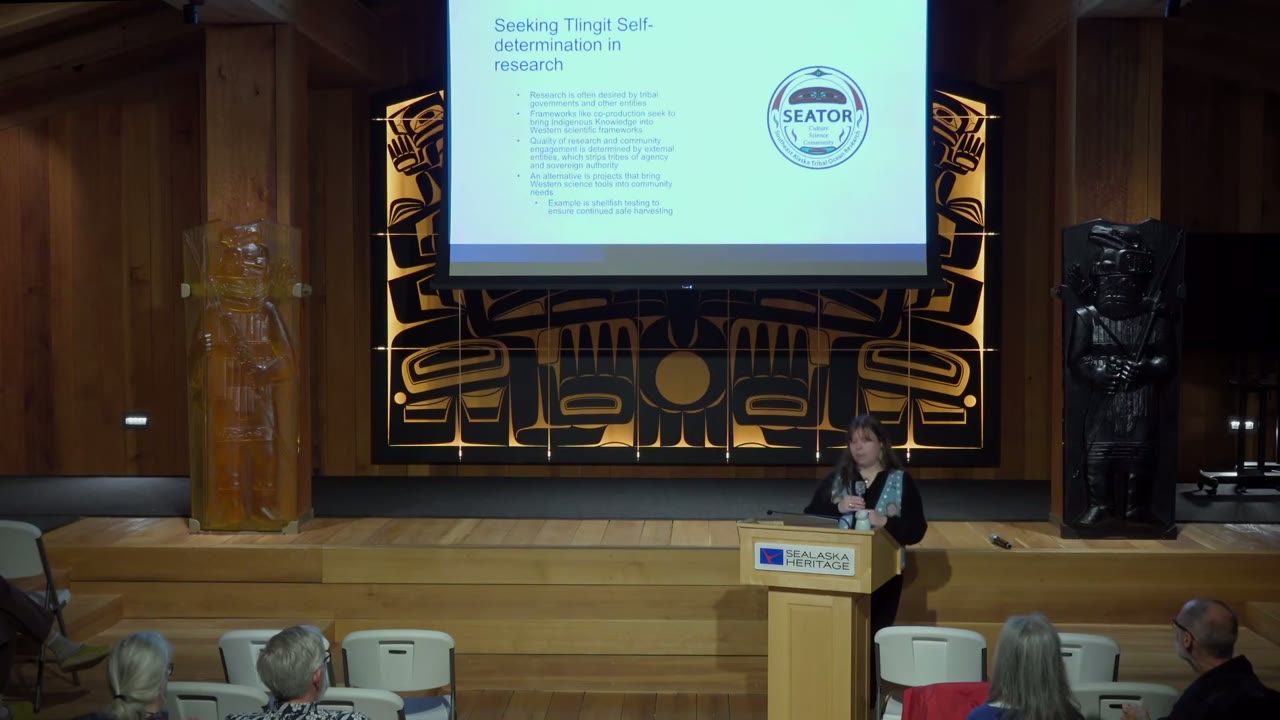
“one really great example of this is the Southeast Alaska Tribal Ocean Research Lab at Sikkok Tribe of Alaska, and specifically the work that they do for shellfish testing to make sure that that is safe to eat.”
- Speaker
- Aandaxjoon Allen
- Timestamp
- 35:44 – 36:00
- Community
- Alaska News
- Captured at
From the transcript
And this specifically strips tribes of agency and of sovereign authority within this process because they're unable to have that ability to determine that relationship for themselves. And there are certainly alternative— alternatives to this way of doing things. And one of the ways that I talk about is instead of Indigenous knowledge being brought into these Western systems, thinking about Western science and how that can be a tool in communities and how that can be directly utilized in community work in a way that almost appropriates it back for Indigenous peoples. And so this is kind of another form of adaptation where we're looking at these tools, acknowledging that they can be useful, especially in the face of climate change, and then taking them on for ourselves. And so one really great example of this is the Southeast Alaska Tribal Ocean Research Lab at Sikkok Tribe of Alaska, and specifically the work that they do for shellfish testing to make sure that that is safe to eat.
Related Coverage
Tlingit scholar says Southeast climate adaptation should rest on Tlingit knowledge
A Tlingit scholar argued in Juneau that Southeast should face climate change mainly at a local and regional scale, grounded in Tlingit knowledge.