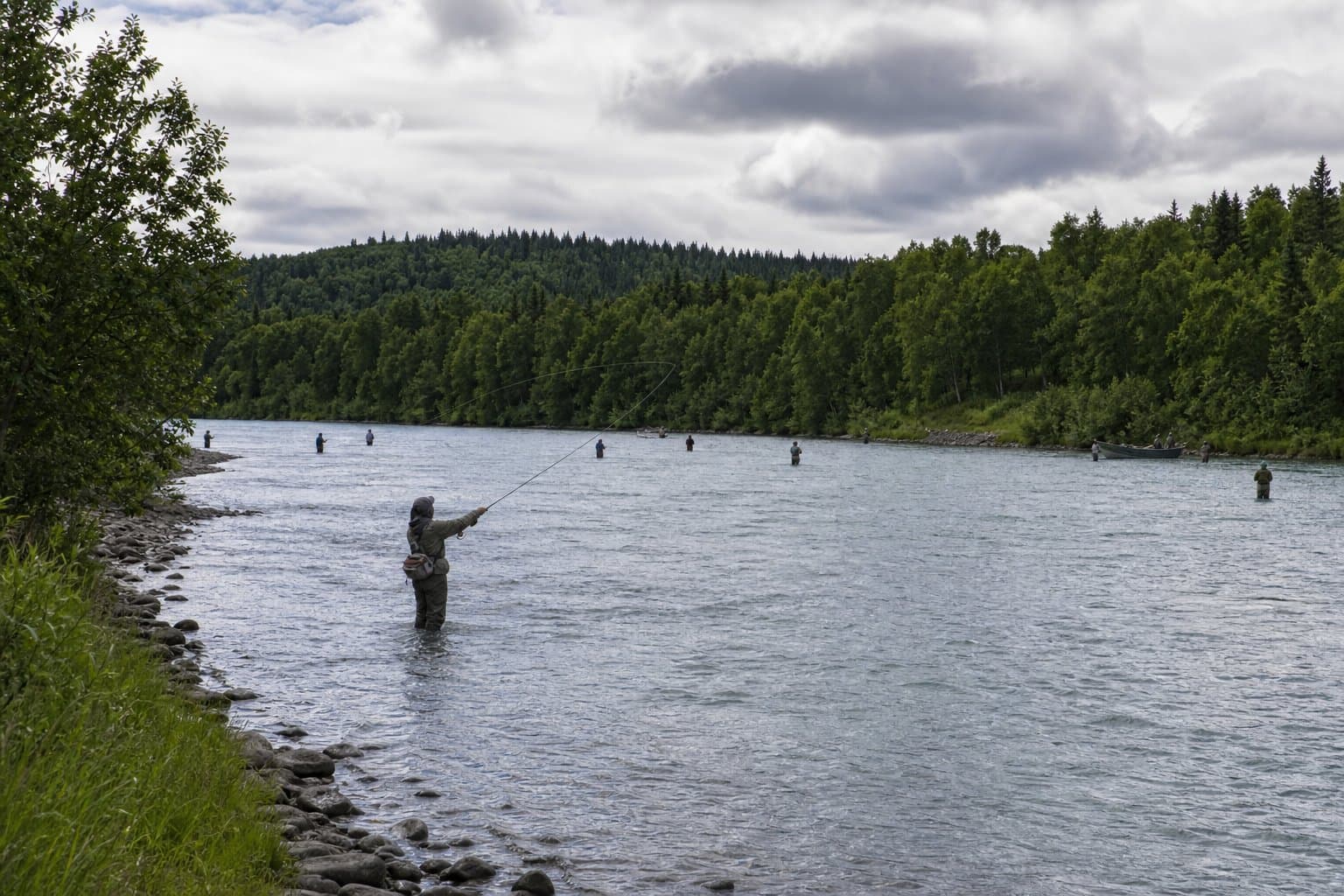
AI image
Washington Man Cited for Keeping Snagged Sockeye on Russian River
If you've ever stood elbow-to-elbow on the Russian River during a sockeye run, you know the one rule that separates fishing from poaching: the fish has to be hooked in the mouth. Snag one in the back or the belly and try to keep it, and you've broken the law — a line Alaska Wildlife Troopers enforce hard on one of the most crowded, most regulated stretches of water in the state.
Troopers cited Marco Maynard, 36, of Washington state on the Russian River the evening of June 19 after determining he'd kept a snagged sockeye. The charge is a strict-liability violation, meaning the state doesn't have to prove he intended to break the rule — only that he did. The charge is an accusation; Maynard is presumed innocent unless proven guilty.
The rule he's accused of breaking isn't bureaucratic fussiness. The Russian River is one of Alaska's premier sockeye fisheries — fly-fishing-only, drawing thousands of anglers a season, who together haul roughly 350,000 sockeye a year out of the Russian and neighboring Kenai. With that many people working a narrow river where the fish swim close to shore, snagging is both easy to do by accident and easy to abuse on purpose, which is exactly why the mouth-hooked rule and the single-hook fly requirement exist. They keep a shoulder-to-shoulder fishery fair and keep escapement honest — the fish counted past the weir are the fish that get to spawn.
And the stakes for getting escapement right are visible this year up and down the road system. Even as the Russian's sockeye run came in strong enough this June for managers to expand fishing, kings have collapsed almost everywhere around it — the Kenai closed to king fishing, record lows on the Copper, missed goals on the Kasilof.
In that climate, the rules that protect a healthy run aren't red tape but the reason it stays healthy.
Source: Alaska Wildlife Troopers, Alaska Wildlife Troopers: Department of Public Safety ().
Drafted with AI. Edited by Cale Green (1 revision). No full editor review is on record. Who is accountable.
Stay informed. Support what matters.
Free, permanent access to local news you can verify. Subscribe to support Bill AlaskaNews and go ad-free.
Related Coverage
A snagged salmon is a released salmon: a Kasilof reminder
Alaska News · 2mo ago
Troopers cite three anglers for keeping snagged sockeye on the Kenai
Alaska News · 2mo ago
Troopers cite 19 anglers for fishing violations on Kenai, Kasilof
Alaska News · 1mo ago
Wisconsin man cited for lifting king salmon on Anchor River
Alaska News · 3mo ago
A busy week on the Kenai brings a run of fishing citations
Alaska News · 2mo ago
Comments
Sign in to leave a comment.
No comments yet. Be the first to share your thoughts.