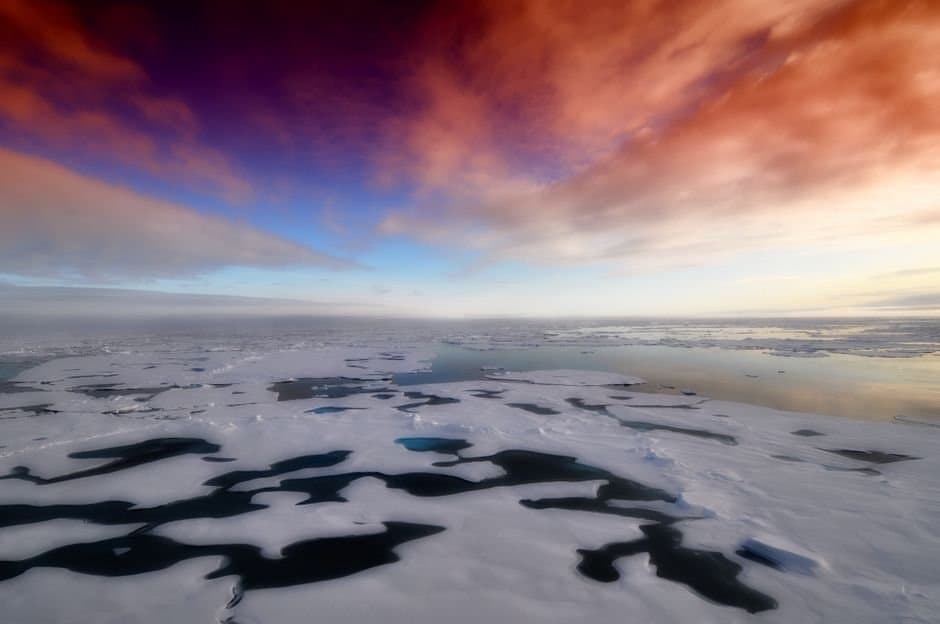
Photo by Pixabay on Pexels · Photo source
Two Arctic climate-data sources lose federal funding, kept alive by others
Two long-running sources of Arctic climate information that Alaska communities rely on have lost their federal funding over the past year — and both are now being kept alive by universities and private groups, one of them restored only days before Arctic sea ice hit its yearly low.
The first is a plain-English monthly summary of sea ice conditions at both poles, produced by the National Snow and Ice Data Center. Its federal funding, from NASA, ended in 2025, and the summary went dark in October along with several of the center's analysis tools. It resumed in September, paid for now by a private climate fund rather than the government. Some features remain suspended, the center says.
The second is a more prominent one: the Arctic Report Card, an annual scientific assessment issued since 2006. NOAA terminated its support for it in early August, according to climate specialist Rick Thoman, who reported both funding changes in his Alaska and Arctic climate newsletter. The report card has found a new online home, with support lined up from the American Geophysical Union, CU Boulder, the University of Alaska Fairbanks and others to try to keep it going for 2026. Its own site is more cautious, noting that not all the pieces are in place for a full release. Thoman is one of the report card's three editors, which he discloses.
The data has direct uses in Alaska. The snow and ice data center is a primary source for the sea ice charts used along the state's northern and western coasts — from Utqiaġvik and Wainwright to Kotzebue and the Bering Strait villages — where the timing of the ice shapes subsistence travel, hunting access, and how hard a fall storm hits an unprotected shoreline. The plain-language summaries are the layer that translates the raw numbers for the people making those calls.
The restorations, so far, are partial and privately funded. The monthly sea ice posts are back, but mid-month updates and some tools are not. The report card has a home but not yet a guarantee.
The funding changes come as the ice reaches its annual low. Thoman's late-August update put this year's Arctic sea ice minimum in mid-September, with extent — the ocean area holding at least some ice — running 11th lowest in the center's record as of Aug. 30, which he described as typical for the period since 2010.
Source: Alaska and Arctic Climate Newsletter, September 2026 News Update.
Made by our human newsroom with AI. How humans and AI work here · Grow with our newsroom
Stay informed. Support what matters.
Free, permanent access to local news you can verify. Subscribe to support Alaska News and go ad-free.
Related Coverage
NOAA pulled the plug on its 20-year Arctic climate record — and Alaska's scientists are scrambling to save it
Alaska News · 2mo ago
Chukchi and Beaufort Seas carry most ice in decades, even as Arctic shrinks
Alaska News · 3mo ago
The Gulf of Alaska's ocean station was saved. The funding still isn't.
Alaska News · 2mo ago
Alaska Energy Planners Design 50-Year Systems Using 2008 Weather Data
Alaska News · 5mo ago
Alaska's senators move to shore up the NSF office that funds most UA research
Alaska News · 2mo ago
Comments
Sign in to leave a comment.
No comments yet. Be the first to share your thoughts.