AI image
The Gulf of Alaska's ocean station was saved. The funding still isn't.
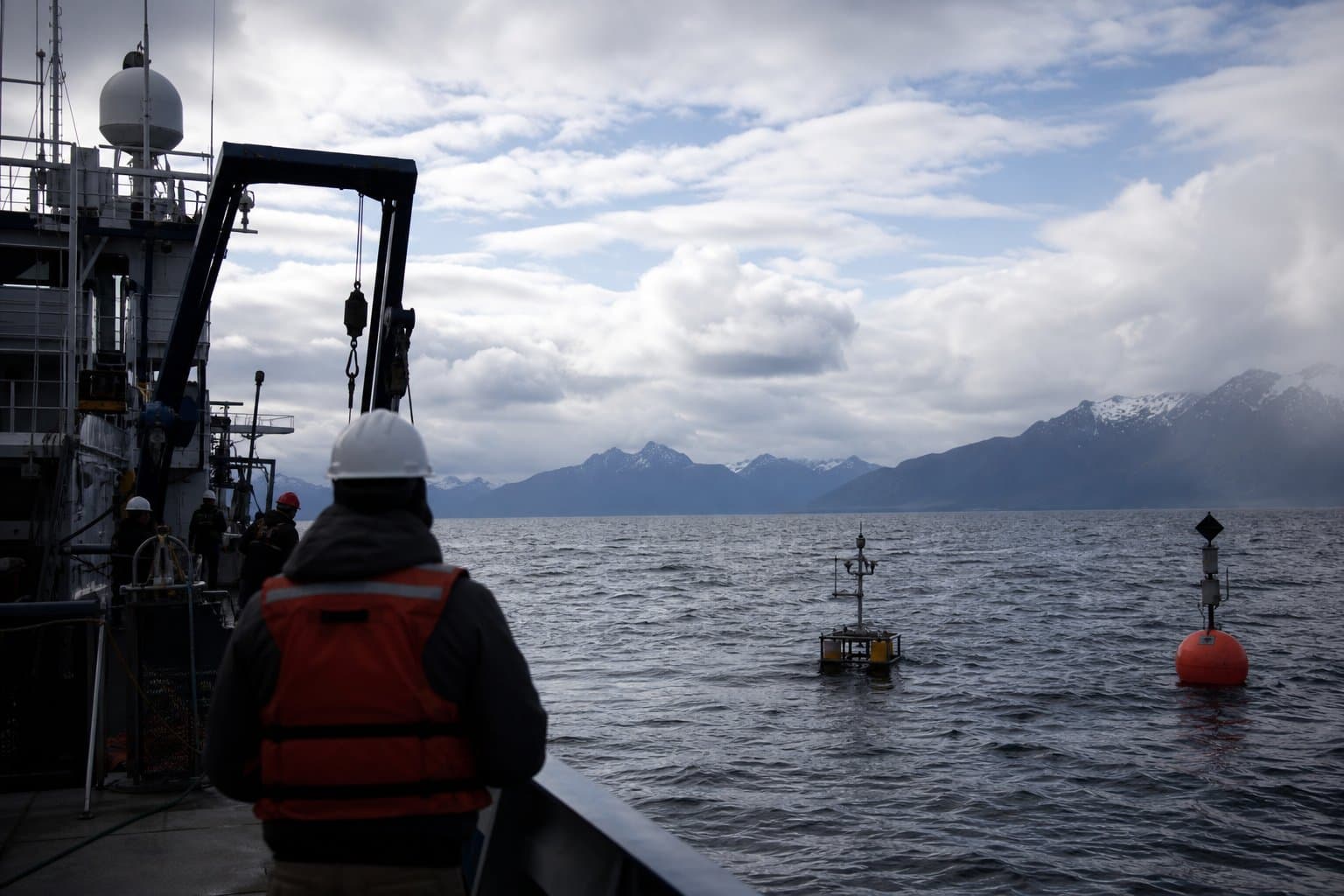
Two and a half miles down in the Gulf of Alaska sits one of the North Pacific's longest-running ocean records — deep-sea moorings that track the water Alaska's fisheries depend on. They were headed for removal. Now they stay, but the money to keep the wider network running is still an open question.
The Gulf of Alaska station, Ocean Station Papa, is part of the Ocean Observatories Initiative — a network of about 900 instruments streaming real-time data on ocean conditions, currents, and extreme weather. The National Science Foundation planned to dismantle most of it. For Alaska, that meant losing a record scientists have used to track marine heatwaves like the "Blob" that formed in the Gulf in 2013 and to help set fishery catch limits — data gathered on trips by the Sikuliaq, a research ship the University of Alaska Fairbanks runs out of Seward.
Sen. Lisa Murkowski helped lead the pushback. Her Saving the OOI Act passed the Senate unanimously in June, and NSF reversed course the next day, halting removals and pledging to redeploy instruments already pulled off Oregon.
But the reprieve isn't fully funded. In a bipartisan letter Thursday, Murkowski and Oregon Sen. Jeff Merkley pressed NSF to say which parts of the network have approved budget authority and which don't. Without steady funding, they warned, the agency can't keep the staff needed to run the system, and gear already pulled can't go back in the water.
No response from NSF has been released.
Source: Murkowski, Merkley Continue Oversight of Restoring NSF Ocean Monitoring Systems ().
AI-assisted. No editor review is on record for this article. Who is accountable.
Stay informed. Support what matters.
Free, permanent access to local news you can verify. Subscribe to support Melinda Communities.News and go ad-free.
Related Coverage
Alaska's senators move to shore up the NSF office that funds most UA research
Alaska News · 1mo ago
NOAA pulled the plug on its 20-year Arctic climate record — and Alaska's scientists are scrambling to save it
Alaska News · 1mo ago
New bill from Murkowski would let NOAA identify fish from the DNA they leave in the water
Alaska News · 1mo ago
Alaska science runs on NSF money, and the money has slowed
Alaska News · 1mo ago
Murkowski flagged Alaska parallels at a Senate deep-sea mining hearing
Alaska News · 2mo ago
Comments
Sign in to leave a comment.
No comments yet. Be the first to share your thoughts.