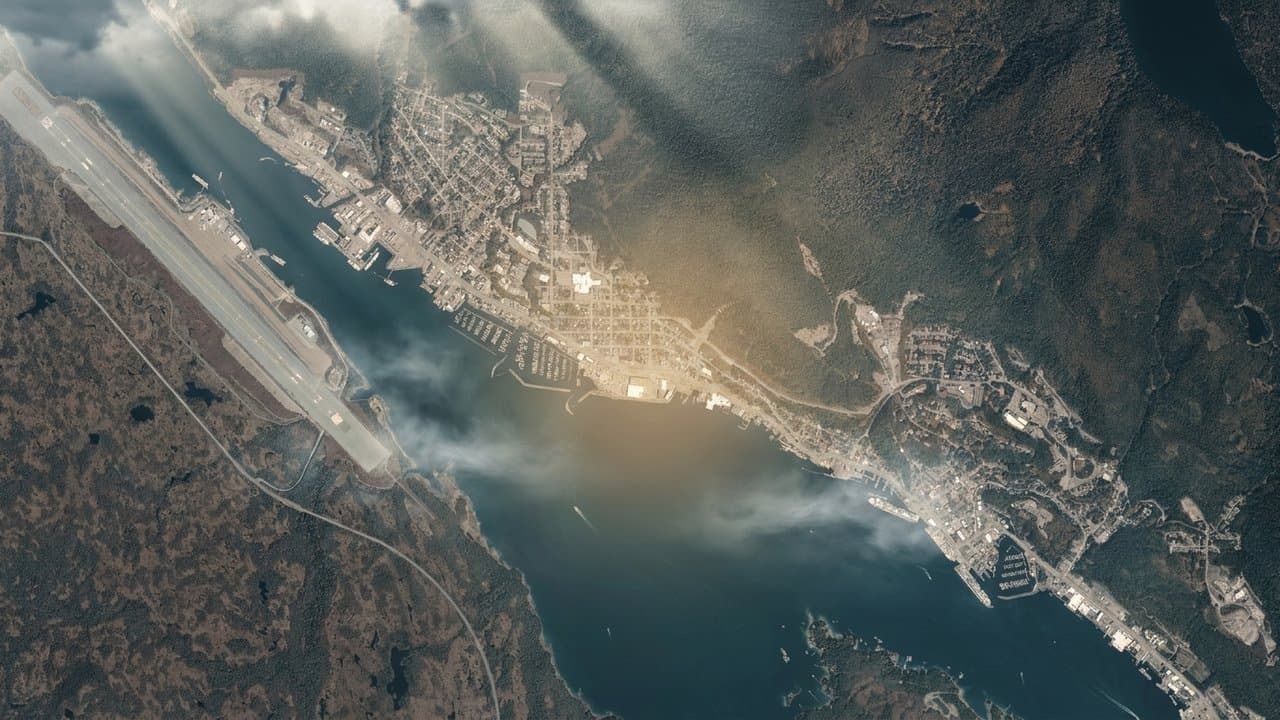
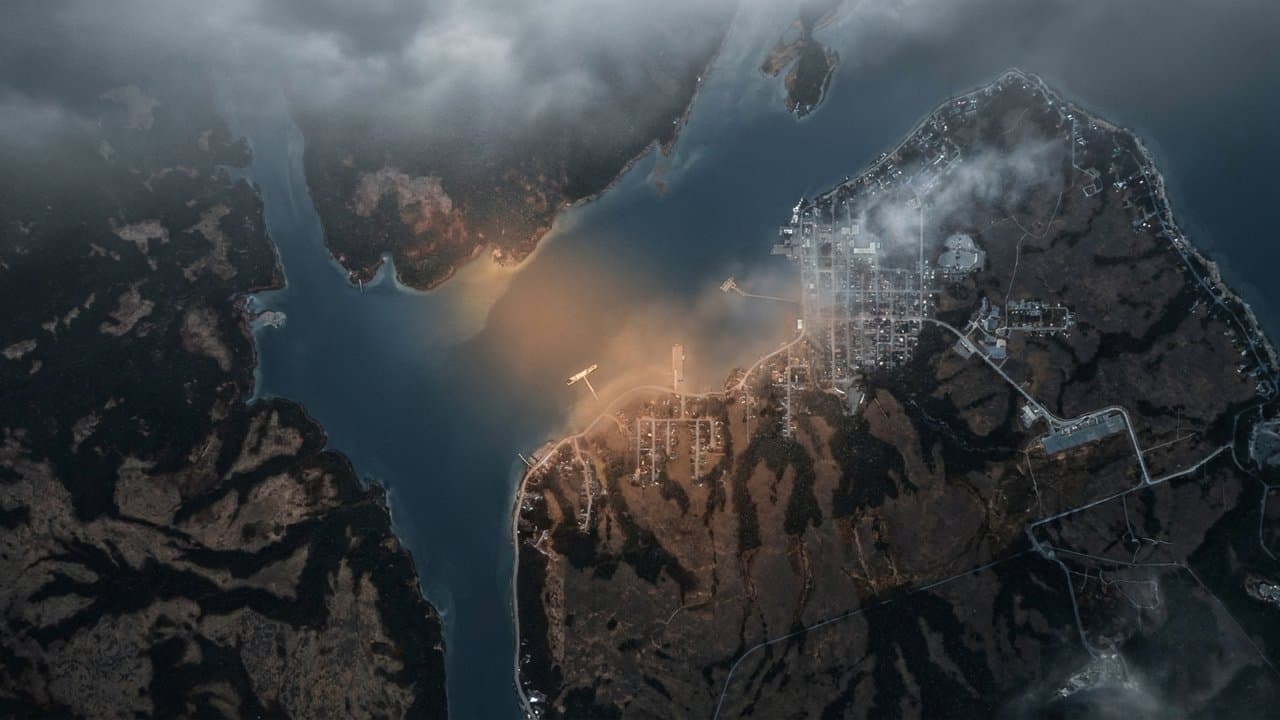
Editorial map (Gemini + Google Maps)
State takes comment on Corps plan to raise Ketchikan's Bar Point Harbor breakwaters
The U.S. Army Corps of Engineers wants to rebuild the two rock breakwaters that shelter Ketchikan's Bar Harbor, the base for the town's commercial fishing fleet, and make them taller. The state began taking public comment Wednesday on one of the approvals the work needs.
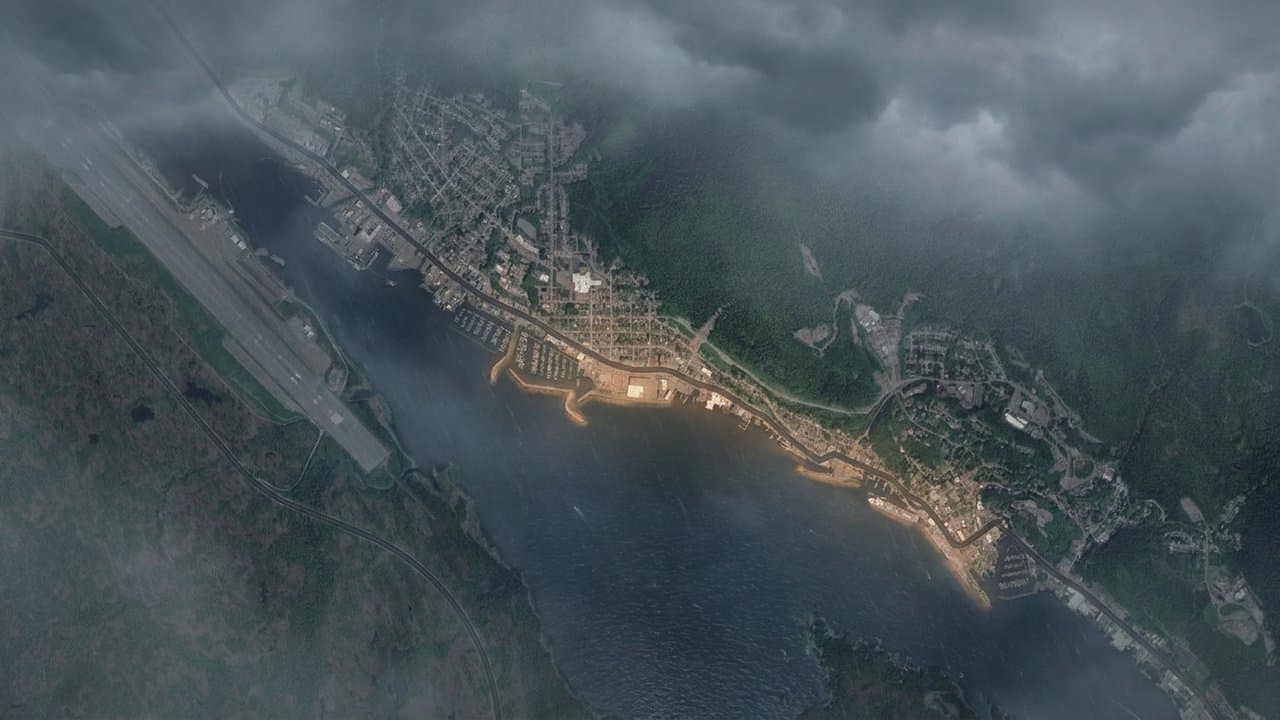
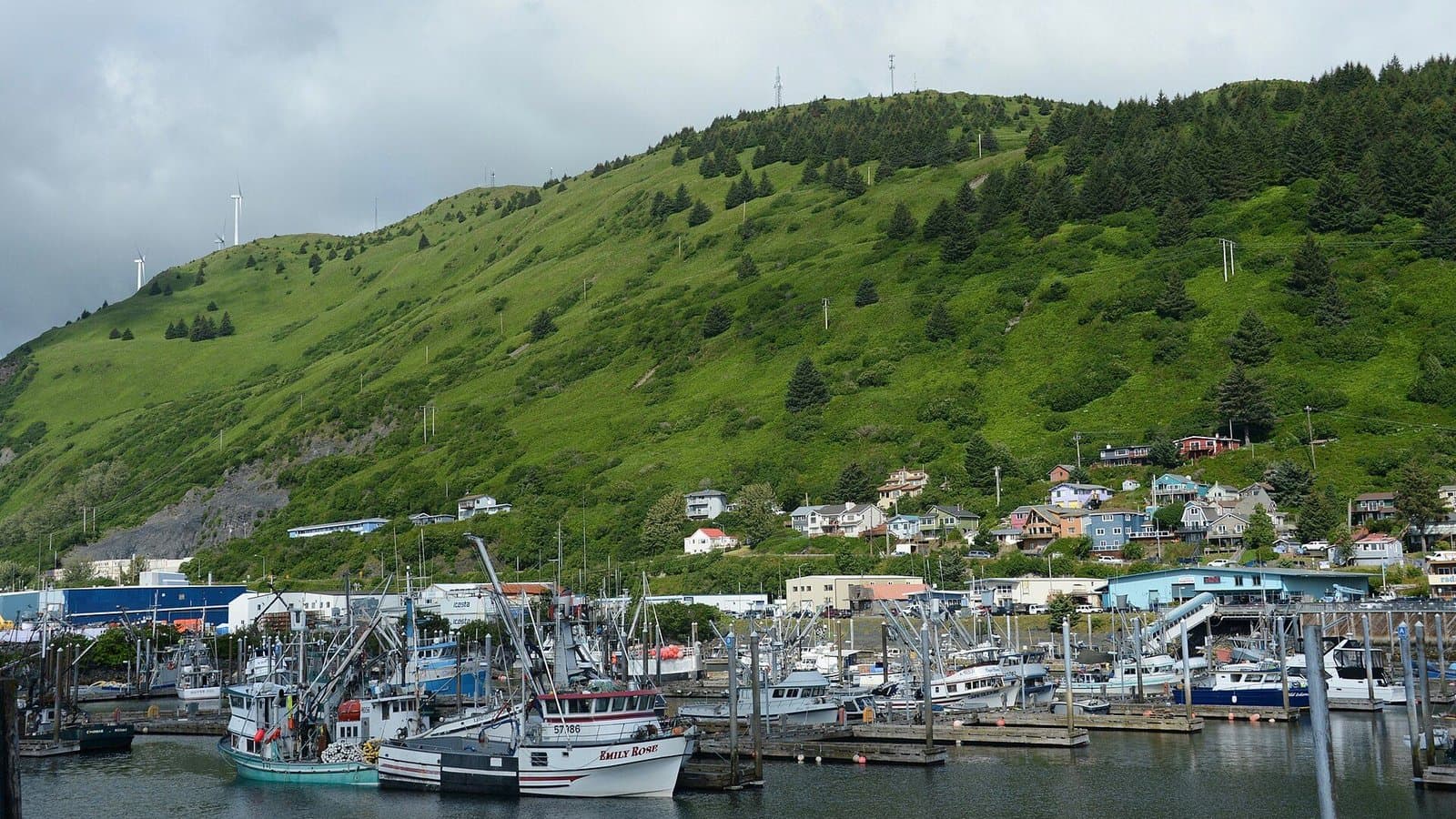
A breakwater is a long wall of rock built out into the water to take the force of waves before they reach the boats inside a harbor. Bar Harbor, formally Bar Point Harbor, has room for 520 boats behind a 1,100-foot breakwater and a 700-foot one, which have sheltered it since 1958.
The rock on both is deteriorating, inspectors have found. During a 2015 storm, harbormaster photos showed waves breaking over both breakwaters at high tide, and a Corps survey that fall found their tops 1 to 4 feet below their design height in several places. When the Corps visited the next spring, the rock along the top was in very poor condition, according to its draft environmental assessment.
Without repairs, the breakwaters "would continue to deteriorate," the Corps told the state in its request. "This would lead to an increasing risk of overtopping and potential catastrophic failure." Storm damage to moored boats would cost their owners money and disrupt commercial fishing, the request says.
Under the Corps' preferred plan, crews would strip off about 42,000 cubic yards of old rock and reuse it to build a shelf along the seaward base of the longer breakwater, meant to steady it against undercutting. Then they would lay down about 44,000 cubic yards of new rock, with an outer layer of armor stones averaging 2,100 pounds, about a ton apiece. Both breakwaters would end up 2.5 feet taller than their original design, with wider tops.
The Corps would also remove the Prince, an abandoned 69-foot seiner that has rested on one of the breakwaters since 2020.
Crews would work only in winter, between Oct. 1 and April 1, to limit the effects on marine mammals, fish and eelgrass, a sea grass that grows in shallow water. The Corps expects two winters of construction. Its filing with the state lists a window from October 2027 to April 2032.
The draft assessment doesn't say what the repairs would cost. The Corps kept a fallback plan that would repair only the longer breakwater, because money may not be available to fix both, the assessment says.
The city separately plans to replace two worn floats inside the harbor with $4.53 million from a state grant the City Council accepted in September.
The Corps' draft finding is that the breakwater project would have no significant environmental impact. Up to a tenth of an acre of eelgrass next to the shorter breakwater would be lost for good, and the new rock shelf would turn about an acre of sand and shell bottom into rocky habitat. Crews would put silt curtains around the work, keep spill equipment on hand and screen the new rock to remove fine material, according to the Corps' Clean Water Act evaluation.
The approval the state is now weighing is a water quality certification, its finding that the rock placed in the water would meet Alaska's water quality standards. The Department of Environmental Conservation is taking comments through Dec. 18 on its public notice. Comments on the Corps' draft plan are due Nov. 21. No public meeting is scheduled; anyone who wants one has to ask the Corps in writing during its comment period and explain why.
What did you make of this story? (no account needed)
Made by our human newsroom with AI. Reviewed by Cale Green. How humans and AI work here · Grow with our newsroom ·
Keep Alaska News free for everyone.
No paywall, ever. Members pay so everyone can read the meetings and records Alaska News covers.
Get Alaska News in your inbox
Create your free account and get the day’s top stories around 6 each morning, in a few minutes’ read.
Top stories, around 6 each morning.
Stories on what you follow, on Sundays.
Source: U.S. Army Corps of Engineers.





Comments
Sign in to leave a comment.
No comments yet. Be the first to share your thoughts.