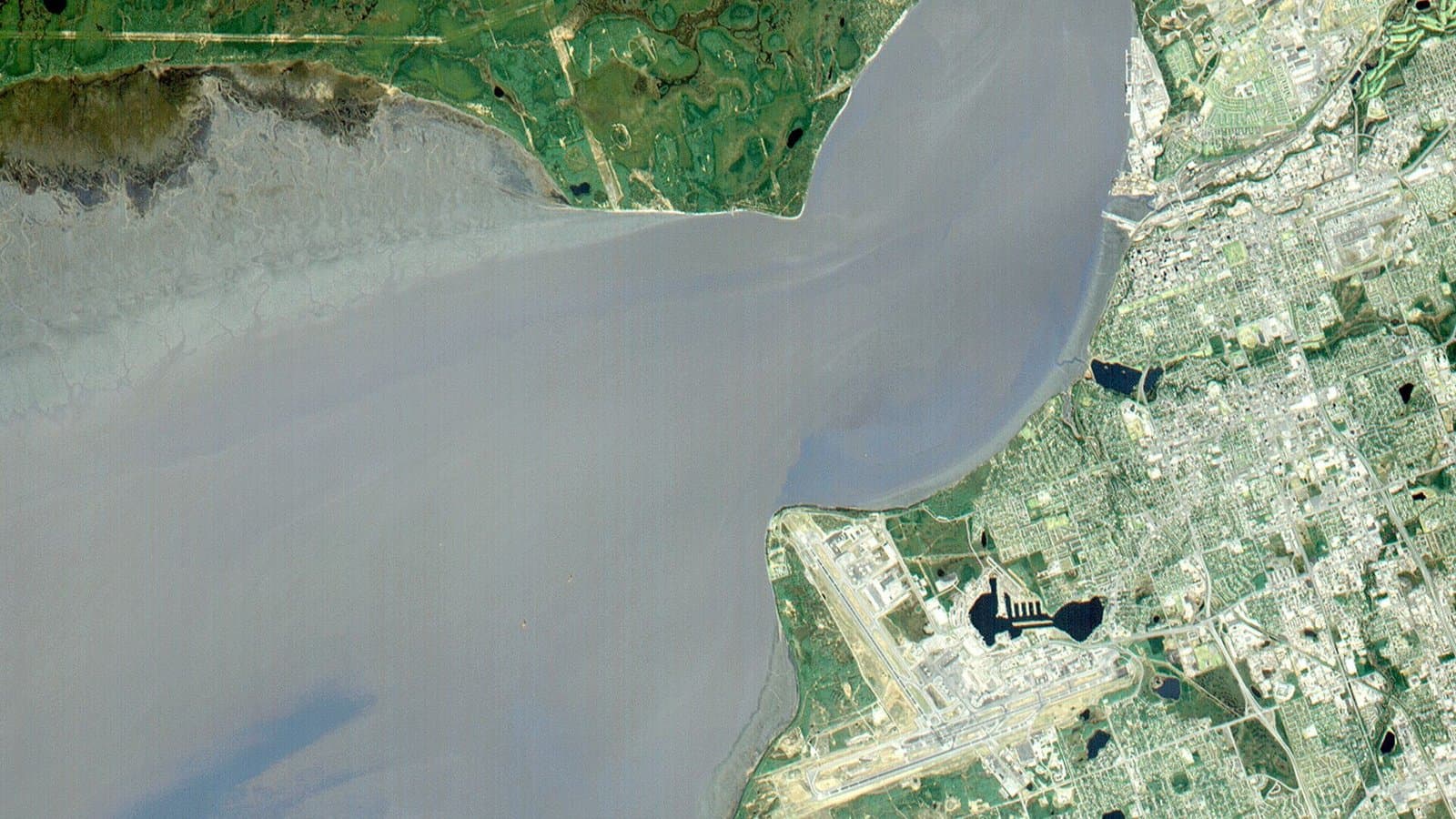
Photo: NASA via Wikimedia Commons · Photo source · Public domain
State energy board moves to accept up to $150 million for a second Railbelt power line
The Alaska Energy Authority's board voted Thursday to pursue up to $150 million in federal Defense Production Act money for a new 223-mile power line between Beluga and Healy, which would give the Railbelt a second high-voltage route between Southcentral and Interior Alaska.
The board authorized Executive Director Curtis Thayer to negotiate the U.S. Department of Energy award and to accept it if talks succeed. The federal government uses that law to pay for projects it deems essential to national defense.
The board also made a second power link, a $413 million cable under Cook Inlet, its top request to the Legislature, asking for $142.3 million in state money to finish paying for it.
Both projects would add backup paths to the Railbelt, the grid that runs from the Kenai Peninsula through Anchorage and the Mat-Su to Fairbanks. Together, they still need about $410 million that hasn't been lined up.
At the same meeting, the board voted to take a new look at the shelved Susitna-Watana dam, citing rising power costs as the Cook Inlet natural gas that Southcentral relies on for heat and electricity dwindles.
Power moving between Southcentral and the Interior now travels a single path, a weakness that the Department of Energy says affects "defense readiness and critical logistics," including at Joint Base Elmendorf-Richardson and the Port of Alaska. The new line would take a separate route, from Beluga, on the west side of Cook Inlet, through the West Susitna area to Healy, just north of Denali National Park.
The department says it would strengthen grid reliability for about 75% of Alaskans. The board's resolution says it would also benefit military bases along the Railbelt, naming Eielson Air Force Base, Clear Space Force Station, Fort Greely and Fort Wainwright along with JBER.
The federal money isn't in hand. The department's Oct. 6 letter selecting the project says the selection doesn't authorize any work, that the department has no financial obligation until a final award is signed and that it can take back the selection if the authority doesn't keep pace. Scope, budget, cost share and schedule are all still to be negotiated.
The line's preliminary cost estimate is about $418 million, leaving $268 million to come from somewhere other than the federal government. Where that money would come from hasn't been settled. The board told Thayer to come up with a funding and financing plan and report back.
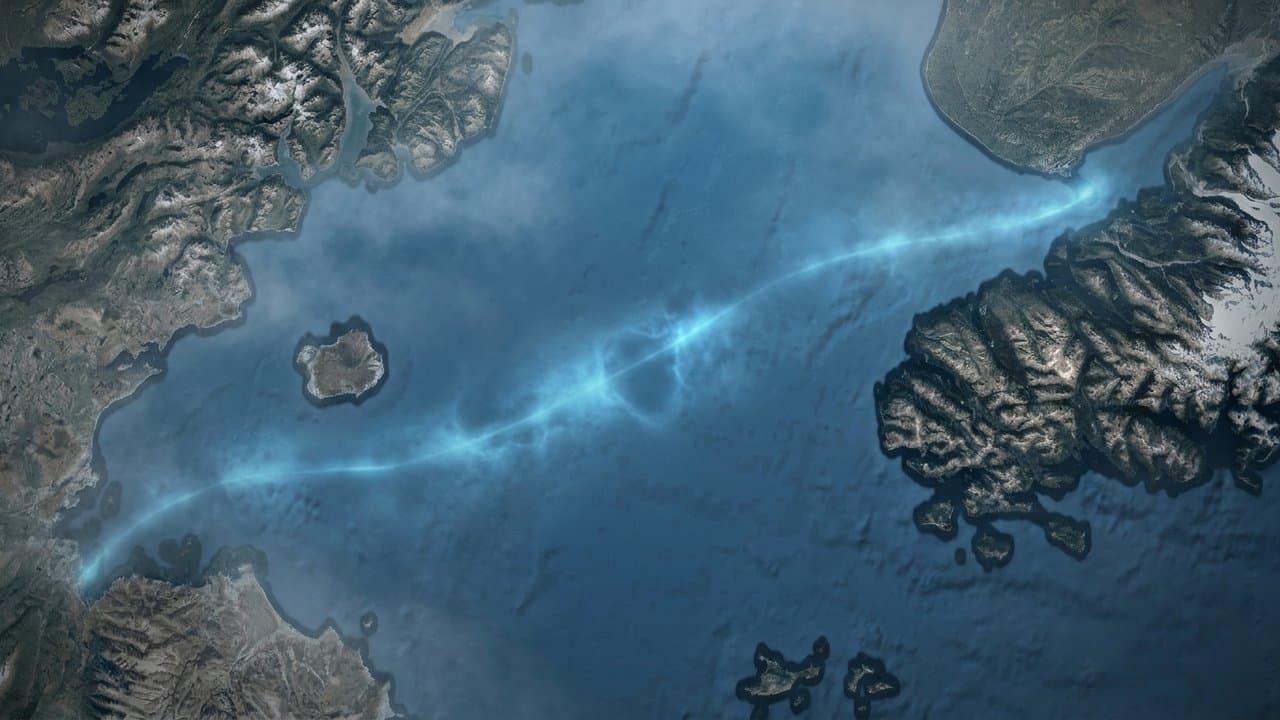
The Cook Inlet cable would run 38 miles under the water between the Kenai Peninsula and the Anchorage and Mat-Su area. One line connects them now, a weak spot the authority calls "a critical single point of failure." The cable would carry 100 megawatts in either direction at first, with room to grow to 200, and would help move more power from the planned expansion of the Bradley Lake hydroelectric plant near Homer.
A $206.5 million federal grant covers half the cable's cost, and the authority has $64.2 million in matching money committed. The $142.3 million it's asking the Legislature for would close the gap.
The board also voted to take $32.8 million in federal grid resilience money, $12.8 million more than the authority expected and the final round of a program that pays to harden power systems against storms and other disruptions. And it approved a nearly $5 million loan for a solar and battery project at Red Dog Mine. The loan can't close until the developer lines up the rest of its money, signs its power contract with mine operator Teck Alaska and gets its parent company to guarantee the loan.
What did you make of this story? (no account needed)
Made by our human newsroom with AI. Reviewed by Cale Green. How humans and AI work here · Grow with our newsroom ·
Get Alaska News in your inbox
Create your free account and get the day’s top stories around 6 each morning, in a few minutes’ read.
Top stories, around 6 each morning.
Stories on what you follow, on Sundays.
Source: State energy board clears talks on $150 million federal award for Beluga-Healy line, backs $142.3 million cable request and approves Red Dog solar loan.











Comments
Sign in to leave a comment.
No comments yet. Be the first to share your thoughts.