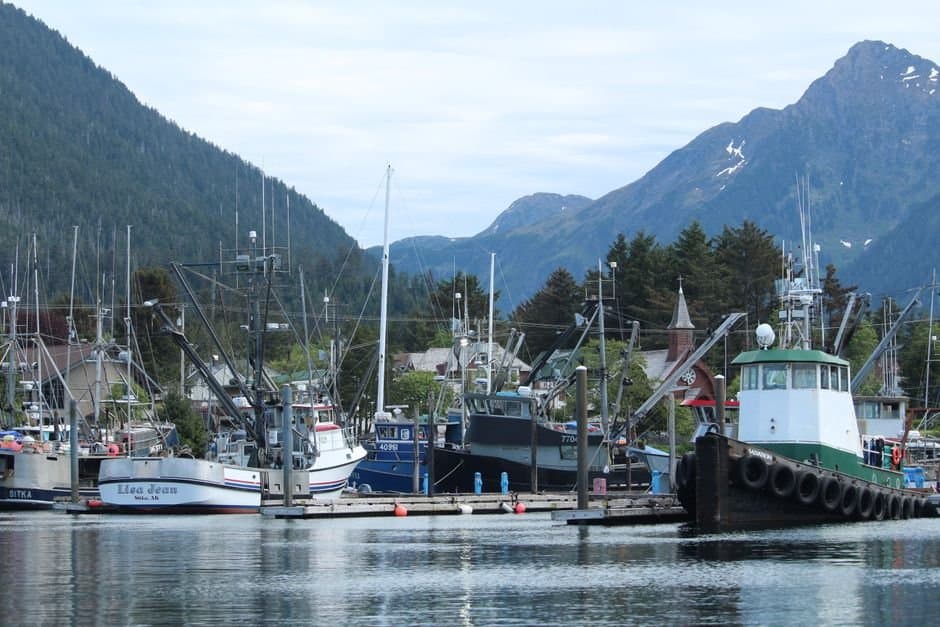
Southeast Alaska drift gillnet season closes with every species below average
Southeast Alaska's drift gillnet fleet caught less of every salmon species this year than the 10-year average in its traditional fishing areas, but is expected to be paid more for that catch than in an average year. The Alaska Department of Fish and Game closed the fishery for the rest of the 2026 season on Thursday, October 1, including Section 1-B.
Traditional openings ran from June 14 through Thursday, and every species landed below the 2016 to 2025 average in those areas. Chinook came in near 5,200 fish against an average of about 7,100; sockeye at 271,000 against 284,000; coho at 135,000 against 165,000; pink salmon at 465,000 against 589,000; and chum at 1.42 million against 1.68 million. Effort rose by 20 permits from 2025, to 342 making landings, but stayed well below the 380-permit average. Terminal harvest areas near hatcheries, where hatchery fish return, bucked the shortfall. Gillnetters there took an estimated 1.3 million chum, above the recent average of about 1.07 million.
Salmon prices were "substantially higher than they have been for many years," the department said. Initial estimates are $6.11 a pound for Chinook, $3.08 for sockeye, $1.88 for coho, $0.71 for pink and $1.37 for chum. It said exvessel value, the total paid at the dock, is expected to run "significantly higher" than the prior two seasons and the $21.4 million average. Final prices will not be set until this winter, so that projection could still move.
Chinook production "remains poor," according to the department, which expects escapement goals, or spawning targets, to be met in only 3 of 11 index systems and likely missed in seven, with one too early to call. Sockeye runs were good to excellent, meeting goals on the Chilkat, Chilkoot, Taku and Stikine rivers and at McDonald, Speel and Redoubt lakes, and narrowly missing at Hugh Smith Lake. Wild chum runs were poor to moderate in most areas. Coho escapements are still being evaluated. The all-gear pink harvest reached 20.4 million fish, and targets were met in 39 of 46 stock groups. Most of the stock groups that missed their targets were in northern Southeast Alaska, according to the department.
The 2024 annual management report put common property drift gillnet value, which excludes the Annette Islands Reserve fishery, at $18.5 million. Southeast seiners closed in September with initial estimates of $0.65 for pinks and $1.34 for chum, according to the purse seine closure announcement.
District-level harvest and escapement detail is set for the Drift Gillnet Task Force meeting on December 2 in Ketchikan. The announcement is the department's own account and includes no comment from permit holders or processors. Its contact is Troy Thynes, (907) 772-3801.
Source: Alaska Department of Fish and Game.
AI-assisted. How we use AI
Stay informed. Support what matters.
Free, permanent access to local news you can verify. Subscribe to support Bill AlaskaNews and go ad-free.
Related Coverage
Southeast pink seining closes at 19.8 million fish; hatchery areas stay open
Alaska News · 3w ago
Southeast gillnetters ride a strong pink run, with the season about to turn toward coho
Alaska News · 1mo ago
Bristol Bay's smaller sockeye run pays 21 percent above average
Alaska News · 2d ago
Bristol Bay's 2026 sockeye run falls below 50 million for first time since 2014
Alaska News · 1w ago
PWS sockeye season ends with low returns as fleet pivots to coho
Alaska News · 2mo ago
Comments
Sign in to leave a comment.
No comments yet. Be the first to share your thoughts.