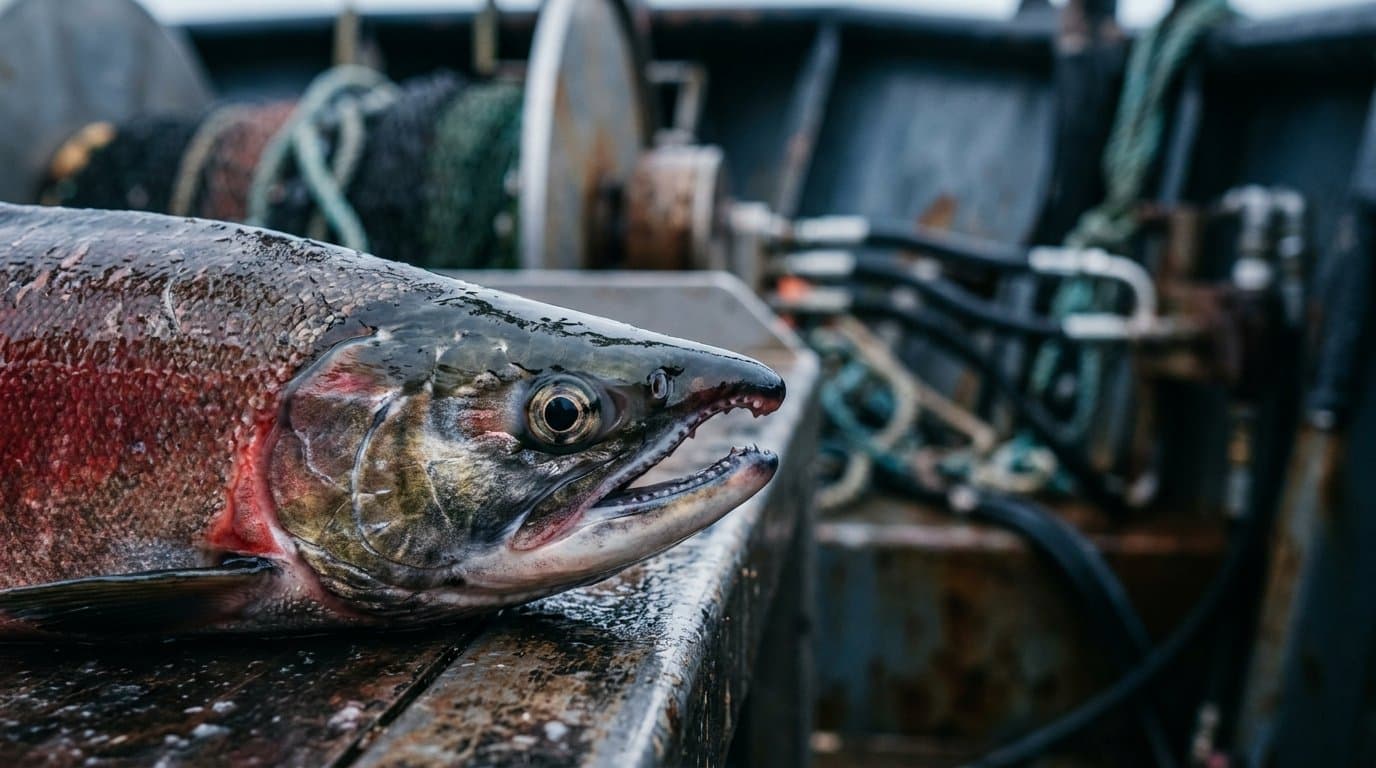
AI image
Norton Sound salmon season draws the fewest commercial permit holders since 2007
Fewer permit holders fished commercially for salmon in Norton Sound this year than in any season since 2007, the Alaska Department of Fish and Game reported Wednesday in its preliminary season summary. Seventy-two permit holders fished.
Over the previous 10 years, an average of 119 permit holders fished each season. In 2018, 149 permit holders caught 543,714 salmon worth $4 million. This year's catch was 48,700 salmon worth $320,657.
By some measures, 2026 was better than recent years. The catch was the largest in four years, and its value was close to the five-year average of $325,865. Fishermen caught 24,730 chum, double the recent average. Most escapement goals, the number of fish managers want to reach the spawning grounds, were met, the department said.
One company bought salmon: Norton Sound Seafood Products, owned by the Norton Sound Economic Development Corporation. It paid the same prices as last year, $2.20 a pound for sockeye, $1.90 for coho, 75 cents for chum and 35 cents for pink, and bought no Chinook.
Unalakleet had the most permit holders, 28. Golovin had the largest catch, 14,215 fish. The Nome Subdistrict had no commercial openings because chum and coho counts were too low.
Last year's catch was smaller, 38,189 fish, but worth more, $449,448. Most of it was coho, which paid more than twice as much per pound as chum.
Kings, again
Chinook salmon missed every established escapement goal in the region. The Kwiniuk River counted 63 against a goal of 250, falling short for the sixth straight year. The North River counted 399 against a goal of 1,200 to 2,600. Eldorado River chum hit historic lows, and Nome River pinks missed their goal.
To protect kings, the department closed subsistence salmon fishing in the Shaktoolik and Unalakleet subdistricts on June 15, then eased the closure in steps through July. Final subsistence harvest numbers aren't in, but the department says anecdotal reports suggest most residents met their needs.
High water cut short several counting projects in August and September. The department closed commercial fishing for the year on Aug. 31, citing below-average to poor catch rates and counting projects that were "generally inoperable," which left it unable to confirm there were enough coho to harvest.
Fish, but no market
Farther north, Port Clarence is home to what the department calls the farthest-north sockeye run in the state. The Pilgrim River weir counted 34,232 sockeye this year, above the 30,000 needed to open a commercial fishery and the third straight year the sockeye escapement goal was met. No fishery opened. Market interest "has not existed in over 10 years," the department said.
Subsistence fishermen could take more. After an early, strong run, the department lifted the usual 25-fish household sockeye limit on July 4.
Source: Alaska Department of Fish and Game, Norton Sound's 2026 salmon season: 72 permits, the fewest since 2007, earned $320,657 from one buyer, and no Chinook goal was met, released .
Made by our human newsroom with AI. Reviewed by Cale Green. How humans and AI work here · Grow with our newsroom
Stay informed. Support what matters.
Free, permanent access to local news you can verify. Subscribe to support Walter AlaskaNews and go ad-free.
Related Coverage
Norton Sound commercial salmon fishing closed for the rest of 2026
Alaska News · 1mo ago
Norton Sound's commercial salmon season ends with the counting towers down
Alaska News · 1mo ago
Kotzebue chum fishermen get a better price but have just one buyer left
Alaska News · 2mo ago
Bristol Bay's smaller sockeye run pays 21 percent above average
Alaska News · 2w ago
Southeast Alaska gillnetters caught less salmon this year but expect higher pay
Alaska News · 1w ago
Comments
Sign in to leave a comment.
No comments yet. Be the first to share your thoughts.