AI image
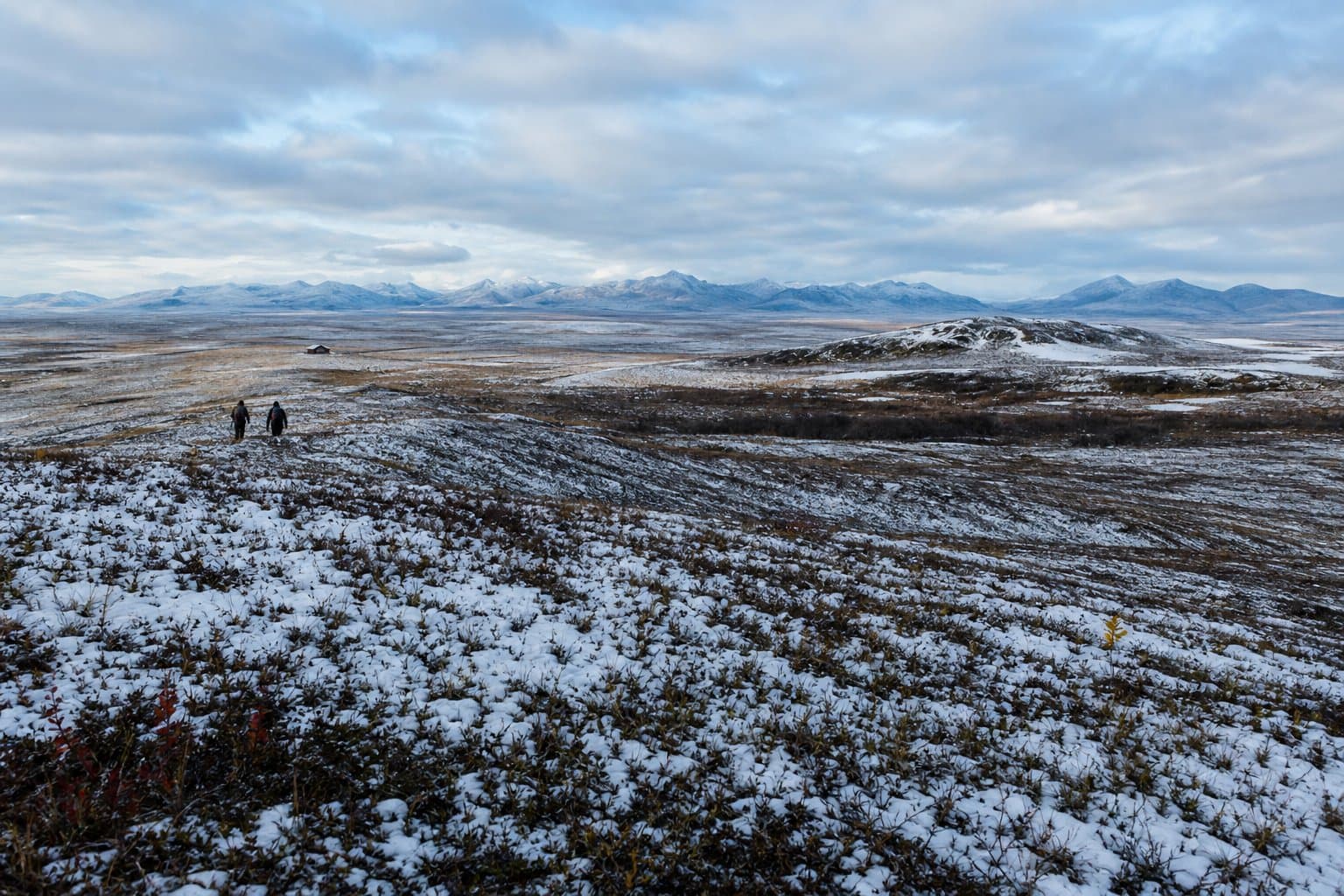
Snow covers just under a quarter of Alaska as September ends
Just under a quarter of Alaska's land had snow on the ground at the end of September, broadly similar to a year earlier, according to a U.S. National Ice Center snow and ice analysis reviewed by Rick Thoman, a climate specialist at the University of Alaska Fairbanks, in his Alaska and Arctic Climate Newsletter.
Even a thin layer of snow cools the air near the ground much faster than bare soil does, the newsletter says. Those lower temperatures speed up river and lake freeze-up. The snow itself also shapes how people in the North get around.
Snow was more widespread on the North Slope this year than at the end of September 2025. It was less extensive in the eastern Brooks Range. Across the border, the Yukon Territory and nearby parts of the Northwest Territories had less snow cover than last year. The Russian far northeast had more.
The newsletter defines the Arctic as land north of 60 degrees latitude. Across that region, snow hit its yearly low on Aug. 11, covering about 4% of land outside the Greenland Ice Sheet. By Sept. 30 it covered 28%, more than 20% below last year but only slightly below the 2004-2025 median.
The 4-kilometer Interactive Multisensor Snow and Ice Mapping System analysis records only whether snow is present, not its depth or how much water the snowpack holds. The Sept. 30 map doesn't necessarily show where the winter snowpack has been established. Snow at lower elevations is likely thin, the newsletter says. It expected some areas to flip back to bare ground in the following days, especially south of 70 degrees north.
The longer record shows the snow season shrinking mostly at the other end. The university's 2024 Alaska's Changing Environment 2.0 report found the season is about two weeks shorter than several decades ago, with the biggest shift in spring. The date when half the state is snow-free now comes 11 days earlier, while the autumn date when half is snow-covered is only three days later.
The buildup moves fast from here. Snow typically covers about 90% of Arctic lands by the end of October, the newsletter says. The National Ice Center posts daily snow and ice charts focused on Alaska.
Source: National Ice Center, National Ice Center: Here Comes the Snow.
Made by our human newsroom with AI. Reviewed by Cale Green. How humans and AI work here · Grow with our newsroom
Stay informed. Support what matters.
Free, permanent access to local news you can verify. Subscribe to support Alaska News and go ad-free.
Related Coverage
Fairbanks logs wettest September since 1925 as Chena River hits late-season record
Alaska News · 2h ago
Up to 6 inches of snow possible in Isabel Pass by Wednesday night
Alaska News · 1w ago
Arctic's warmest summer since 1950 included the rain that flooded the Susitna Valley
Alaska News · 2w ago
Much of the Beaufort Sea's ice melted out in August after a cold, late start
Alaska News · 1w ago
Up to 11 inches of snow expected on Richardson Highway through Isabel Pass
Alaska News · 6d ago
Comments
Sign in to leave a comment.
No comments yet. Be the first to share your thoughts.