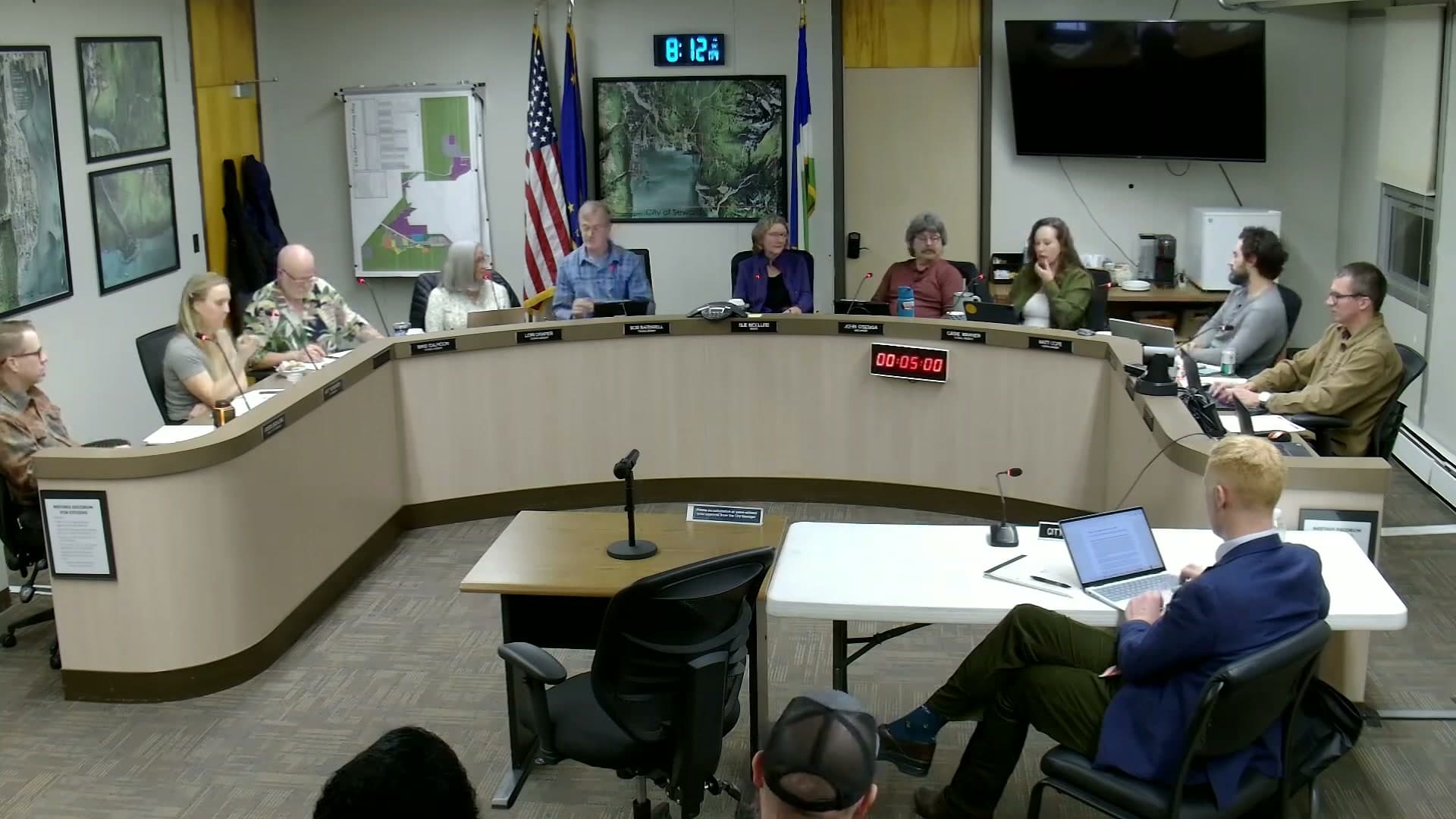
Frame from "Seward: City Council Meeting 11/9/2026" · Photo source
Seward plan for no city sales tax in winter, 6% in summer gets its first public hearing
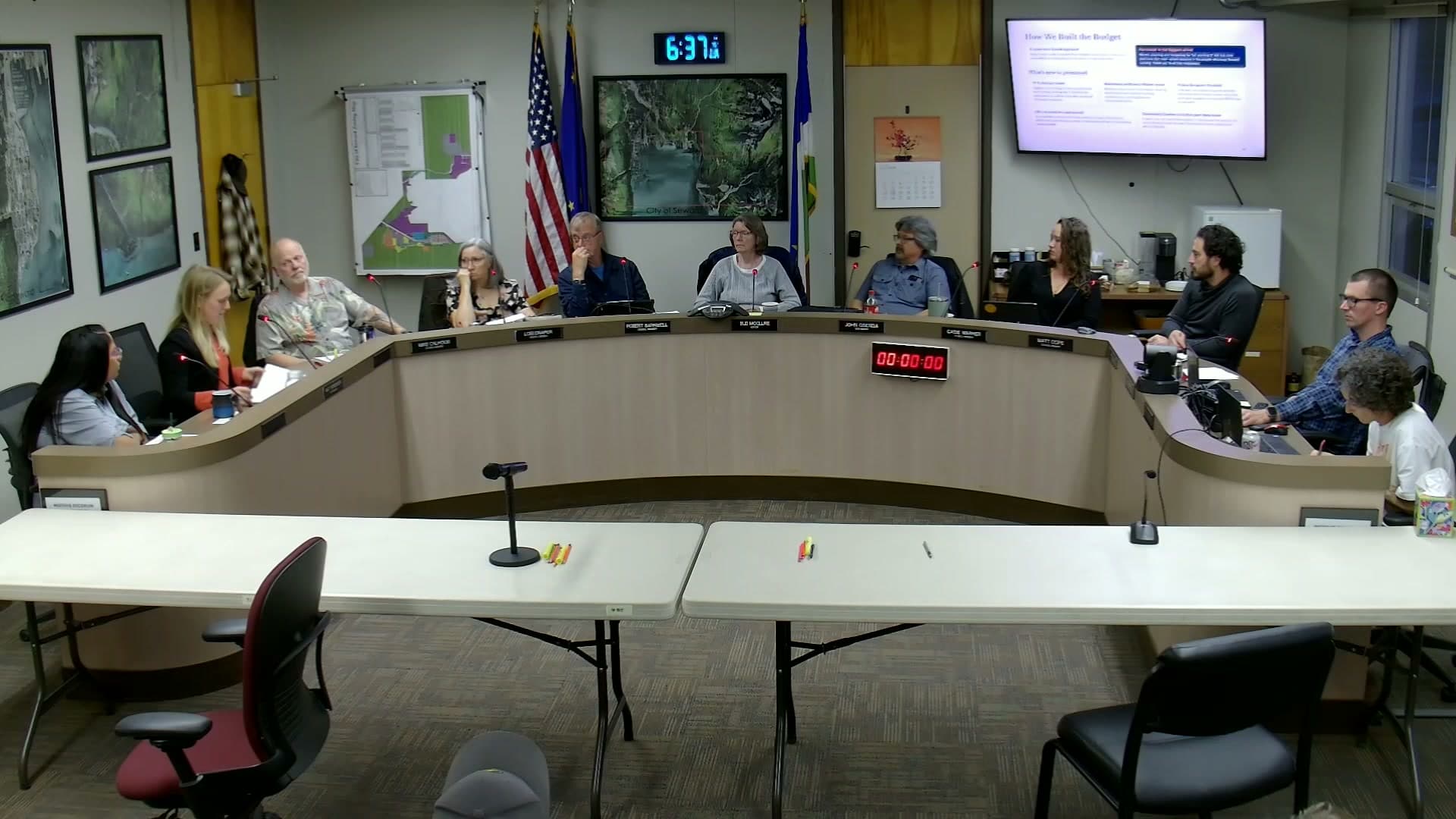
The Seward City Council held its first public hearing Monday on a proposed budget built around dropping the city's sales tax to zero from October through March and charging 6% from April through September, starting in 2028.
The city charges 4% all year now, and would through 2027, according to the agenda statement. The Kenai Peninsula Borough's 3% sales tax wouldn't change.
About 81% of the city's taxable sales already happen in those summer months, City Manager Kat Sorensen told the council, so the summer rate drives the revenue. The administration says the change shifts the tax burden from year-round residents to seasonal visitors. For residents, the city's seasonal rate would average about 3% over a year, she said.
Sorensen said the seasonal tax would bring in about $1.67 million more in 2028 than in 2027, and about $650,000 of that would cover property tax relief. The city's property tax rate would drop by 1 mill, from 3.64 to 2.64, and homes their owners live in would get a $75,000 exemption. A mill is $1 of tax for every $1,000 of assessed value, so the rate cut alone would save the owner of a home assessed at $400,000 about $400 a year in city property tax.
The rest, along with other cuts and adjustments, would pay for an extra $350,000 a year for the hospital's capital needs, a second police sergeant, an IT technician and a maintenance and street worker. It would also cover the community center and a $200,000-a-year pool contract the city took on after the borough said it would stop funding the pool.
The city would wait until 2028 because many visitors book their summer trips ahead, Sorensen said. A one-time transfer from the city's campgrounds and parking fund would cover the new costs in 2027.
Groceries would carry no sales tax at all from October through March, because the borough already exempts them except in June, July and August. Sorensen estimated a family of four spending $15,000 a year on groceries would save about $300 in winter and pay about $150 more in summer, for a net savings of about $150.
Six people testified. Tom Tougas, who said he served on a borough tourism tax task force that looked at a seasonal sales tax and dropped it, questioned whether the city needs more money. He said the city's annual financial report shows sales tax came in about $803,000 over budget in 2025, and that the city's cash and investments grew from $60 million to $70 million over three years. "I really think we need to ask ourselves, do we need to increase taxes?" he said.
Rhonda Hubbard asked the council to exempt groceries from September through May, matching the borough, and to drop sales tax on heating oil and utilities for homes. Two others spoke for a part-time job connecting Seward High School students with local businesses, and one asked the city for $25,000 toward it.
Council members questioned the property tax cut at a work session last month, and Sorensen floated cutting electric rates instead by ending a roughly $678,000 fee the electric utility pays the city's general fund. The budget before the council Monday keeps the property tax cut.
Council member Robert Barnwell asked Monday about cutting electric rates instead, and said the property tax cut benefits owners and he doesn't know whether it trickles down to renters. A city official suggested waiting for an electric rate study that's nearly done.
Council member Casie Warner suggested another break: "I would like to see perhaps a $75,000 property tax exemption for anyone interested in converting short-term rentals into long-term," she said.
Council member Lori Draper said the homeowner exemption, which matches the borough's, doesn't have to stop at $75,000. New council member Matthew Cope said the city could do a better job explaining the need for the change, though for him, the need is "pretty close to being there."
The council took no vote Monday. Separate ordinances to change the sales tax and add the exemption will be introduced at the next meeting, Sorensen said. The council plans two more hearings, Nov. 23 and Dec. 14, with a final vote Dec. 14.
What did you make of this story? (no account needed)
Made by our human newsroom with AI. Reviewed by Cale Green. How humans and AI work here · Grow with our newsroom · Transcript byLucas Brown
Get Alaska News in your inbox
Create your free account and get the day’s top stories around 6 each morning, in a few minutes’ read.
Top stories, around 6 each morning.
Stories on what you follow, on Sundays.
This article is based on a public meeting of City of Seward — Seward: City Council Meeting 11/9/2026 ().
Watch key moments from the source meeting. Click to expand.











Comments
Sign in to leave a comment.
No comments yet. Be the first to share your thoughts.