Senate panel advances fishing co-op bill with electronic monitoring
The Alaska Senate Resources Committee unanimously advanced a bill Monday that would legalize set gillnet fishing cooperatives statewide and give the state new authority to require electronic monitoring on trawl vessels.
The committee adopted two amendments to House Bill 117 before passing it out of committee. The first gives the Alaska Department of Fish and Game commissioner authority to establish an electronic monitoring program for vessels participating in state commercial trawl fisheries. The second caps cooperative size at five permits until the Board of Fisheries establishes area-specific limits.
The electronic monitoring provision applies only to vessels already equipped with monitoring systems for federal fisheries in the Bering Sea, Aleutian Islands, or Gulf of Alaska. The amendment would not require vessel owners to purchase or install new equipment. It takes effect January 1, 2027.
Senator Wielechowski introduced the electronic monitoring amendment. He said it gives the Fish and Game commissioner the ability to establish and manage an electronic monitoring program for vessels participating in a state commercial trawl fishery.
Fish and Game Commissioner Doug Vincent-Lang told the committee the amendment addresses concerns that earlier electronic monitoring proposals were too broad. The narrower scope limits the program to the Prince William Sound pelagic trawl pollock fishery and the Aleutian Islands Subdistrict bottom trawl Pacific cod fishery.
Wielechowski noted the department informed the committee there would be a zero fiscal note associated with the amendment.
Representative Louise Stutes, the bill's sponsor, supported both amendments. She said the electronic monitoring provision is carefully tailored to trawl fisheries and does not open the door to monitoring in other fisheries.
"I certainly support this amendment. I think it's a great amendment. I think the fact that it is specifically tailored so that the electronic monitoring can only be required when you're engaged in trawl fishing in state waters, I think that's important," Stutes said.
The second amendment addresses concerns raised by Bristol Bay fishermen about large cooperatives. It caps cooperative size at five permits until the Board of Fisheries establishes maximum sizes for each administrative area through its regular three-year cycle of local meetings.
Wielechowski said the amendment addresses concerns by capping the number of people that may fish as one cooperative at five permits until the regulation package is passed in that administrative area.
Each area, including Bristol Bay, will have a locally held Board of Fisheries meeting on cycle so that fishermen can weigh in on the size of cooperatives appropriate for their fishery.
"I'm fully supportive of this amendment and I'm delighted with it because I know that specifically there were some areas concerned about large groups. And as was stated, those numbers will be set by the Board of Fish. But until then, we can protect those areas by having a cap of five permits per unit," Stutes said. "I think it's real protective as well."
Vincent-Lang said the five-permit cap is reasonable. He noted the department is aware of at least a couple of cooperatives already operating in Bristol Bay, though they are currently illegal under state law.
The underlying bill makes set gillnet entry permit cooperatives legal statewide, with local control through the Board of Fisheries. The board retains authority to establish total bycatch limits in state fisheries and can use electronic monitoring as a data collection and enforcement tool.
Stutes told the committee she spoke with testifiers who raised concerns during a previous hearing and cleared up confusion about the bill. The committee passed the amended bill with no objection.
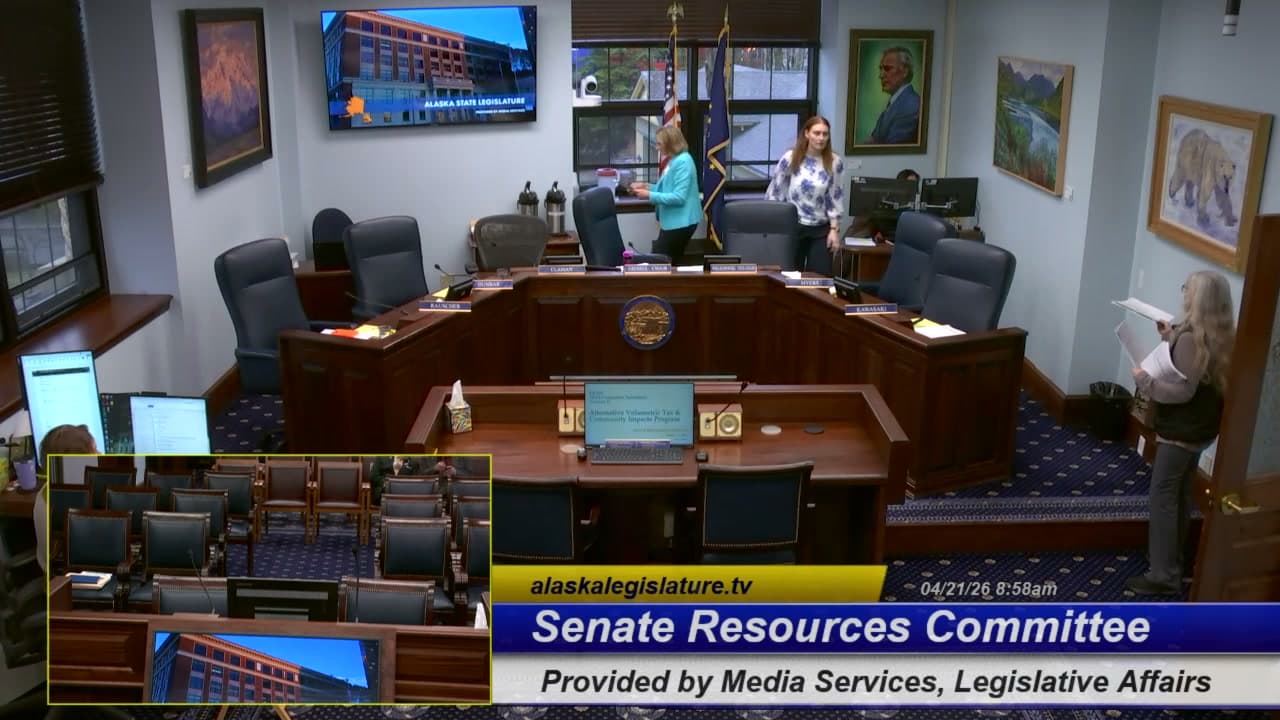
This article is based on a public meeting — Alaska Legislature: Senate Resources, 4/21/26, 9am ().
AI-assisted. How we use AI Transcript byLucas Brown
Stay informed. Support what matters.
Free, permanent access to local news you can verify. Subscribe to support Alaska News and go ad-free.
Related Coverage
Senate panel advances fishing cooperative bill with electronic monitoring
Alaska News · 5mo ago
Senate panel hears setnet cooperative bill, sets aside land transfer
Alaska News · 5mo ago
Sullivan's bycatch bill advances from Senate committee
Alaska News · 1w ago
House panel advances seafood industry data-sharing bill
Alaska News · 5mo ago
Sullivan's bycatch bill reaches its first Senate committee test
Alaska News · 1w ago
Comments
Sign in to leave a comment.
No comments yet. Be the first to share your thoughts.