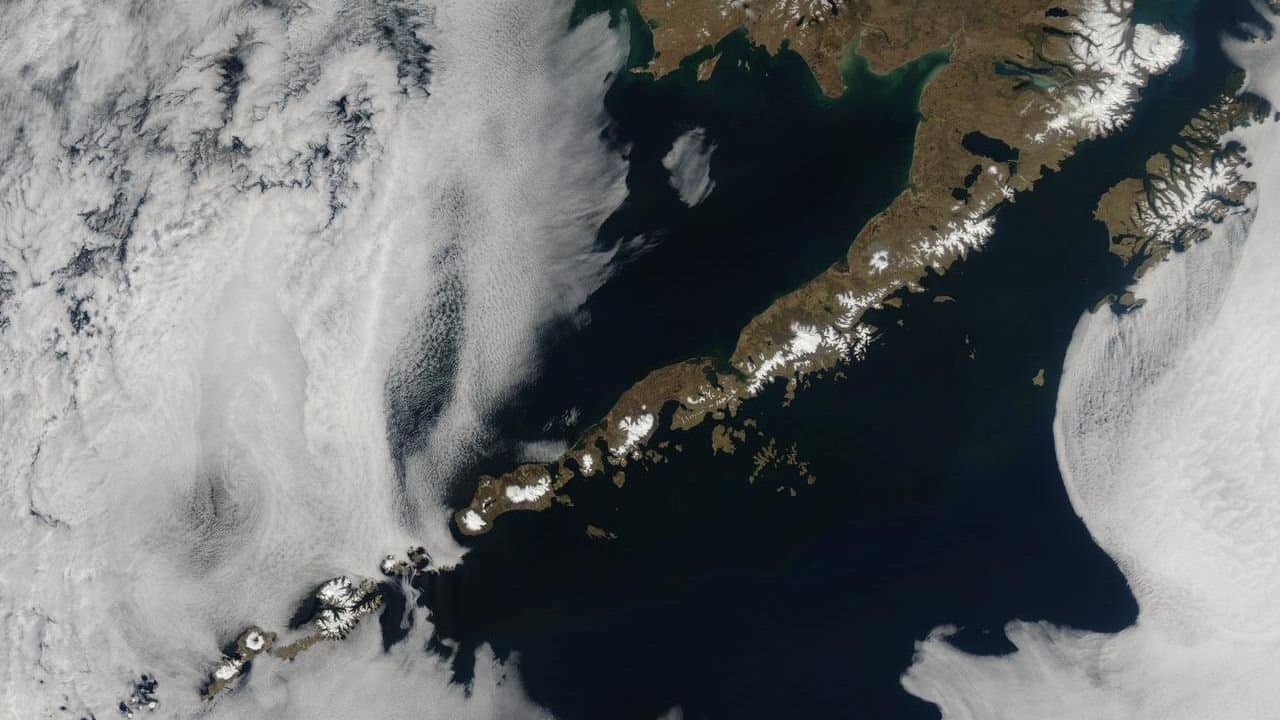
Photo: NASA · Photo source · US government work
Scientists recommend a 2.5% lower 2027 catch ceiling for Bering Sea, Aleutian northern rockfish
Federal scientists are recommending that the 2027 acceptable biological catch for Bering Sea and Aleutian Islands northern rockfish fall to 17,784 metric tons, 2.5% below the 2026 level of 18,232 metric tons, according to the Assessment of the Northern Rockfish Stock in the Bering Sea and Aleutian Islands.
The acceptable biological catch works as a ceiling: the total allowable catch, the amount fishermen may take, cannot be set above it, the council's Scientific and Statistical Committee notes in its October report.
This year's total allowable catch is well below that ceiling. Federal managers raised it by 1,800 metric tons to 12,000 metric tons in September, drawing on reserves. The committee reported 8,389 metric tons caught by Sept. 8, and the assessment projects a total 2026 catch of 7,905 metric tons.
The authors wrote that the stock is not overfished and was not subject to overfishing in 2025. A 2024 Aleutian Islands survey estimated 429,000 metric tons of northern rockfish. The authors recommend a 2027 overfishing level of 21,739 metric tons and project female spawning biomass at 119,465 metric tons.
The chapter is an update. A 2025 assessment was not conducted because of a federal government shutdown.
The North Pacific Fishery Management Council's Scientific and Statistical Committee concurred Oct. 6 with the authors' recommendations for northern rockfish and six other stocks, with no reduction from the maximum the assessments allowed.
Later in October, the council approved proposed 2027 and 2028 specifications that roll over the 2026 numbers. It is set to adopt final limits in December, and the final federal rule is expected in March 2027.
Public comment on the council's final 2026 groundfish assessment chapters opens Dec. 31 on the council's eAgenda.
Source: North Pacific Fishery Management Council.
Made by our human newsroom with AI. How humans and AI work here · Grow with our newsroom
Stay informed. Support what matters.
Free, permanent access to local news you can verify. Subscribe to support Maggie AlaskaNews and go ad-free.
Related Coverage
New models could cut Alaska's 2026 sablefish catch advice by nearly a third
Alaska News · 2w ago
Advisory panel asks scientists to test four more sablefish models before December
Alaska News · 2w ago
Federal managers raise Bering Sea perch, rockfish and flatfish catch limits
Alaska News · 3w ago
The panels that shape Alaska's pollock and cod catch limits meet next month
Alaska News · 2mo ago
Aleutian groundfish boats barred from selling 'other rockfish' for the rest of 2026
Alaska News · 4w ago
Comments
Sign in to leave a comment.
No comments yet. Be the first to share your thoughts.