AI image
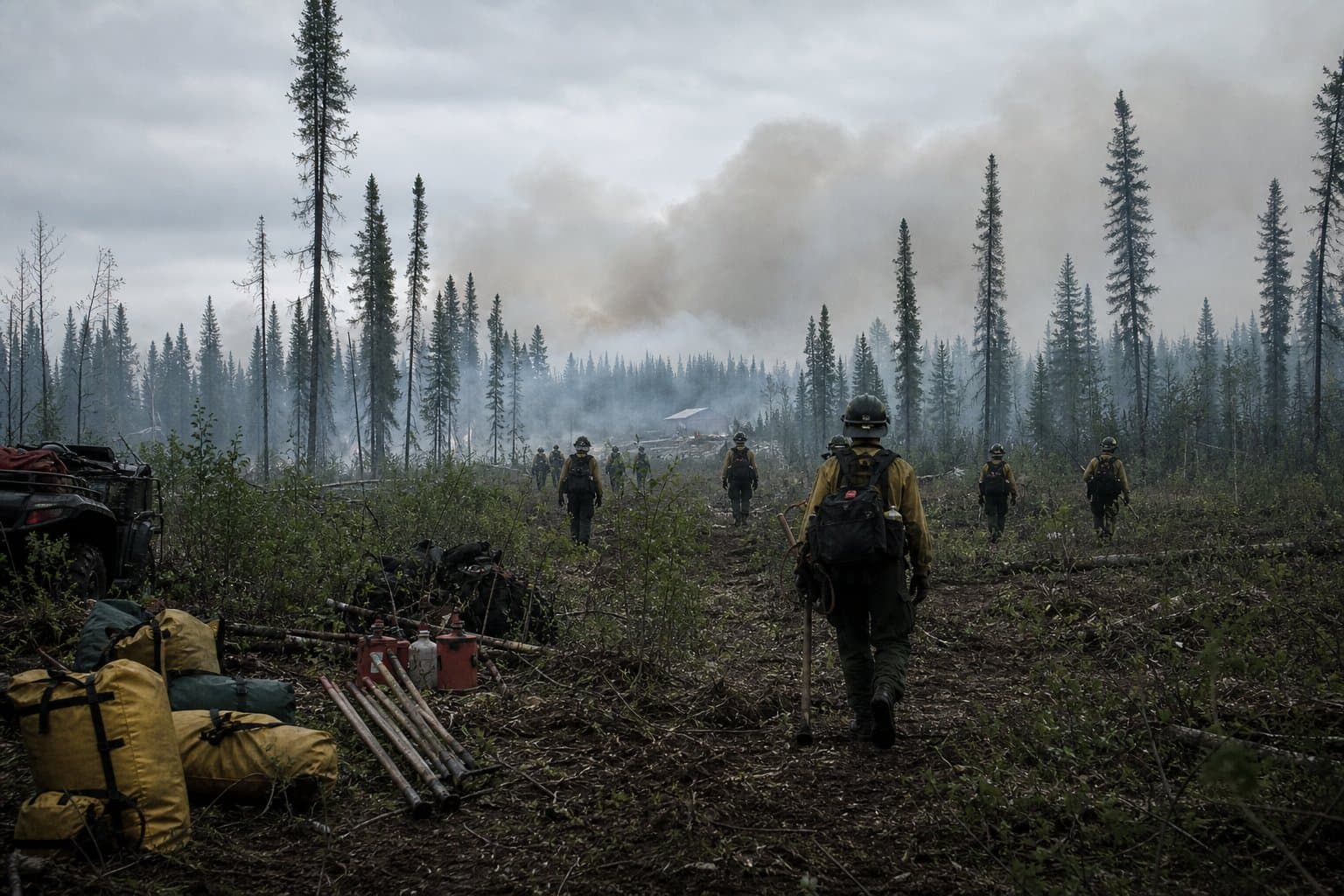
Smokejumpers and the Chena Hotshots are protecting Native allotments from the Canyon Fire
The Canyon Fire #174, burning 20 miles west of Rampart on the north side of the Yukon River, would normally be left alone. It's in a "Limited Management" zone, the lowest tier of Alaska's fire-response system, where natural fires are allowed to play their ecological role — burning through old growth, recycling nutrients, resetting the boreal forest cycle. Most of the fire's 340 acres are still burning under that policy.
But two Native allotments — small parcels of private Alaska Native land owned by individuals, scattered across remote Interior Alaska as a legacy of the federal Native Allotment Act and its successors — sit in the fire's neighborhood. One is about 1.5 miles southwest of the fire's edge. The other is about 3 miles northeast. Native allotments carry full federal fire protection status regardless of how the surrounding land is managed. That's enough to override the Limited designation at specific sites.
So Monday night, fire managers made the call. Eight U.S. Wildland Fire Service smokejumpers landed at the fire to prepare for the incoming crew. The Chena Hotshots are driving to Manley Hot Springs and helicoptering 31 miles north to join them. None of the crews will directly engage the main fire. Their mandate is "point protection" — keeping the fire away from the allotments while the rest of it continues to burn the way Alaska's fire policy intends.
The fire was ignited by a lightning strike on June 11 and has been backing down a ridge through decadent black and white spruce, burning in mosaic patterns characteristic of a healthy boreal fire regime. The Yukon River corridor below — heavily used by boaters and aviators — is seeing visible smoke; reduced visibility is expected.
The structural feature of Alaska fire management on display: the state uses four fire-response tiers (Critical, Full, Modified, and Limited) to triage where suppression resources go, and that triage works most of the time. But individual Native allotments, federally protected, override the tier system at their specific locations. Across Alaska's vast roadless interior, dozens of fires each year run into the same calculation — most of the burn is allowed; specific points get defended.
U.S. Wildland Fire Service Public Affairs Specialist Beth Ipsen can be reached at (907) 356-5510 or [email protected].
Source: U.S. Wildland Fire Service, U.S. Wildland Fire Service: U.S. Wildland Fire Service Smokejumpers, Hotshots Mobilize to Protect Native Allotments from Fire 20 Miles West of Rampart – Alaska Wildland Fire Information ().
Drafted with AI. Edited by Cale Green (1 revision). No full editor review is on record. Who is accountable.
Stay informed. Support what matters.
Free, permanent access to local news you can verify. Subscribe to support Maggie AlaskaNews and go ad-free.
Related Coverage
Rain gives Canyon Fire crews window to protect Native allotments
Alaska News · 2mo ago
Defending Yukon Fish Camps From Fire
Alaska News · 2mo ago
Crews deploy to protect Native allotment near Tatlanika Fire
Alaska News · 1mo ago
Smokejumpers stop half-acre fire across Yukon River from Circle
Alaska News · 3mo ago
Rain offers Interior Alaska's fire crews a needed break
Alaska News · 2mo ago
Comments
Sign in to leave a comment.
No comments yet. Be the first to share your thoughts.