AI image
Alaska Moves to Keep One of the World's Last Fire Outposts
In a roadless stretch of Southwest Alaska the size of a small country, a single air-only outpost stands between summer lightning and the villages scattered along the rivers. The state wants to keep it there.
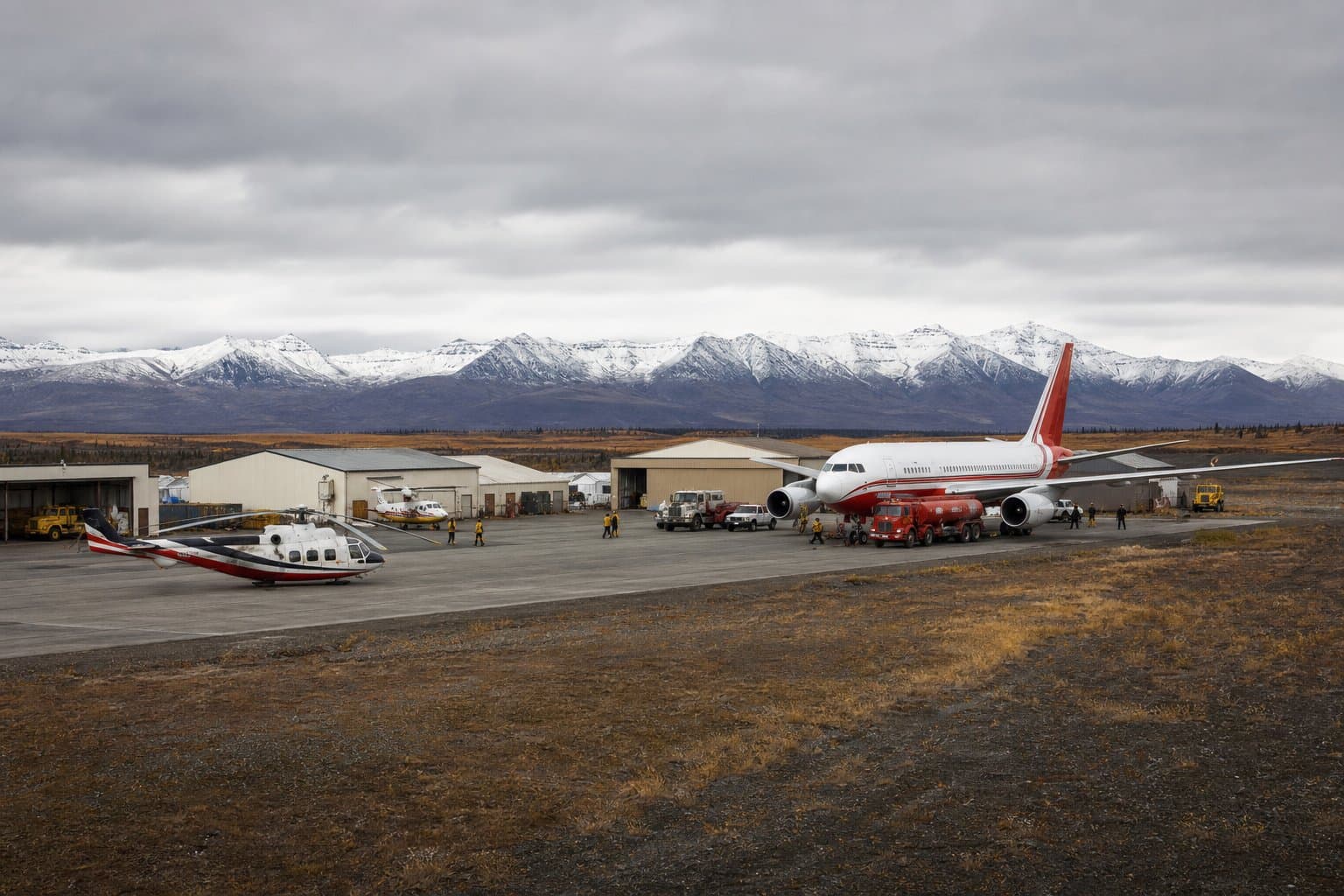
The Alaska Division of Forestry and Fire Protection is seeking a five-year extension on its lease for the McGrath Fire Base, the forward outpost from which it runs aviation-based firefighting across the region. Because there's no road in or out, McGrath fights fire the only way it can — by air, launching helicopters and air tankers straight to the smoke. Forestry's own description of the base is striking: one of the last forward-operating wildland firefighting bases in the world.
The ground it covers is enormous. From McGrath, crews protect roughly 66.6 million acres of Southwest Alaska — terrain running from mountainous uplands to lowland flats, dotted with river villages, reachable only by air. When fire season hits, the base's job is to catch new starts fast and keep them away from communities like Red Devil and Nikolai. It does that on a lean operation: ten permanent seasonal positions were cut in 2015 to save money, leaving a crew built largely from temporary emergency firefighters who, as the base's longtime manager once put it, "make it work."
That history is exactly why the lease matters more than routine property paperwork. Funding and staffing at McGrath have been fought over before — after the 2015 cuts, a local resident pressed legislators to restore the base's capacity, arguing the region remained dangerously exposed to fire. Locking in the base's footprint for another five years keeps the outpost, and the air attack it launches, in place for the communities that have no other line of defense.
Source: Alaska DOT&PF proposes extension of state airport land lease ADA-05736 at McGrath Airport ().
Drafted with AI. Edited by Cale Green (1 revision). No full editor review is on record. Who is accountable.
Stay informed. Support what matters.
Free, permanent access to local news you can verify. Subscribe to support Maggie AlaskaNews and go ad-free.
Related Coverage
For a roadless village, an airport lease is really about the lifeline
Alaska News · 2mo ago
A Fort Yukon tribal crew that fights fire across the country just locked in funding through 2031
Alaska News · 1mo ago
A tiny Alaska post office runs out of a cabin, and the state wants to keep it
Alaska News · 2mo ago
A village-based fire crew from Nulato gets federal funding through 2031
Alaska News · 1mo ago
Smokejumpers and the Chena Hotshots are protecting Native allotments from the Canyon Fire
Alaska News · 3mo ago
Comments
Sign in to leave a comment.
No comments yet. Be the first to share your thoughts.