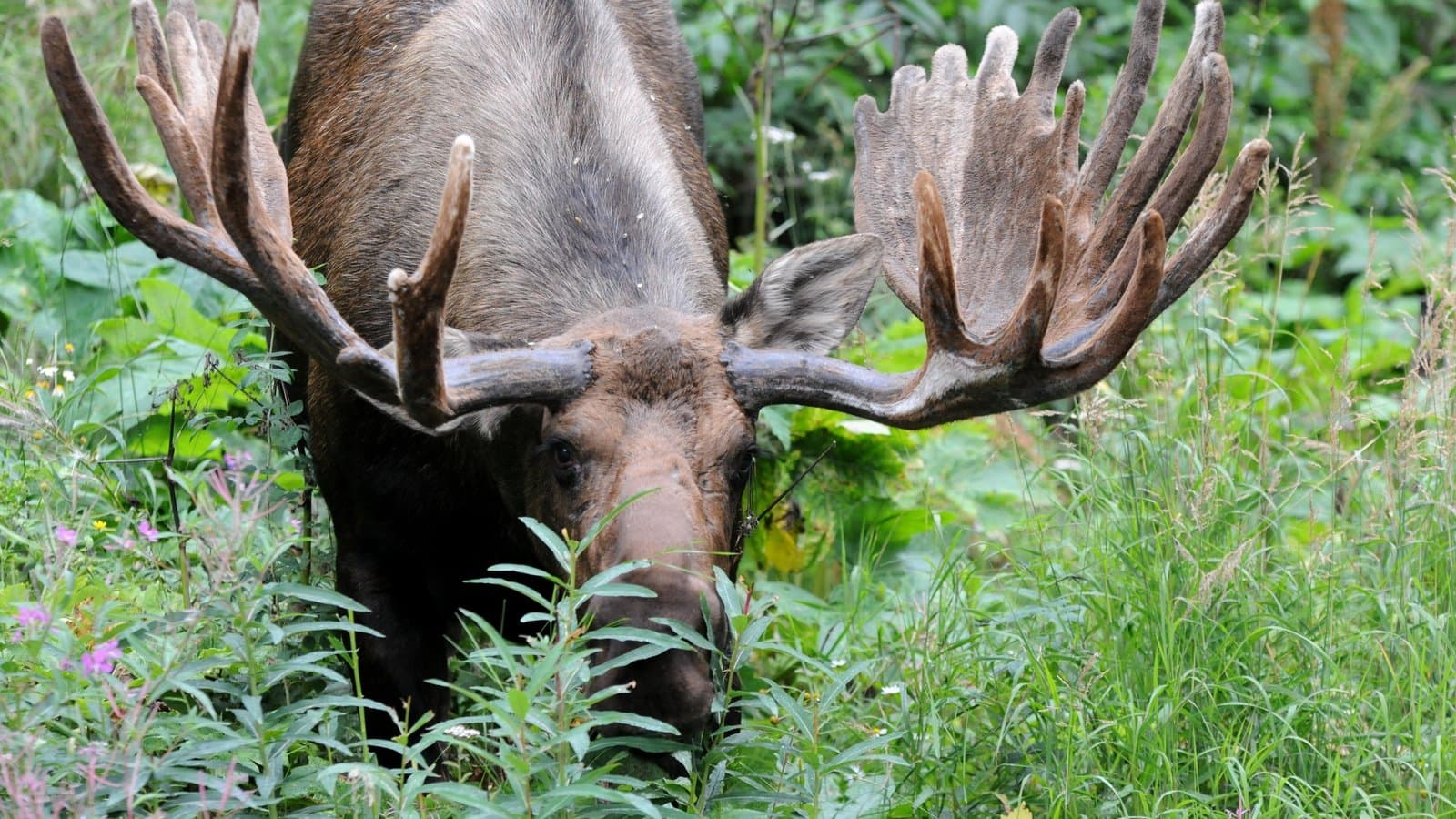
Photo: Staff Sgt. Jeffrey Smith via DVIDS · Photo source · US government work
Proposal would let hunters cut skull plates on the biggest moose racks in the field
Lex Patten wants the Alaska Board of Game to let moose hunters cut the skull plate and antlers of the biggest bulls, with racks 55 inches across or more, while still in the field. That's more than 4½ feet of antler.
Large racks are "very difficult to transport particularly in small planes where they often become dangerous external loads by necessity," he wrote in Proposal 121. The board takes it up at its meeting in Fairbanks in March.
The rule he wants to change helps show a moose was legal to shoot. In hunts with a 50-inch antler restriction, a bull is legal if its antlers are at least 50 inches wide or carry enough brow tines, the points that grow from the first branch of the antler and typically project forward. Depending on the area, a bull needs three or four on one side.
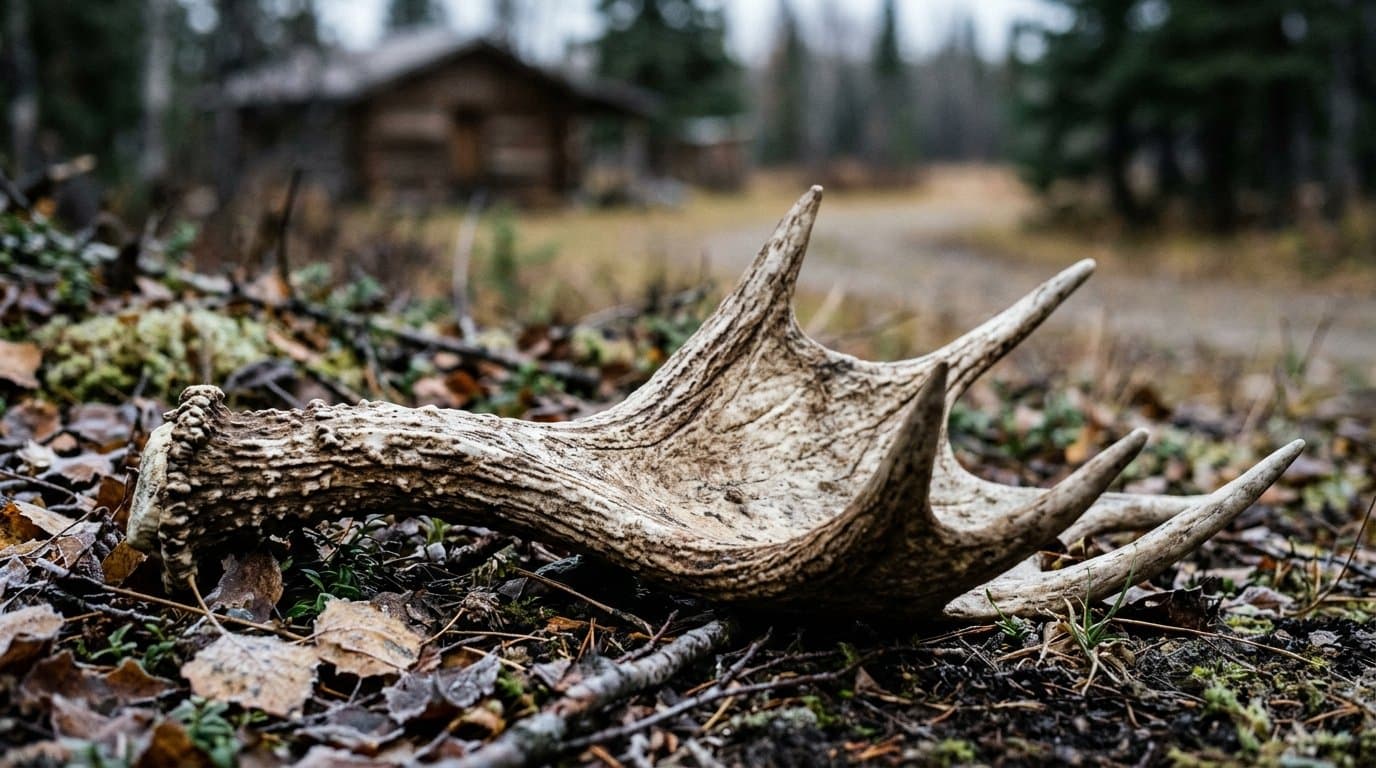
If a bull doesn't have enough brow tines, hunters must bring the antlers out still attached to an unbroken, uncut skull plate, according to the state's hunting regulations. Antlers can't be altered at all until all salvage requirements are met. The regulation sits under the state's rules on evidence of a hunted animal's sex and identity.
That means a bull that's legal by width alone, but short on brow tines, has to come out of the field with its antlers still attached to an uncut skull plate.
Patten argues a bull that's clearly legal by its width shouldn't be held to those rules. The regulations themselves say that if the antlers are 50 inches or wider, "it doesn't matter how many brow tines are present, the moose is legal." The brow tine count is meant to help hunters who are unsure about the spread, they say. On a bull of 55 inches or more, Patten wrote, putting the cut skull and antlers back together in the field should be enough to show it was legal. His cutoff sits 5 inches above the legal line.
He also cited cost, since bulky racks drive up what hunters pay to fly their game out. And he said taxidermists can now rebuild a cut skull and antlers to their natural state.
Patten wrote the proposal for Unit 19C, which includes the Farewell area, and the Interior-Arctic region, but added that "it may well need to be considered state wide." In Unit 19 and several other Interior and Arctic units, hunters who take a moose before Oct. 1 also have to keep the quarters and ribs on the bone until the meat leaves the field.
He wrote that he developed the idea in discussions with a former Fish and Wildlife employee and a former Board of Game member, through Michael Litzen of Litzen Guide Service.
The proposal is one of several on Unit 19C moose before the board, including nine on the Farewell hunt. The board meets March 19-26, 2027, and written comments are due March 5.
What did you make of this story? (no account needed)
Made by our human newsroom with AI. Reviewed by Cale Green. How humans and AI work here · Grow with our newsroom ·
Keep Alaska News free for everyone.
No paywall, ever. Members pay so everyone can read the meetings and records Alaska News covers.
Get Alaska News in your inbox
Create your free account and get the day’s top stories around 6 each morning, in a few minutes’ read.
Top stories, around 6 each morning.
Stories on what you follow, on Sundays.
Source: Alaska Board of Game.





Comments
Sign in to leave a comment.
No comments yet. Be the first to share your thoughts.