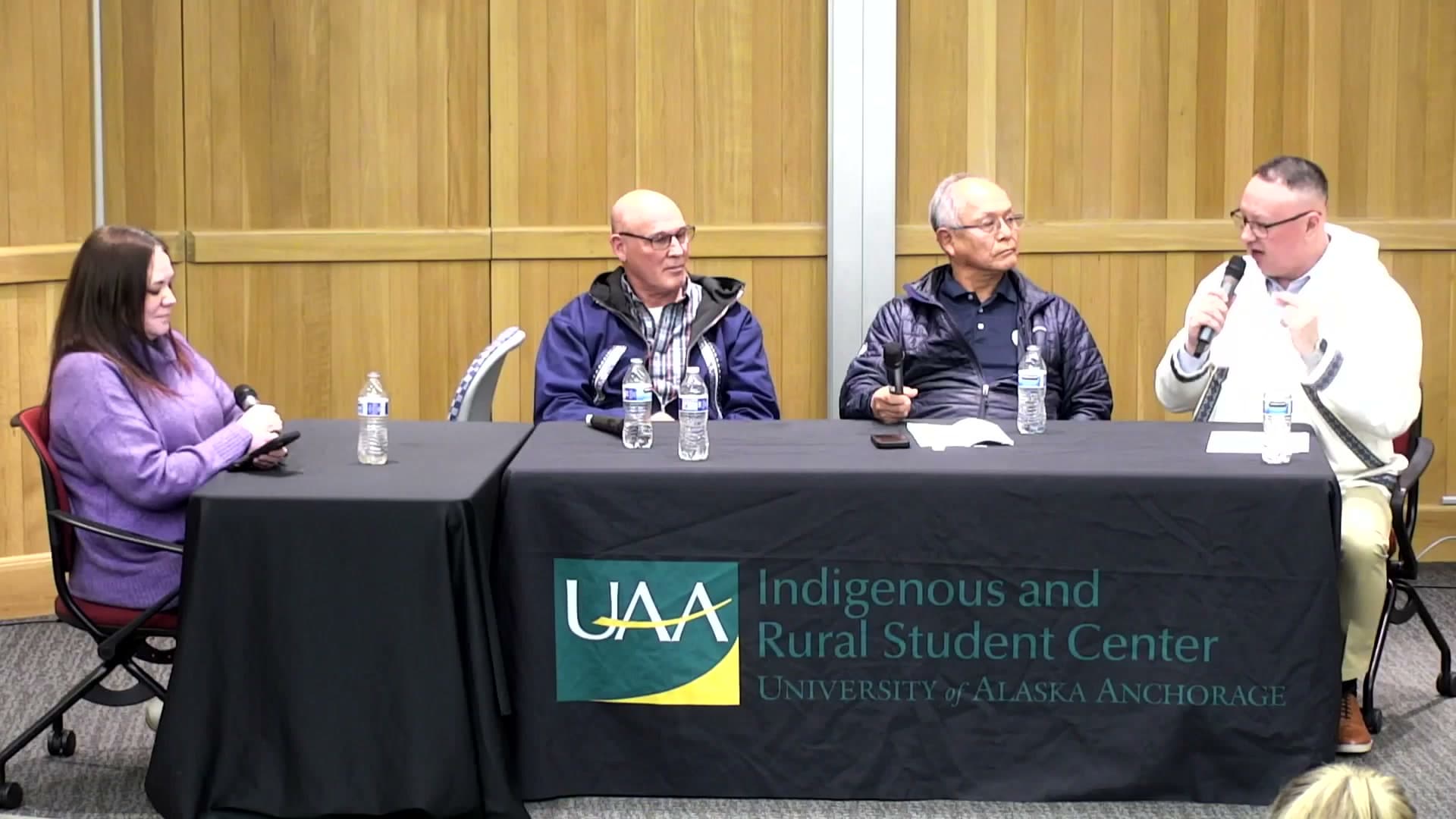
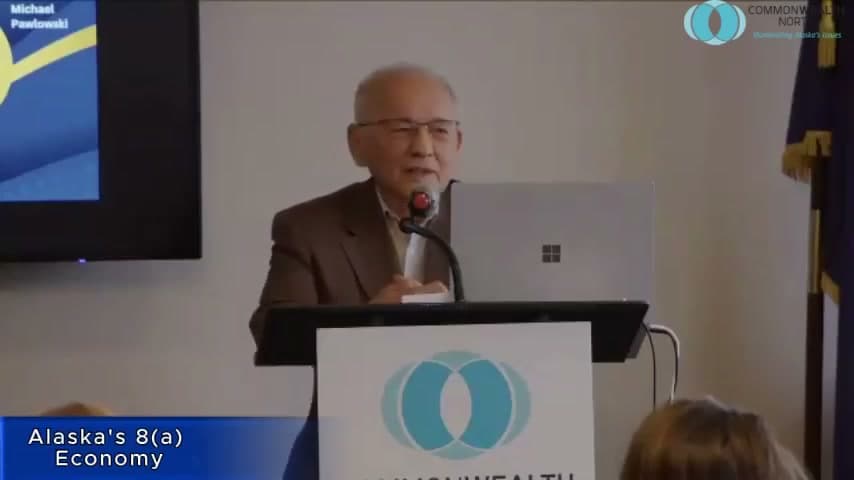
Frame from "ANCSA Lecture Panel Series: 7(i) Revenue Sharing: History, Impact & the Future" · Photo source
Panelists warn two-thirds of Alaska village corporations face a Red Dog revenue cliff
Panelists at an Alaska Native Claims Settlement Act forum at the University of Alaska Anchorage said Tuesday that about two-thirds of Alaska's 177 village corporations depend on shared resource revenue. Haven Harris, senior vice president of growth and strategy at Bering Straits Native Corporation, said the biggest source of that money, the Red Dog Mine, will probably make its final payment through NANA in 2032.
"We're about to hit the 7J cliff," Harris said.
Under the act's sections 7(i) and 7(j), regional corporations share 70 percent of their resource revenue among themselves and pass at least half of what each receives to the village corporations in their region and to at-large shareholders.
Moderator Hallie Bissett, a former CIRI board member, said about two-thirds of village corporations are "100% dependent" on that money. She said Red Dog payments alone make up 50% to 90% of what the other corporations receive. The Alaska Industrial Development and Export Authority counts $2.02 billion in 7(i) payments from the mine through fiscal year 2024.
The state's Red Dog reclamation plan also assumes mining through 2032. The mine is down to one pit, and Teck said in October it expects zinc output to fall by nearly half by 2028. NANA, the mine's owner, said in January 2025 that the deposits Teck is exploring to extend the mine lie on state land. It did not say whether they would produce shared revenue.
Harris said he has not heard of anything extending the payments. His message to village boards without a business already built: "I hope you are starting to save money."
Andrew Guy, president and CEO of Calista Corporation, said about 30 village corporations in his region rely on 7(j) money "to be profitable. Or even break even." Harris called Calista's Donlin gold project, a potential next Red Dog, the only near-term replacement. Guy said the lease began in 1995 and that he hopes partners decide to build it in the next few years.
Harris pointed to the NANA and Ahtna regions, which have absorbed almost all of their villages. Guy said mergers would be the best way to address what's coming. But he said approving one takes a lot of shareholders, and Congress and the state would need to change those thresholds. Richard Glenn, a former Arctic Slope Regional Corporation vice president, said many of the corporations' businesses started as partnerships and joint ventures.
Harris said regional corporations cannot tell village corporations what to do. He said he hopes Alaska's congressional delegation will work with them on "what that forward process looks like."
What did you make of this story? (no account needed)
Made by our human newsroom with AI. How humans and AI work here · Grow with our newsroom · Transcript byWalter AlaskaNews
Get Alaska News in your inbox
Create your free account and get the day’s top stories around 6 each morning, in a few minutes’ read.
Top stories, around 6 each morning.
Stories on what you follow, on Sundays.
This article is based on a public meeting — ANCSA Lecture Panel Series: 7(i) Revenue Sharing: History, Impact & the Future ().
Watch key moments from the source meeting. Click to expand.











Comments
Sign in to leave a comment.
No comments yet. Be the first to share your thoughts.