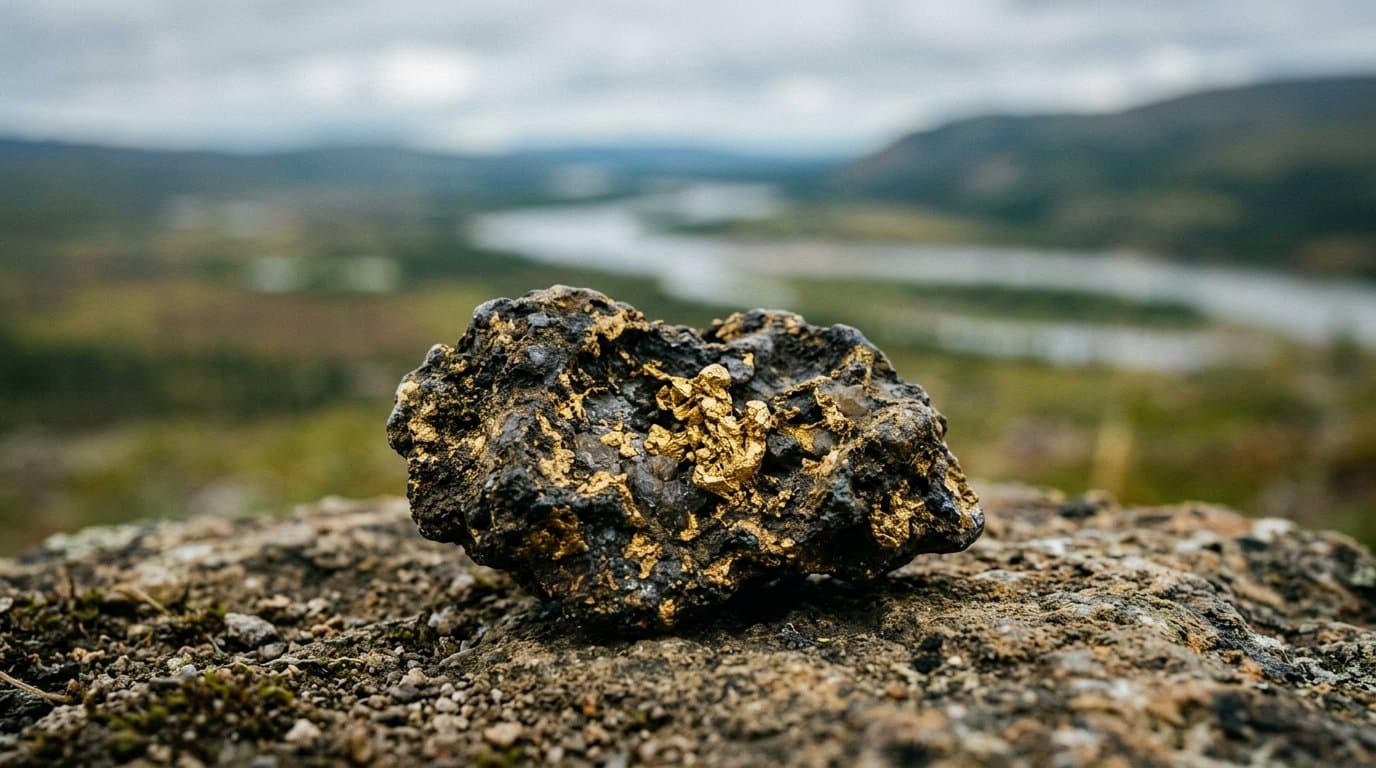
AI image
NovaGold moves to consolidate the Donlin gold project, a potential next Red Dog for Alaska Native corporations
NovaGold Resources has agreed to consolidate ownership of Donlin Gold, one of the largest undeveloped gold deposits in the country and a project with enormous stakes for Alaska Native corporations. Under agreements signed July 21, NovaGold would acquire the 40 percent of the project it doesn't already own from its partner, the investment firm Paulson, in exchange for stock — putting the entire project under a single corporate parent. The deal has not closed; NovaGold expects it to by the end of the year, pending shareholder, court and regulatory approval.
Donlin is a proposed open-pit gold mine in the Yukon-Kuskokwim region of Southwest Alaska, and much of it sits on Alaska Native corporation land. Calista Corporation owns the mineral estate and some of the surface, and The Kuskokwim Corporation owns most of the surface over the project lands; Donlin also holds hundreds of state mining claims around the core deposit. Because the deposit lies largely on Native-owned land, building the mine could deliver royalties and payments to those corporations and their shareholders on a scale few Alaska projects ever have.
Under ANCSA's resource-sharing provisions, much of the qualifying resource revenue Calista receives would flow into a statewide system that divides it among Alaska's other regional Native corporations — Calista has said 70 percent of the natural-resource revenue it receives from the project would be shared that way. That reach is why Donlin draws comparisons to Red Dog, the Northwest Alaska zinc mine that has been one of the most consequential resource projects in ANCSA history and a dominant source of that statewide sharing; a 2025 state report says its operator, NANA, has shared about $1.8 billion with other Native corporations from it. With Red Dog approaching the end of its current mine plan, corporations have been looking at what could replace that revenue.
The consolidation builds on a 2025 deal. NovaGold and Paulson agreed in April 2025 to buy mining giant Barrick's 50 percent stake in Donlin for $1 billion, closing that June — NovaGold paying $200 million to raise its economic interest from 50 to 60 percent, Paulson paying $800 million for 40 percent. Despite that 60-40 split, the two owners have held equal say over the project, which makes consolidating it under one owner more consequential than the numbers suggest. Rather than a cash buyout, the new deal has Paulson trading its direct project stake for shares in the successor company: it would end up owning roughly 40 percent of the company that owns all of Donlin, though its voting power would be capped at just under 20 percent, and John Paulson would become co-chair alongside Thomas Kaplan.
As part of the deal, NovaGold would move its corporate home from British Columbia to Delaware — a common step for large companies, given the state's well-established corporate law and courts — and the successor company is set to list on the New York Stock Exchange, where NovaGold already trades. Shareholders would trade their shares one-for-one into the new entity, which NovaGold's July announcement valued at about $4.2 billion.
NovaGold's own estimates put the cost of building the mine at roughly $9.2 billion, with billions more in sustaining capital over its life, and a new feasibility study meant to firm up that figure isn't expected until 2027. NovaGold says consolidating ownership is meant to simplify financing and broaden the company's access to capital, including from private investors and what it calls "official-sector" sources such as government agencies and sovereign wealth funds. Financing a mine that size remains the central question hanging over the project.
Regional opinion is deeply divided. Calista supports Donlin as responsible development that it says can coexist with subsistence, pointing to jobs, distributions and the region's direct economic stake as owner of the mineral estate. But multiple Yukon-Kuskokwim Delta tribes oppose the mine, citing threats to water, fish, wildlife, culture and health, and in 2019 delegates at the Association of Village Council Presidents convention voted to reverse the organization's earlier support and adopt a resolution against it. Tribal litigation has already reshaped the project's federal review: after plaintiffs successfully challenged how the original environmental study analyzed a potential tailings-dam failure, federal agencies are now conducting a narrower supplemental review focused on a larger tailings-spill scenario and its effects on subsistence, before deciding whether to reaffirm, modify or rescind the affected approvals — which remain in effect in the meantime. The project has also won in court: the Alaska Supreme Court upheld key state permits in November 2025, with a water-quality certification appeal still pending.
Source: Donlin's owner is buying out its partner and reincorporating in Delaware, leaving one company across from Calista and TKC.
Made by our human newsroom with AI. How humans and AI work here · Grow with our newsroom
Stay informed. Support what matters.
Free, permanent access to local news you can verify. Subscribe to support Walter AlaskaNews and go ad-free.
Related Coverage
Donlin Gold targets 2027 investment decision on $10B Alaska mine
Alaska News · 4mo ago
The fight to keep Red Dog alive past 2031
Alaska News · 2mo ago
Ambler advances, but the U.S. stake in its developer hasn't closed
Alaska News · 2mo ago
The federal stake in Trilogy Metals closes, terms made public
Alaska News · 3w ago
Washington bought into Ambler. The payoff depends on the road being built
Alaska News · 1mo ago
Comments
Sign in to leave a comment.
No comments yet. Be the first to share your thoughts.