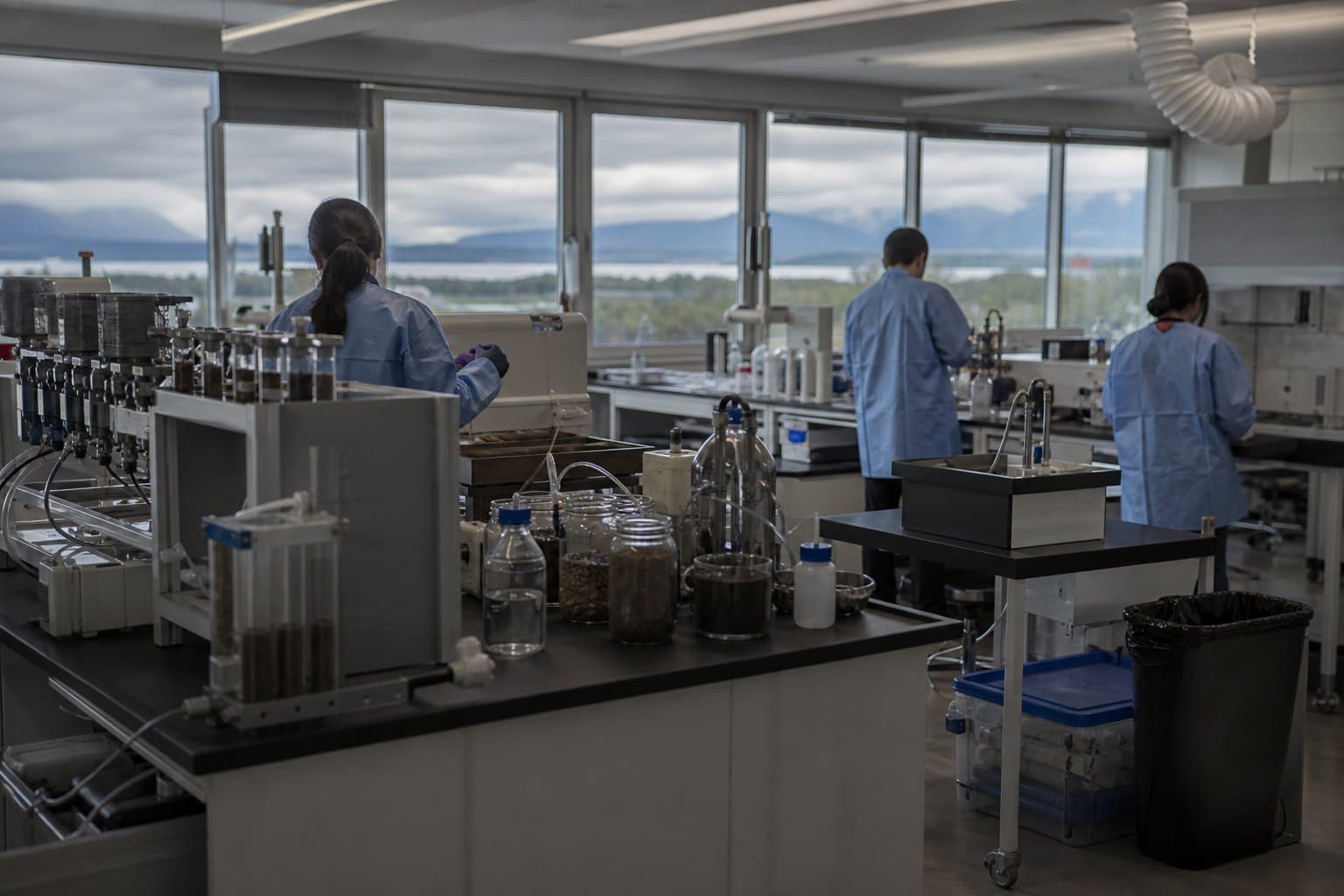
NSF awards UAA $3.8 million to test bacteria that pull rare earths from coal waste
The University of Alaska Anchorage will receive $3,824,575 from the National Science Foundation to determine whether a bacterium can pull rare earth elements out of coal mining refuse and ash, under a four-year award that runs from Sept. 1 through Aug. 31, 2030. A parallel award of $913,037 goes to the University of Alaska Fairbanks over the same period. NSF recorded Aug. 5, 2026, as the most recent award action date for both grants, days before the performance period begins.
Rare earth elements are crucial to energy technologies, advanced manufacturing and national defense, and the US relies heavily on foreign sources for them even though abundant domestic supplies sit locked within coal mining waste. The project is pitched as a way to secure that supply chain by developing scalable biological technologies for domestic recovery.
Brandon R. Briggs of UAA is principal investigator on the lead award; Srijan Aggarwal holds the Fairbanks award. Montana Technological University and the University of Wyoming round out the partnership, which spans three states in NSF's Established Program to Stimulate Competitive Research, the agency's program for jurisdictions that have historically drawn relatively little NSF research funding.
The technical core is the bacterium Shewanella oneidensis, which the researchers will test for its ability to leach rare earths out of coal refuse and ash. The award abstracts describe two organizing ideas: a Smart Bio-Refinery, meaning the overall recovery process, and a Virtual Pilot Plant, a computer model of that process that lets researchers try out operating conditions before running them in a real facility. Software will first screen waste samples to predict which ones hold the most promise. Machine-learning controllers will then tune the simulated process, including how much power it draws from a modeled electrical grid, and the results will be judged on cost and environmental impact over the full life cycle.
Whether coal waste can supply rare earths at commercial cost remains unsettled. The US Geological Survey concluded in a 2019 fact sheet that coal and coal fly ash are not currently classified as economic rare earth resources, though they could become viable and are being studied. Researchers at the Indiana Geological and Water Survey have found rare earth concentrations in coal waste above average but generally below recoverable thresholds. Environmental advocates and analysts, in separate commentary on rare-earth commercialization generally, caution that turning coal waste into a rare earth source could prolong coal dependence and open new pollution pathways if extraction is not carefully controlled. That concern addresses the broader push to commercialize such recovery, not any demonstrated effect of this UAA-UAF research itself.
The awards follow NSF's selection of a UAF-led Critical Mineral Accelerator as a Regional Innovation Engine, worth $15 million over two years and up to $160 million over a decade.
AI-assisted, reviewed by editors. Spot an error?
Related Coverage
Alaska won up to $160M to hunt critical minerals with AI and microbes
Alaska News · 3w ago · 87% match
NSF backs UAF-led critical minerals coalition with $15 million
Alaska News · 1w ago · 85% match
NSF awards UAF $877,501 for mass spectrometer to support fisheries and minerals research
Alaska News · 2w ago · 81% match
NSF awards UAF $1.77 million to build AI geohazard forecasting tools
Alaska News · 3w ago · 80% match
A federal minerals program is funding science on the seafloor mining wants to dig
Alaska News · 1w ago · 79% match
Comments
Sign in to leave a comment.
No comments yet. Be the first to share your thoughts.