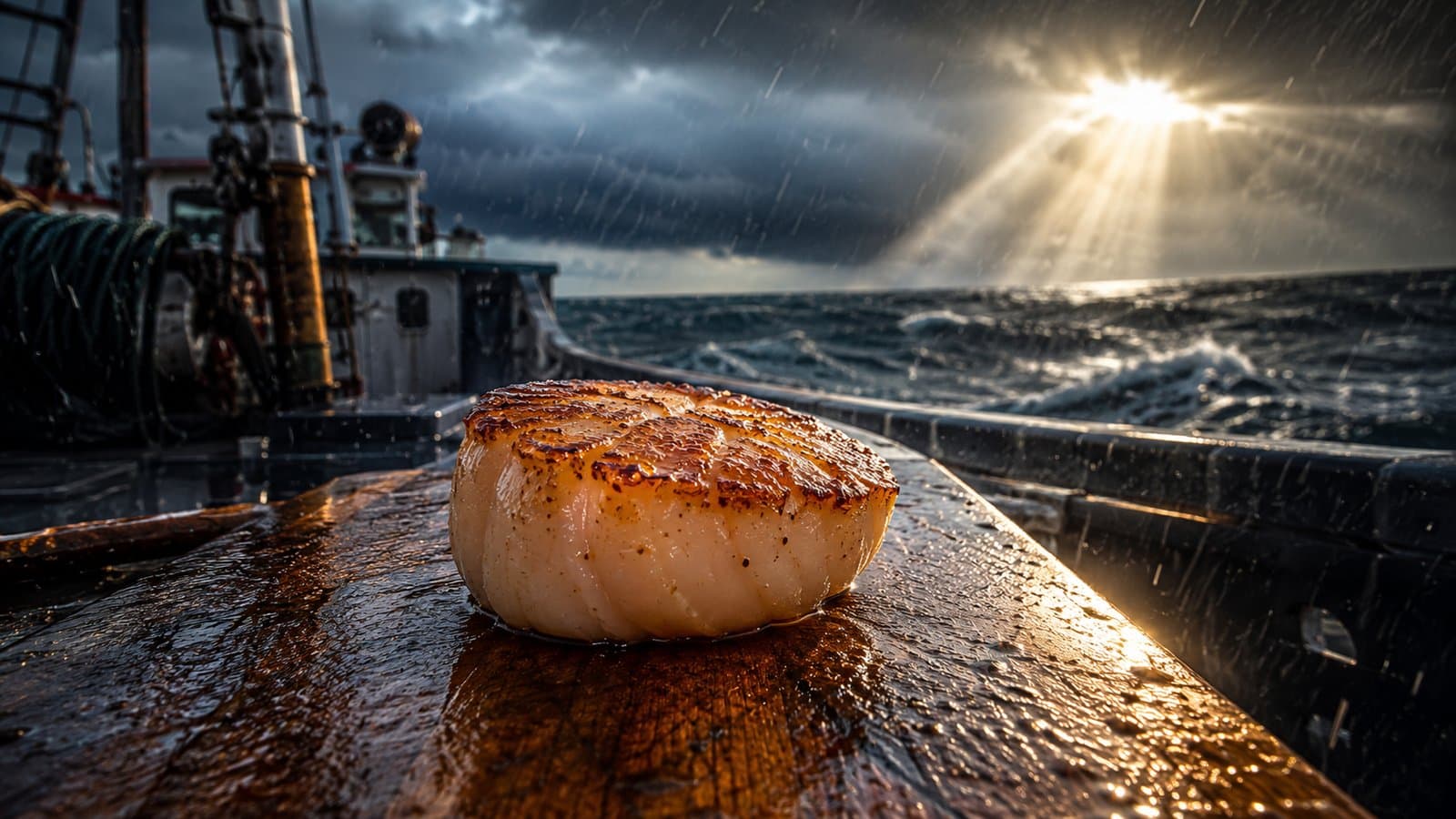
Generated image by Cale Green
NPFMC sets Alaska weathervane scallop harvest limits for 2026
In all of Alaska, only four boats are allowed to catch scallops. Four. Four.
The state's weathervane scallop fishery is one of the smallest and most exclusive commercial fisheries Alaska has — by law, just four licensed vessels can take part. So when the North Pacific Fishery Management Council quietly set the 2026 catch limits for the Gulf of Alaska and Bering Sea at its June meeting in Anchorage, it was effectively deciding the entire year's living for four crews.
Weathervane scallops are large, cold-water shellfish, dredged off the seafloor in deep northern waters and sold as a premium product. Most Alaskans might not stop to think where their scallops come from, if they think about scallops at all.
The answer is a handful of boats, working a fishery so tightly held that the number of participants is fixed by design.
With only four vessels splitting the harvest, every adjustment to the limits lands directly on specific boats' revenue and specific crew members' paychecks. The effects ripple onshore, too, especially in Kodiak, the fishery's hub, where processing and support jobs rise and fall with the season.
Setting that number is a yearly ritual. Each spring, a science team assesses the health of the scallop stock and recommends how much can safely be caught. The council adopts those limits, which become the season's harvest targets. From there, the Alaska Department of Fish and Game's Kodiak office takes over, managing the catch in real time as the 2026 season plays out.
It's a small fishery by almost any measure. But for the few who hold a piece of it, this is the whole game.
Source: NPFMC sets scallop harvest specifications for 2026 ().
Drafted with AI. Edited by Cale Green (1 revision). No full editor review is on record. Who is accountable.
Stay informed. Support what matters.
Free, permanent access to local news you can verify. Subscribe to support Walter AlaskaNews and go ad-free.
Related Coverage
North Pacific Fisheries Management Council limit golden king crab catch limits
Alaska News · 3mo ago
Yakutat scallop fishery closes as harvest reaches 145,000-pound cap
Alaska News · 1mo ago
Alaska closed its Bering Sea scallop grounds after the two-boat fleet hit the cap
Alaska News · 21h ago
Unimak Bight scallop grounds close tonight with the season's 7,500-pound quota filled
Alaska News · 2w ago
The panels that shape Alaska's pollock and cod catch limits meet next month
Alaska News · 1mo ago
Comments
Sign in to leave a comment.
No comments yet. Be the first to share your thoughts.