AI image
Nome port's national security designation could save city $132 million in construction costs
The City of Nome could see significant cost savings on its Arctic deep-draft port project under a bill the Senate Environment and Public Works Committee advanced Thursday, though any relief depends on full Senate passage and enactment. A prior cost-share modification secured in the 2022 Water Resources Development Act was estimated to save the city roughly $132 million by cutting its share of the project from 35 percent to 10 percent. The new measure builds on that framework by classifying the port's supporting infrastructure as serving a federal national security interest and prohibiting any reduction in the project's scope or capability, with the potential to further reduce costs to the local community.
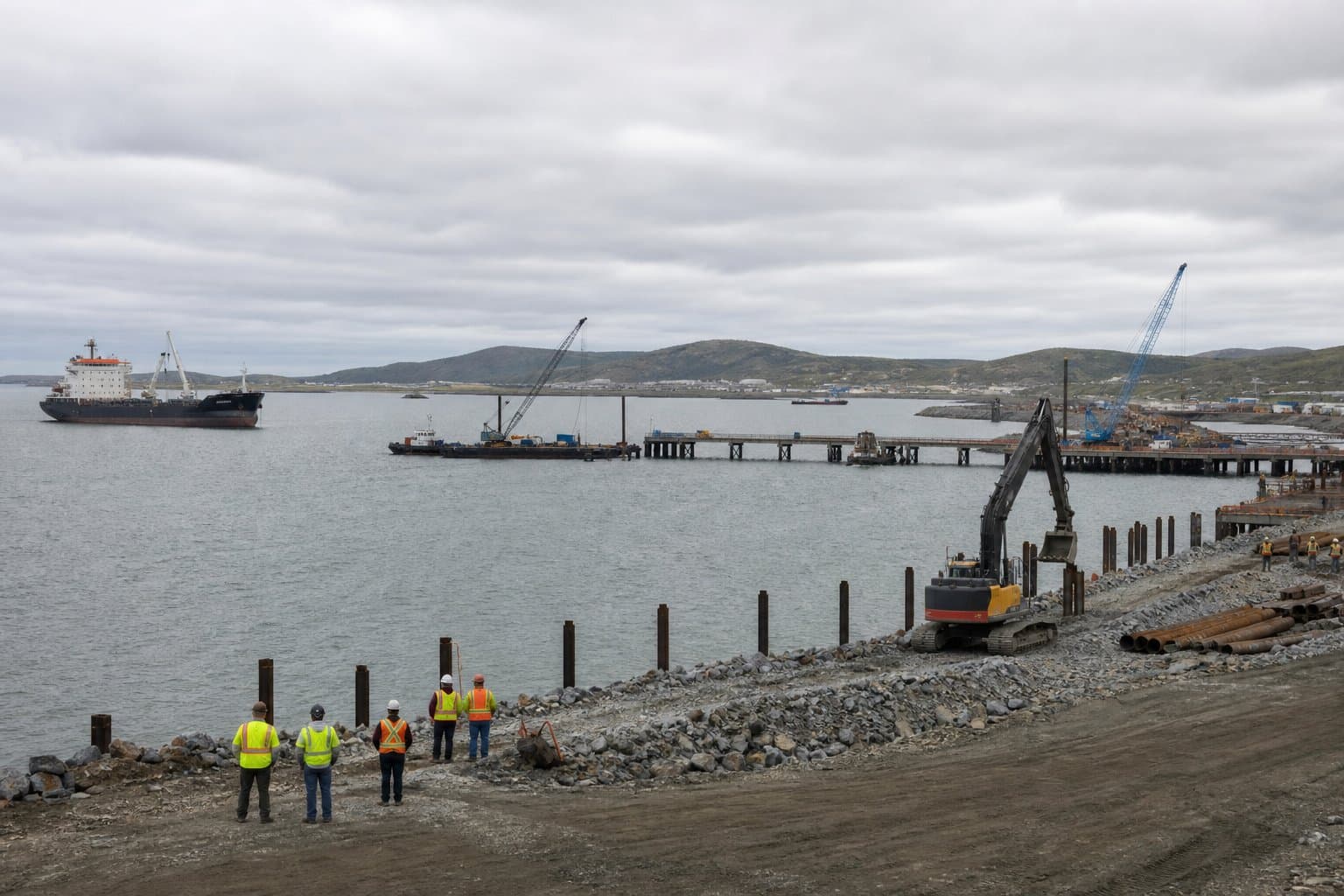
Nome Mayor Kenny Hughes confirmed construction is underway this summer, making the cost-share question immediately consequential. Under the Water Resources Development Act of 2020, the original cost split left Nome and its partners responsible for roughly $126 million of a $505 million project.
In October 2024, the Army Corps of Engineers canceled the phase 1 contract solicitation after bid pricing exceeded the statutory limit. The Water Resources Development Act of 2026 now prohibits any reduction in the port's scope or capability and classifies its supporting infrastructure as serving a federal national security interest.
The bill also directs the Assistant Secretary of the Army for Civil Works to fast-track the separate Port of Nome Inner Harbor feasibility study and the Homer Harbor modification feasibility study. It green-lights new feasibility studies for Kodiak Harbor and Scow Bay Harbor in Petersburg, among other Alaska sites, along with $13.7 million in direct authorizations for drinking water and wastewater projects, including $7 million for Sitka, $3.3 million for Nelson Lagoon, $2.1 million for Ouzinkie, and $1.3 million for Soldotna. The bill reauthorizes the Safe Water for Small and Disadvantaged Communities program at $140 million annually and authorizes $60 million annually for Alaska Native village sanitation.
“Construction is underway this summer, and the provisions he has secured in the 2026 WRDA bill in today's mark-up will help to ensure that this vital infrastructure project is one step closer to supporting national security missions and the region's economy,” Hughes said.
Port Director Joy Baker credited Sen. Dan Sullivan's persistence. “Throughout the years, Senator Sullivan has fought relentlessly for the Arctic Deep Draft Port,” Baker said. “His dedication and leadership have been instrumental as we have navigated the challenges that come with such a significant project.”
Sullivan, a member of the committee, framed the port as central to both Arctic security and western Alaska's cost of living. “This year's WRDA will help maintain the significant progress on our nation's first Arctic deep-water port in Nome, which will strengthen Arctic security and reduce the cost of goods for the people of Nome and communities across the region,” he said.
The measure now moves to the full Senate.
Source: Office of Sen. Dan Sullivan, Senate Environment & Public Works Committee: Sullivan Secures Wins for Alaska in Committee-Passed Water Infrastructure Package.
Made by our human newsroom with AI. How humans and AI work here · Grow with our newsroom
Stay informed. Support what matters.
Free, permanent access to local news you can verify. Subscribe to support Walter AlaskaNews and go ad-free.
Related Coverage
Senate panel advances water bill with Alaska Native village sanitation, Nome port, and Juneau flood provisions
Alaska News · 3mo ago
Nome is becoming America's first deepwater port in the Arctic
Alaska News · 3mo ago
A Record Alaska Defense Bill Clears Its First Hurdle
Alaska News · 3mo ago
Senate bill would fast-track Army Corps engineering for Juneau's glacial flooding
Alaska News · 3mo ago
Spur demolition begins for Nome's planned Arctic deep-draft port
Alaska News · 1mo ago
Comments
Sign in to leave a comment.
No comments yet. Be the first to share your thoughts.