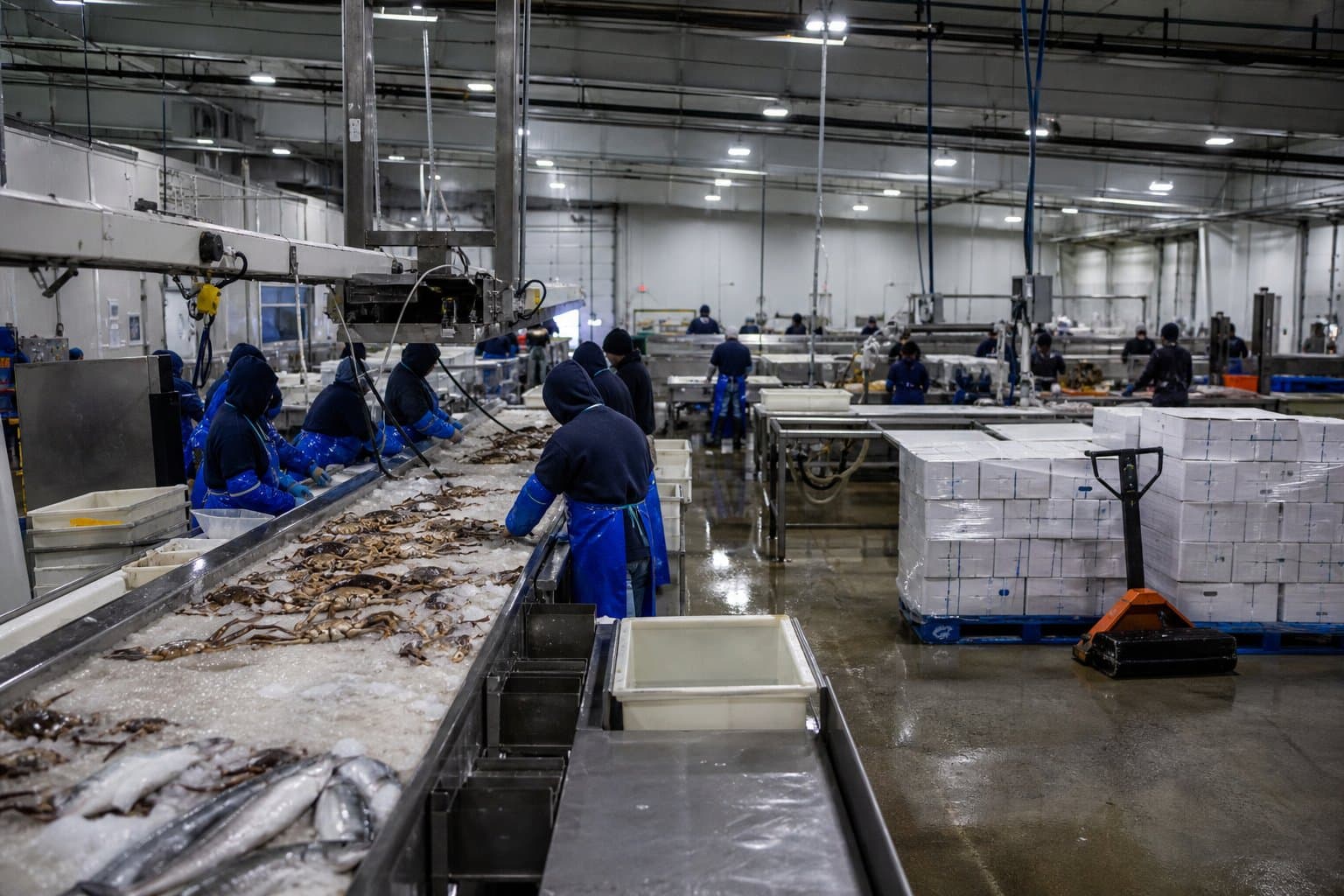
AI image
New EU seafood paperwork lands Sept. 3, and it is not the only change
Alaska seafood exporters have just over a week before new European Union health certificate rules take effect. The new forms become mandatory Sept. 3, and older ones issued no later than that date can still accompany shipments entering the EU through Dec. 3.
For Alaska's wild-caught fish and crab, that change is mainly the form. The EU adopted new U.S. certificate models in June.
The heavier lift arrives separately. The EU has overhauled its catch-documentation system for wild-caught seafood, requiring more detailed vessel, harvest and supply-chain information on many shipments. NOAA has extended use of the Legal Harvest-US certificate through Nov. 30 while exporters move to the newer Reported CATCH and EU CATCH system. Processing or non-manipulation documents can also apply depending on where and how the product moves before it reaches Europe.
NOAA is telling exporters to start that process early and coordinate closely with importers and supply-chain partners, warning that incomplete vessel, harvest or processing records can delay certification.
The new health certificate also carries an antimicrobial attestation, but it applies to farmed product, not wild. Affected aquaculture establishments must upload an Antimicrobial Resistance Declaration to the Food and Drug Administration's Export Listing Module, documenting that source animals were not given antimicrobials for growth promotion or drugs the EU reserves for treating certain human infections. The declaration is valid a year and must be shared with source-animal establishments every 12 months.
That has little direct reach in Alaska. State law prohibits commercial finfish farming, and Alaska's farm sector is shellfish and seaweed. Alaska-grown bivalves are also not currently covered by the U.S.-EU shellfish equivalence arrangement, which recognizes eligible production from Massachusetts and Washington.
Alaska accounts for roughly 60 percent of U.S. commercial seafood harvest by volume, and Dutch Harbor led U.S. ports by volume for the 26th consecutive year in NOAA's latest national fisheries report.
Based on a press release from NOAA Fisheries.
Made by our human newsroom with AI. How humans and AI work here · Grow with our newsroom
Stay informed. Support what matters.
Free, permanent access to local news you can verify. Subscribe to support Bill AlaskaNews and go ad-free.
Related Coverage
New EU paperwork could slow Alaska seafood shipments starting in September
Alaska News · 2mo ago
Alaska seafood headed to Europe needs a new certificate starting today
Alaska News · 1mo ago
New EU rules could jam up Alaska fish headed to Europe this summer
Alaska News · 3mo ago
A paperwork snag with Europe threatens a major market for Alaska seafood
Alaska News · 2mo ago
Alaska seafood exporters get EU paperwork reprieve through 2026
Alaska News · 3mo ago
Comments
Sign in to leave a comment.
No comments yet. Be the first to share your thoughts.