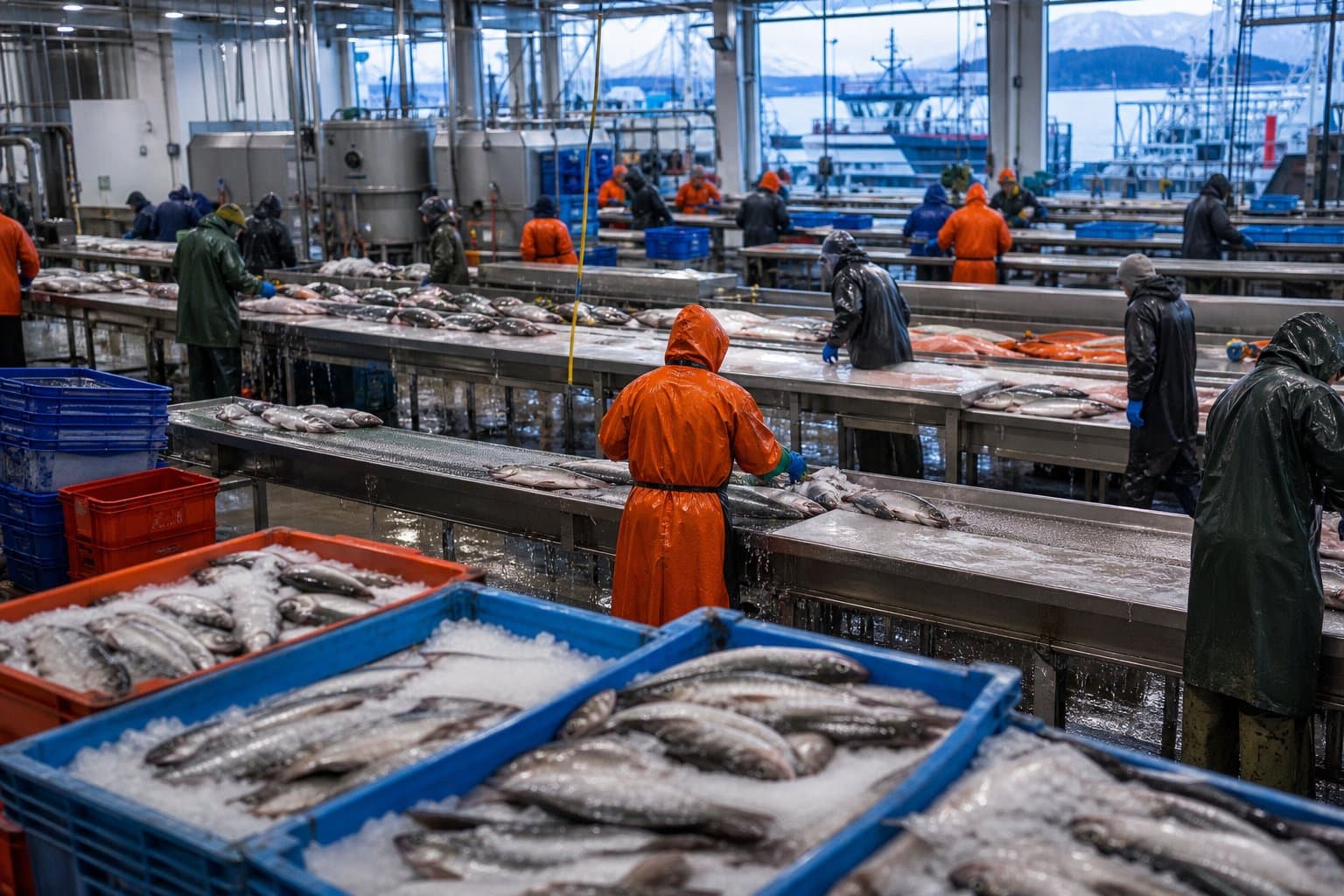
AI image
New EU rules could jam up Alaska fish headed to Europe this summer
If you catch fish that ends up in Europe — pollock most of all, but also salmon and other Alaska staples — a paperwork change is coming that could affect how smoothly your catch sells overseas.
For years, U.S. exporters could send seafood to the European Union on a simple catch certificate. Starting July 10, the EU stops accepting it. After that, Alaska fish bound for Europe needs the EU's new, far more detailed certificate — and NOAA says the EU has shown no sign it will push the deadline back, even though the industry has asked.
Why should a fisherman care about an export form? Because the EU is a major buyer of Alaska fish, and if the paperwork doesn't line up, shipments can get held at the European border. Fish stuck at the border backs up the whole chain — processors, buyers, and ultimately the market for what you land. And it hits in the middle of the season.
Most of the new burden falls on the exporters and processors who file the documents. But some reaches the boat: the new form wants your gear type, more exact catch-area information, and the skipper's or permit-holder's signature. Those three pieces get a bit of breathing room — until October 10 — even though the main switch still happens July 10.
The Alaska Seafood Marketing Institute is pushing back hard, warning the rules could shut Alaska seafood out of the EU market and asking for more time and simpler options for low-risk fisheries. NOAA admits the change could disrupt trade and says it's still negotiating with the EU for flexibility — but so far, no extension.
One practical note: NOAA is briefly reopening the old certificate on June 26 for shipments dated before the cutoff, so anything already in motion can still use it.
Based on a press release from NOAA Fisheries.
Drafted with AI. Edited by Cale Green (1 revision). No full editor review is on record. Who is accountable.
Stay informed. Support what matters.
Free, permanent access to local news you can verify. Subscribe to support Bill AlaskaNews and go ad-free.
Related Coverage
New EU paperwork could slow Alaska seafood shipments starting in September
Alaska News · 1mo ago
A paperwork snag with Europe threatens a major market for Alaska seafood
Alaska News · 1mo ago
New EU seafood paperwork lands Sept. 3, and it is not the only change
Alaska News · 4w ago
Alaska seafood exporters get EU paperwork reprieve through 2026
Alaska News · 2mo ago
Alaska seafood headed to Europe needs a new certificate starting today
Alaska News · 2w ago
Comments
Sign in to leave a comment.
No comments yet. Be the first to share your thoughts.