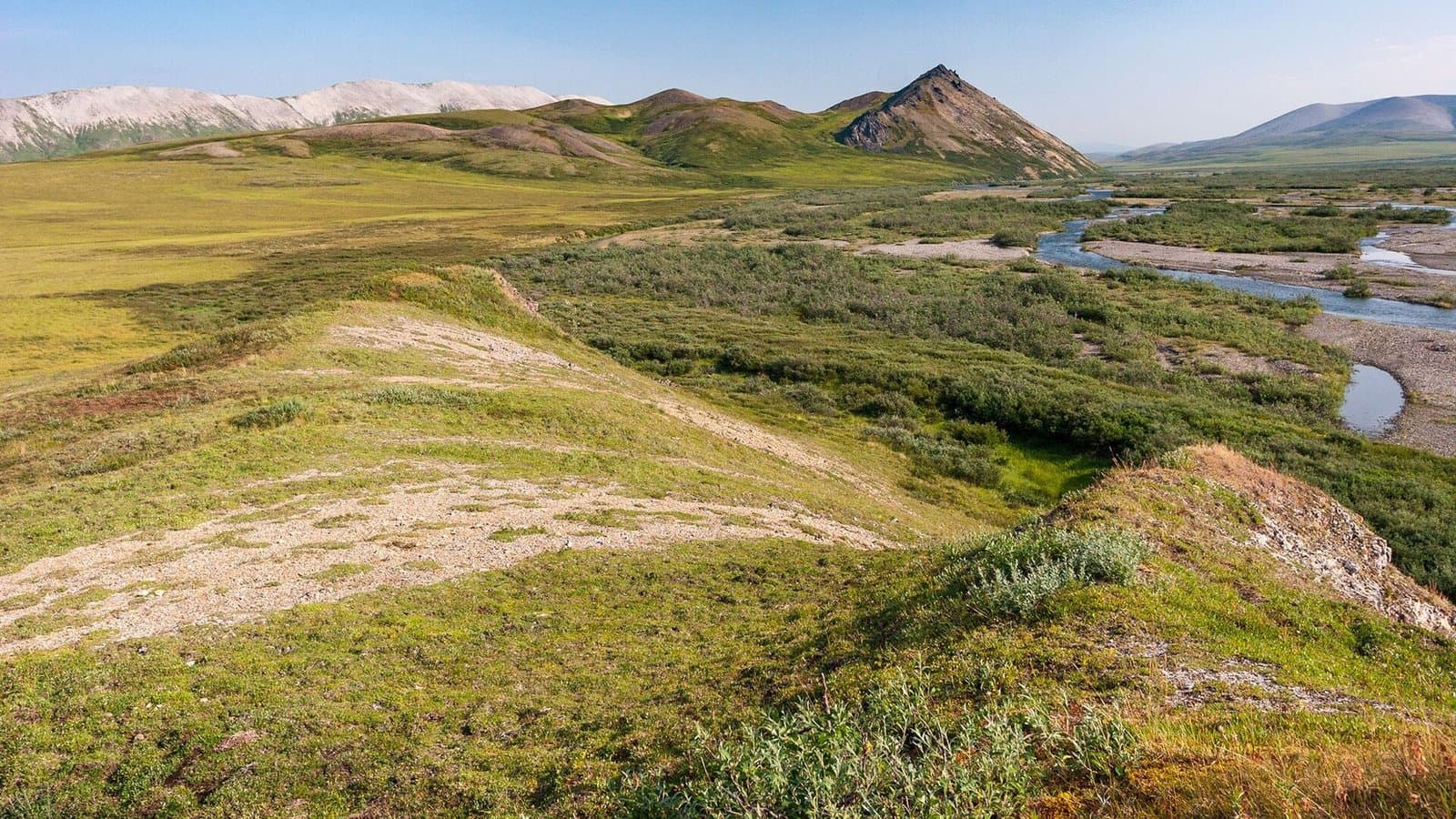
Photo: BLM Alaska via Wikimedia Commons · Photo source · Public domain
Kivalina, Wales and Eek lead off $100 million push to replace village fuel tanks
Contractors were headed to Kivalina, Wales and Eek this summer to start building new bulk fuel tank farms, the first three of 10 rural Alaska villages sharing a $100 million federal grant that runs through July 2028, the head of the Alaska Village Electric Cooperative wrote in July.
"This is life changing money for the communities involved," AVEC President and CEO Bill Stamm wrote in the column, which the cooperative posted online Wednesday. Contractors "are hitting the beaches this year to begin construction" in the three villages, he wrote, and tanks for all 10 projects have been bought and are being built for delivery over the next two years.
Aging tanks
Villages off the road system usually get fuel by barge once or twice a year, in summer. They have to store enough heating oil, transportation fuel and diesel for power generation to get through the year, Stamm wrote. That fuel is costing more: in AVEC communities that had received fuel by August, the delivered cost was 35% to 40% higher than last year, he wrote, Alaska News reported Thursday.
Many of the tanks that hold it are old. The Alaska Energy Authority counts more than 400 bulk fuel facilities in rural Alaska, most of them more than 40 years old, and puts the deferred maintenance at about $1 billion. In August 2024, the agency moved two tanks in Shageluk that were within two feet of falling into the river, according to its budget request. Shageluk is one of the 10 villages.
In Wales, the old tanks are in poor condition and at risk from coastal erosion and flooding from Bering Sea storm surges, according to AVEC's request for a state water quality certification. The new tank farms would sit farther from the coast, on a gravel pad built up to 17 feet above sea level from ground that sits 8 to 10 feet up. The pad would hold four 30,000-gallon AVEC tanks, three 30,000-gallon tanks for the city's retail fuel sales and a new power plant. AVEC estimated the work would run from June 2026 to June 2028.
All of the new facilities will be raised above flood level on earthen pads or steel piles and built inside secondary containment, which holds fuel if a tank leaks, Stamm wrote.
Where the money came from
The $100 million went to the Denali Commission. It was first meant for the U.S. Environmental Protection Agency's Community Change Grants, which were canceled after the change in administration in 2025, according to minutes of the commission's July 16, 2025, meeting. The commission proposed spending it on bulk fuel instead and chose the villages from the energy authority's needs-based priority list, weighing need and project readiness. No local match is required.
The Alaska Native Tribal Health Consortium administers the grant and split it evenly between the energy authority, which is managing Aniak, Eek, Russian Mission, Shageluk and Tuluksak, and AVEC, which has Kivalina, Kobuk, Noatak, Quinhagak and Wales. A single bulk fuel facility costs $6 million to $12 million, a commission staff member told commissioners at that 2025 meeting.
Three years to spend it
The grant period runs from Aug. 1, 2025, through July 30, 2028, according to ANTHC. Stamm wrote that weather and logistics often push Alaska projects off schedule, and that running 10 at once is "putting a strain on the limited resources of everyone from grant administrators to painting contractors." Last winter went to contract negotiations, community and design meetings, procurement bids, land acquisition and cargo bookings.
"In Alaska, summer can go by in the blink of an eye," he wrote. "And in three blinks, we need to have these done."
A full rebuild takes two to three years, commission staff said in 2025. The commission said then that it planned to commit at least three years of the money it gets from the Trans-Alaska Pipeline Liability Fund, which staff said can only be spent on bulk fuel facilities, to finish the projects if they run long.
The commission's federal co-chair hoped for more. At the July 2025 meeting, Julie Kitka said 10 to 15 more villages could be lined up almost immediately with another $100 million, according to the minutes. A draft study prepared for the commission and the energy authority, dated Sept. 9, calls the EPA grant a one-time allocation that "is not anticipated to be repeated in the future." The study recommends that villages share tank farm purchasing, maintenance and training through regional cooperatives, Alaska News reported Oct. 15.
Source: Alaska Village Electric Cooperative.
Made by our human newsroom with AI. Reviewed by Cale Green. How humans and AI work here · Grow with our newsroom
Stay informed. Support what matters.
Free, permanent access to local news you can verify. Subscribe to support Maggie AlaskaNews and go ad-free.
Related Coverage
In Koyuk, old fuel tanks left petroleum in the ground. Now someone will measure it.
Alaska News · 3mo ago
The North Slope's fuel farms sit on thawing ground
Alaska News · 3mo ago
A decade after a plan promised lower energy costs, Bering Strait villages are still studying the problem
Alaska News · 2mo ago
Draft study backs regional co-ops for rural Alaska tank farms, comments due Friday
Alaska News · 1w ago
AVEC says it must raise revenue 10% as delivered fuel costs climb 35% to 40%
Alaska News · 2h ago
Comments
Sign in to leave a comment.
No comments yet. Be the first to share your thoughts.