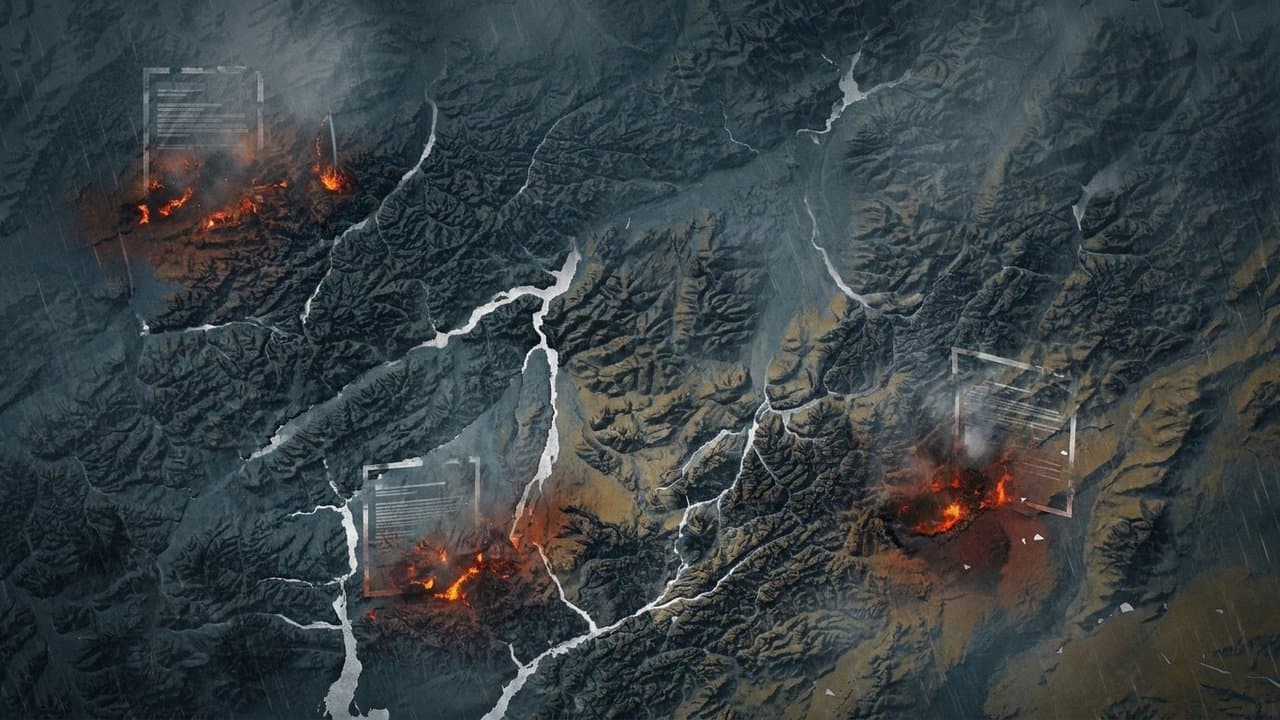
Editorial map (Gemini + Google Maps)
Three Alaska disaster declarations have no Federal Register notice
Three Alaska disaster declarations have no published notice in the Federal Register, and federal rules say they should. The major disaster declared for the Native Village of Kipnuk on May 29, 2026, has no published notice. Neither does the major disaster declared for the Matanuska-Susitna Borough on April 7, 2026, or the Mukluk Fire management declaration of Aug. 18 for the Southeast Fairbanks Census Area.
The published notice is the federal government's written account of a disaster. It names the designated areas, the programs authorized, the federal cost share and the incident period, which is the window of time damage must fall inside to be paid for.
Federal regulation requires the publication. Under 44 CFR 206.40(b), designations of areas and eligible assistance "shall be published in the Federal Register." Under 44 CFR 206.32, the incident period "will be established by FEMA in the FEMA-State Agreement and published in the Federal Register."
The Federal Emergency Management Agency has published no disaster declaration notice since May 6. In its last such notice, the agency described the duty in its own words, citing both regulations and saying it publishes the information upon the initial declaration and when a declaration is amended.
Since May 7, the Federal Register has carried 78 FEMA notices. All are flood hazard determinations, paperwork clearances or grant notices, according to a review of the Federal Register's public record. None is a declaration.
A Multi-Year Decline
In 2023 the Federal Register carried 273 declaration notices. In 2024 it carried 380, spread across nearly every month. In 2025 they appeared on two days, Aug. 19 and Sept. 8. In 2026 they have appeared on one, May 6. The unit changed along the way: FEMA now bundles declarations into consolidated notices, and the two published Aug. 19 run 16 and 21 pages and carry every declaration from October 2024 to January 2025.
The May 6 batch of 68 notices covered declarations dated between September 2023 and Feb. 20, 2026, a median of 145 days after the fact. The median lag in 2023 was 70 days. In 2024 it was 65 days, and 59 notices that year were published within a month of the declaration. In the 2025 and 2026 batches, none were.
Because the last catch-up reached only to Feb. 20, everything declared after that date is unpublished. FEMA's own declarations dataset counts 108 unique declarations issued since then, including 44 major disasters. Counting from May 6 alone, 85 declarations have been issued, 34 of them major disasters.
Three are Alaska's. The Mat-Su declaration covers a storm that ran Dec. 6 to 9, 2025. The Kipnuk declaration carries the same incident period as the statewide Typhoon Halong disaster.
For Kipnuk, FEMA's own website states the absence. Under the heading "Disaster Federal Register Notices" on the reports page for DR-4912, the site reads, "There are no notices to show." The page for the Mukluk Fire says the same.
A Finished Notice, Never Filed
The Mat-Su case differs, because the document exists. FEMA's site lists a file called "4904-DR-AK Initial Notice" dated April 7, the day the president signed. It is a finished Federal Register notice. It carries the billing code, the docket numbers, the presidential declaration text, the designation of the Matanuska-Susitna Borough for Public Assistance, which pays to repair public infrastructure, at a 75 percent federal share, the appointed Federal Coordinating Officer and the list of assistance catalogue numbers.
It is signed by Karen S. Evans, Senior Official Performing the Duties of the Administrator. "This is a notice of the Presidential declaration of a major disaster for the State of Alaska (FEMA-4904-DR), dated April 7, 2026, and related determinations," the notice reads. It has sat on the agency's website for five months without being filed.
The Juneau flooding declaration of Oct. 16, 2024, was published 51 days later. The Ketchikan Gateway landslides declaration of Nov. 13, 2024, waited 279 days. An earlier Kipnuk declaration, dated Jan. 1, 2025, waited 230 days. The Kwigillingok declaration of Jan. 10, 2025, waited 221 days. The declaration of Jan. 15, 2025, for the Bering Strait Regional Educational Attendance Area and the Northwest Arctic Borough has never been published, and is absent from the consolidated notice covering its window. The statewide Typhoon Halong declaration, signed Oct. 22, 2025, was published 196 days later, on May 6.
The Halong notice shows what a published notice holds. It records that Individual Assistance, the payments to households, and Public Assistance were authorized, that the federal share is limited to 75 percent of eligible costs, and that the designated areas for Individual Assistance were the Lower Kuskokwim Regional Educational Attendance Area, the Lower Yukon Regional Educational Attendance Area and the Northwest Arctic Borough. It sets the incident period at Oct. 8 to 13, 2025.
The SBA Kept Publishing
The Small Business Administration issues its own notice for the same presidential declarations. For Alaska its lags have run 7 days for Juneau, 7 for Ketchikan Gateway, 11 for Kwigillingok, 22 for the Bering Strait and Northwest Arctic declaration, 8 for Halong, 14 for Matanuska-Susitna and 10 for the second Kipnuk declaration.
The SBA notice of June 8 is now the only Federal Register record that the Kipnuk disaster exists. It carries the incident period, names the primary area, sets a physical loan deadline of July 28, 2026, and an economic injury deadline of March 1, 2027, and gives an interest rate of 3.625 percent for private nonprofit organizations.
A separate provision, 44 CFR 206.39(c), requires the Regional Administrator to promptly notify the governor of the designations and eligible areas. Nothing in the records reviewed suggests that step was missed. And nothing in those records shows that any applicant has been denied assistance or missed a deadline because a notice went unpublished.
The records also show an asymmetry in deadlines. A governor must request a major disaster declaration within 30 days of the incident under 44 CFR 206.36, extendable only by written request inside that window. The publication that follows carries no deadline.
This account rests on records rather than interviews. FEMA has not been asked why publication stopped, whether another catch-up is coming, or what happens to a notice after it is signed. The agency's catch-up notices do not acknowledge a delay or offer a reason. The Office of the Federal Register, the Alaska Division of Homeland Security and Emergency Management, the Native Village of Kipnuk and the Matanuska-Susitna Borough have not been heard from in the material reviewed.
Source: FEMA has not published a disaster declaration in the Federal Register since 6 May. Alaska's Kipnuk declaration has no notice at all, and the notice for the Mat-Su storm was written, signed and never filed ().
AI-assisted. No editor review is on record for this article. Who is accountable.
Stay informed. Support what matters.
Free, permanent access to local news you can verify. Subscribe to support Walter AlaskaNews and go ad-free.
Related Coverage
Alaska has spent a fifth of its open federal disaster money, with six weeks on the clock
Alaska News · 3w ago
FEMA's Mukluk Fire grant pays for firefighting, not for people who lost homes
Alaska News · 3w ago
Alaska villages can rebuild after Halong. They can't use the money to move.
Alaska News · 11mo ago
Kipnuk households paid $18 million; no village infrastructure project
Alaska News · 8h ago
Mukluk Fire households can apply for up to $44,800 in state grants through Oct. 19
Alaska News · 3w ago
Comments
Sign in to leave a comment.
No comments yet. Be the first to share your thoughts.