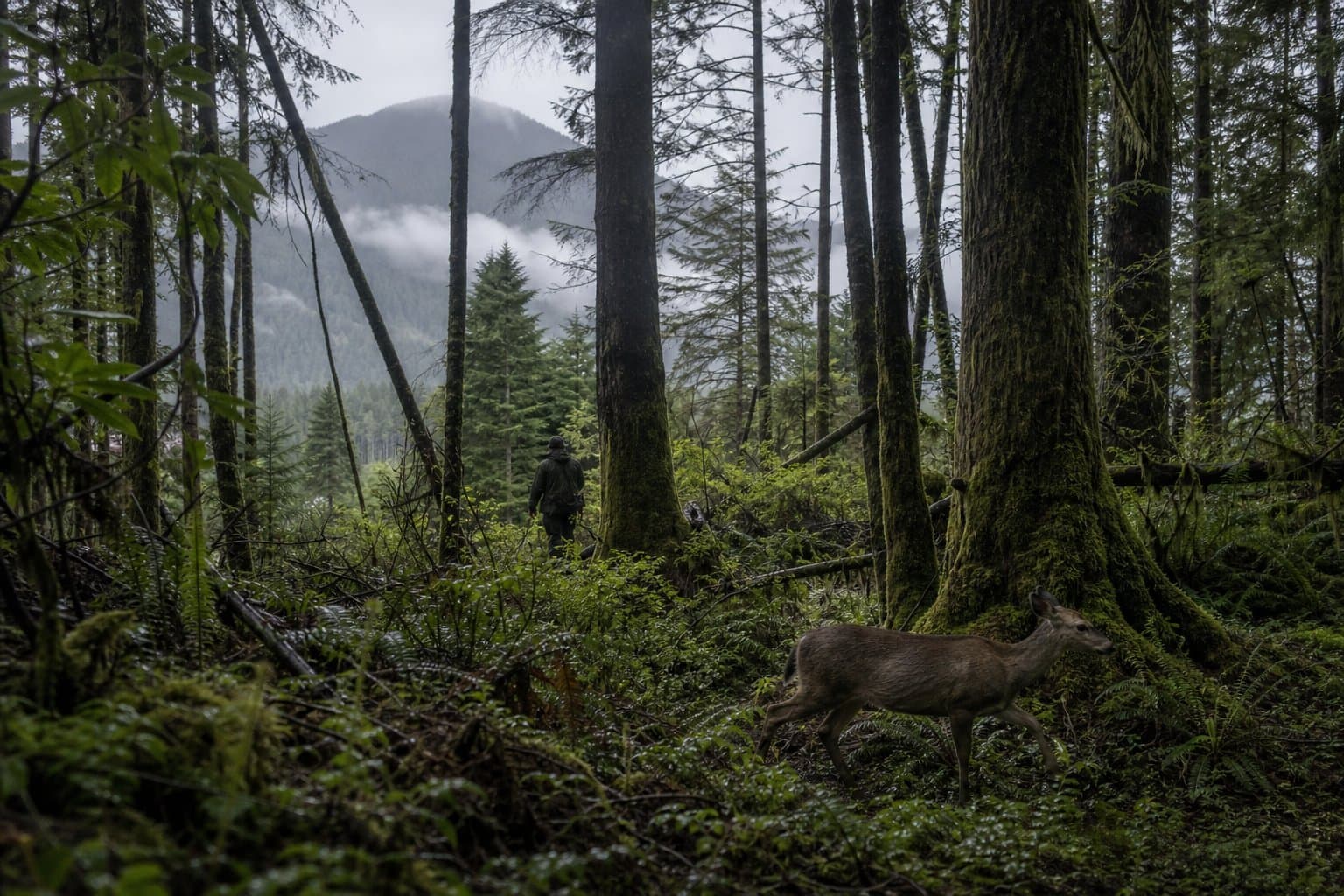
AI image
Ketchikan tribe sues Forest Service over South Revilla logging near Ketchikan
Ketchikan Indian Community sued the U.S. Forest Service on Thursday over a logging project the agency itself concluded may significantly restrict subsistence deer hunting on Revillagigedo Island.
The complaint says the South Revilla Integrated Resource Project would cut high-value Sitka black-tailed deer winter habitat inside the 41,305-acre project area, 17 miles northeast of Ketchikan, by 44%. Ketchikan hunters have historically taken most of their deer from Revillagigedo Island. The complaint also faults the agency's handling of the Queen Charlotte goshawk, a rare Southeast raptor. The Forest Service identified one nest area near Saddle Lakes in 2025.
The tribe filed the suit with the Center for Biological Diversity and the Southeast Alaska Conservation Council in U.S. District Court in Alaska. Earthjustice represents them. The suit alleges violations of the Alaska National Interest Lands Conservation Act, the National Forest Management Act, the Multiple Use and Sustained Yield Act and the Administrative Procedure Act. It asks the court to void the project's final environmental impact statement and record of decision.
The Forest Service began the review in 2018 and released a draft impact statement in 2020. The agency says the project will harvest timber, restore watersheds, improve fish and wildlife habitat and expand recreation. It calls the decision consistent with federal law and forest planning.
In 2025, the Federal Subsistence Board reclassified Ketchikan from nonrural to rural at the tribe's petition, giving residents subsistence priority on federal lands. Craig Tribal Association and Shaan Seet Inc. asked the board to reconsider, saying the change could add roughly 13,000 hunters and pressure deer in Unit 2.
The record of decision, released July 31, authorizes up to 83 million board feet of timber over 15 years, roughly three-quarters of it old growth. It also allows 11 miles of new road and work on another 31 miles.
The complaint measures the same project differently: clearcutting across 3,696 acres, 139 miles of salmon and other anadromous fish habitat affected, and more than 300,000 metric tons of forest carbon lost.
The Forest Service estimated the project would support 315 to 364 logging-related jobs. Southeast Conference says regional timber employment has fallen from about 4,200 jobs at the time of the 1990 Tongass Timber Reform Act to about 325 today. The complaint adds that the agency lacks current subsistence-use data, and that its own analysis showed a shortfall in deer available to hunters if the full timber volume is logged.
"We will not stand by while decisions are made that threaten the lands, waters, wildlife, and traditional ways of life our people have depended upon for generations," tribal President Gloria Ilsxilee Stáng Burns said.
The Forest Service had not responded to the lawsuit as of Thursday.
Source: Ketchikan Indian Community files federal lawsuit challenging Tongass South Revilla logging project.
Made by our human newsroom with AI. How humans and AI work here · Grow with our newsroom
Stay informed. Support what matters.
Free, permanent access to local news you can verify. Subscribe to support Maggie AlaskaNews and go ad-free.
Related Coverage
The Forest Service approved logging it says may restrict subsistence hunting
Alaska News · 1mo ago
Ketchikan Indian Community asks judge to halt Shelter Cove timber sale before contract award
Alaska News · 1w ago
The Tlingit & Haida tribal government opposes opening the Tongass
Alaska News · 1mo ago
Ketchikan Indian Community gets $900,000 to revive its fleet for subsistence trips, training and charters
Alaska News · 2w ago
A small Petersburg timber sale is a marker of the Tongass's long turn away from old growth
Alaska News · 2mo ago
Comments
Sign in to leave a comment.
No comments yet. Be the first to share your thoughts.