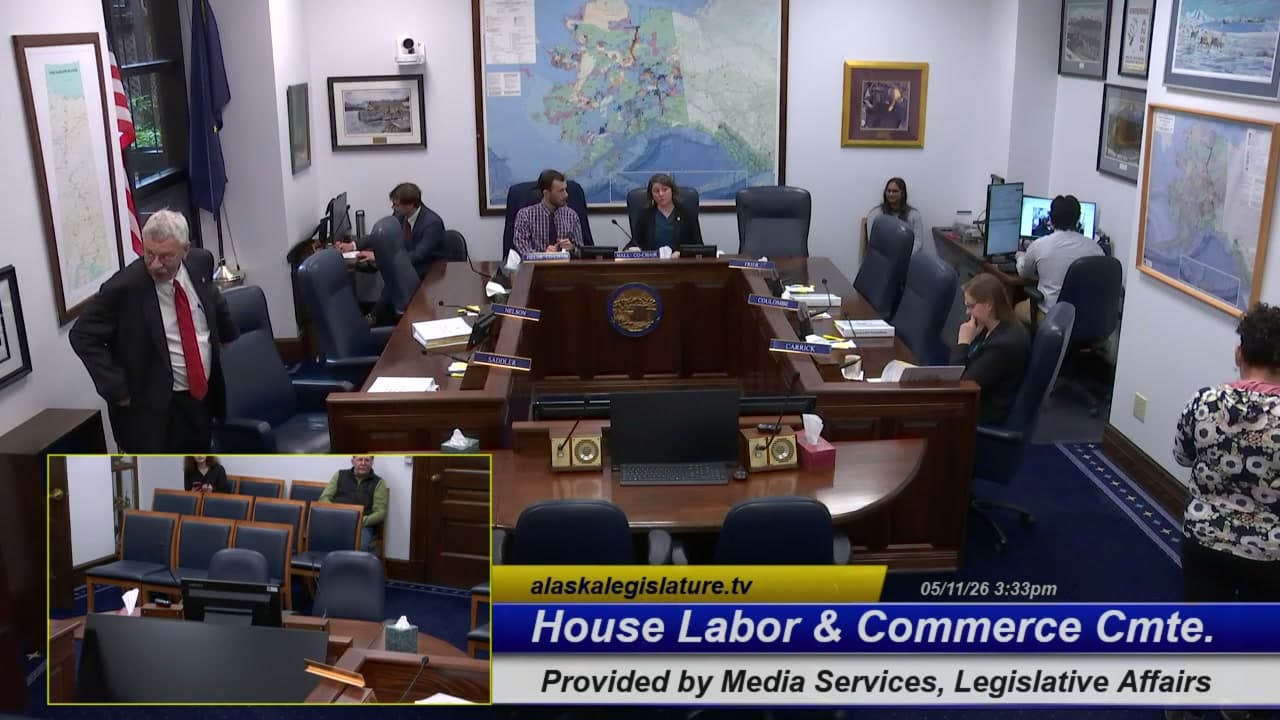
House panel hears electronic pull-tab bill with 35% manufacturer cap
The House Labor and Commerce Committee heard testimony Monday on a bill that would cap manufacturer fees for electronic pull-tabs at 35 percent, a rate critics say is too high and will hurt charities.
House Bill 386, sponsored by Senator Jesse Bjorkman, would allow electronic pull-tab games in Alaska while capping what manufacturers can charge at 35 percent. The bill would also reduce the bar take from 30 percent to 25 percent for electronic games and limit tablets to one per six occupancy or a minimum of 10 devices, whichever is greater. The bill drew divided testimony during an earlier House committee hearing, with operators and industry representatives disagreeing over the proposed fee structure and tablet limits.
Manufacturer cap sparks debate
Bjorkman said the 35 percent cap creates negotiating space above a published agreement between a distributor and manufacturer at 31 percent.
"Currently, there is no cap on what a manufacturer can take as a cost of their contract to provide paper pull tabs. There is none at all. Zero. Unlimited," Bjorkman said. "The bill before us establishes a manufacturer cap at 35 percent, and that is a cap that charities can negotiate down from, but it is a ceiling."
But operators testified the cap is significantly higher than Minnesota's model, which the bill is partly based on. Jerry Lewis, an Anchorage operator, said Minnesota manufacturers charge 20 percent while House Bill 386 would allow 35 percent.
"Secondly, they did not ask what do vendor locations in Minnesota receive when they play a game. The answer is 15 percent. Again, what we have been saying for the last year. But House Bill 386 allows it to be 25 percent," Lewis said.
Lewis also noted Minnesota bars can have only six tablets in play, while House Bill 386 sets a minimum of 10. He added that the bill would eliminate lottery ticket sales in bars.
Mack Miners, a Juneau operator with 27 years in the pull-tab business, said the higher percentages would reduce charity revenue.
"I saw that the percentages were very high and that the charities would suffer. And under this Minnesota bunch, the same thing is going to happen. They are going to take a large percentage. The charities are going to end up not making so much money," Miners said.
Tablet limits and rural concerns
The bill caps tablets at one per six occupancy or a minimum of 10 devices, whichever is greater.
Co-chair Zack Fields asked whether the bill should include a maximum cap. Bjorkman said he would accept a limit of 25 tablets.
"I think 25 would probably be a reasonable number. Tablets in play. You could have other spares on the premises if something breaks or something does not work," Bjorkman said.
One committee member raised concerns about rural areas, where smaller organizations may have less negotiating power with manufacturers.
Bjorkman defended the 35 percent cap, saying lowering it too much could drive manufacturers out of the market entirely.
"If we lower that and then we shut off the availability for a manufacturer to provide games to charities and nonprofits because they cannot, they cannot or will not do it for so little margin, then we have created a loss to the charities," Bjorkman said.
Bar take and charity revenue
The bill would reduce the bar share from 30 percent for paper pull-tabs to 25 percent for electronic games, Bjorkman said.
"Currently a bar, if they sell pull tabs, paper pull tabs, they are entitled to a 30 percent share of the take. For electronic pull tabs, that share is reduced from 30 percent to 25 percent. Again, more money for charities and nonprofits," Bjorkman said.
Bjorkman said the bill aims to increase competition and give charities more negotiating power. He said current law allows what he characterized as monopolistic practices.
Other provisions
The committee spent much of the hearing completing a sectional analysis of the bill's later sections. The bill would allow electronic pull-tabs on portable tablet devices but prohibit freestanding casino-style machines. It would also lift current restrictions on broadcasting and advertising charitable gaming, allow debit card transactions but prohibit credit cards, and permit gaming on the Alaska Marine Highway ferry system.
The bill includes security and recordkeeping requirements, including that all pull-tab series have a serial number that is sealed or encrypted. It requires vendors to designate a person on-site responsible for overseeing pull-tabs and prohibits owners and employees with access to status reports from playing pull-tabs at their location.
Dan Saddler asked whether the Department of Transportation would need one license or multiple licenses for ferry gaming. Bjorkman said he did not know, as the ferry provisions were not made in consultation with his office.
Next steps
The committee did not take action on the bill Monday. Co-chair Carolyn Hall said the committee anticipated receiving a committee substitute of Senate Bill 170 by the end of the day and set an amendment deadline of 5 p.m. Tuesday. The committee expects to take up the substitute Wednesday. Hall said members expected the substitute would clarify unresolved questions, including ferry-system licensing.
This article is based on a public meeting — House Labor & Commerce, 5/11/26, 3:15pm ().
AI-assisted. How we use AI Transcript byLucas Brown
Stay informed. Support what matters.
Free, permanent access to local news you can verify. Subscribe to support Alaska News and go ad-free.
Related Coverage
House Committee Hears Divided Testimony on Electronic Pull-Tab Bill
Alaska News · 4mo ago
Alaska Lawmakers Advance Electronic Pull-Tab Gaming Bill
Alaska News · 4mo ago
House panel rejects gaming price caps after industry debate
Alaska News · 4mo ago
Alaska Senate committee advances sports betting bill with tax revenue promise
Alaska News · 4mo ago
House Panel Considers Bills to Ease Alaska's Liquor Liability Insurance Crisis
Alaska News · 6mo ago
Comments
Sign in to leave a comment.
No comments yet. Be the first to share your thoughts.