House panel rejects gaming price caps after industry debate
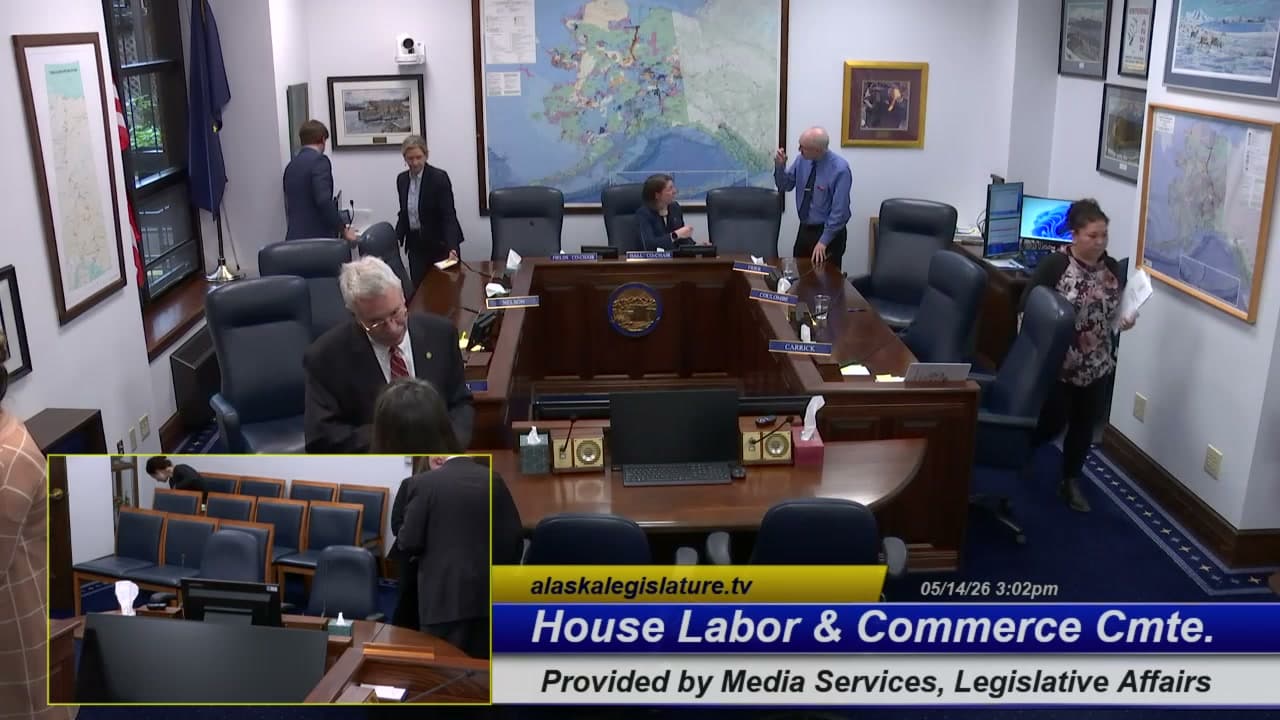
The Alaska House Labor and Commerce Committee voted Thursday to reject tighter price controls on electronic pull-tab manufacturers after rescinding earlier amendments and hearing warnings that lower caps could drive small gaming companies out of business.
The committee voted 4-2 to rescind Amendment E.15, which would have lowered the manufacturer price cap from 35 percent to 25 percent of ideal net revenue. Members then adopted a conceptual amendment setting the cap at 30 percent by a 4-2 vote, but later rejected Amendment E.15 as amended by a 2-4 vote.
Senate Bill 170, sponsored by Sen. Jesse Bjorkman, modernizes Alaska's charitable gaming statutes to allow electronic pull-tabs played on tablets. The bill does not expand where pull-tabs can be sold or who can buy them. It also updates bingo prize limits, reporting requirements, and cleanup language to improve enforcement of charitable gaming laws.
Electronic pull-tab games have become a growing segment of Alaska's charitable gaming industry, drawing legislative scrutiny to ownership of distribution channels and competition among manufacturers and operators. Alaska News previously reported that the rapid expansion of electronic pull-tab machines in Alaska bars and clubs has raised concerns from lawmakers and nonprofits about market concentration, regulatory gaps, and the share of profits reaching charities.
Co-Chair Zack Fields said he changed his position on the price cap after further research into how economies of scale affect smaller manufacturers and distributors. Fields said he wanted to make sure the state maximizes competition and that smaller manufacturers and distributors can survive.
Bjorkman argued that setting a cap at 30 percent would create deadweight loss in the economy. "Setting a cap at 30% would essentially risk creating deadweight loss in the economy, meaning that smaller manufacturers who do not have the assets and resources to compete in the market would essentially be priced out of the market because they could not compete," Bjorkman said. The senator's stated policy aim is to maximize competition among for-profit firms so that prices fall and charities and nonprofits keep more revenue.
The free market has already set an agreement between a manufacturer and a distributor at 31 percent, Bjorkman said. The idea of setting the manufacturer limit at 35 percent is to provide a ceiling while still allowing the market to work under that level, he said.
The committee also voted 4-2 to rescind Amendment E.13, which would have allowed manufacturers to own distributors for electronic pull-tabs. Members then rejected the amendment by a 3-3 vote.
Bjorkman said allowing manufacturers to own distributors would create monopolistic advantages. "By allowing kind of monopolistic practices and enticements for one manufacturer, or any manufacturer who would buy a distributor, it significantly breaks that relationship of competition and introduces a marketplace whereby whoever has the most gold wins on the for-profit side. And that will hurt charities and nonprofits," Bjorkman said.
Matt Fisher, owner of Alaska Wholesale, testified that his family business would be done if the amendment passed. Fisher said a $2.5 billion corporation could offer hundreds of thousands of dollars to sites to place their games, and small independent businesses could not compete.
John Gallagher, CEO of Arrow, said his company has invested in charitable gaming for many years through its subsidiary The Whaler, a distributor in Alaska for more than 30 years. Gallagher said the amendment would allow Arrow to continue operating as it has been.
Bjorkman said the bill as written allows The Whaler to keep operating in the paper market selling paper pull-tabs and bingo paper. If Arrow wants to distribute electronic pull-tabs, it would need to separate itself from The Whaler, he said.
Co-Chair Hall said in closing remarks that the bill reflected many competing interests. "It's abundantly clear that there's a lot of competing interests in this bill. My understanding that in this bill there is something that everybody hates. And with my background in journalism, when you're producing a story and everybody who's been engaged with that story, who's been interviewed and a part of the story-making process, hates the story then you know you did a good job," Hall said.
The committee moved Senate Bill 170 from committee without objection with individual recommendations and accompanying fiscal notes. The bill now advances to the House Finance Committee.
This article is based on a public meeting — House Labor & Commerce, 5/14/26, 2pm ().
AI-assisted. How we use AI Transcript byLucas Brown
Stay informed. Support what matters.
Free, permanent access to local news you can verify. Subscribe to support Alaska News and go ad-free.
Related Coverage
Alaska Lawmakers Advance Electronic Pull-Tab Gaming Bill
Alaska News · 4mo ago
House panel hears electronic pull-tab bill with 35% manufacturer cap
Alaska News · 4mo ago
House Committee Hears Divided Testimony on Electronic Pull-Tab Bill
Alaska News · 4mo ago
House Finance writes a $16 gas-price cap into Alaska LNG bill — even if Enstar's contract isn't signed
Alaska News · 3mo ago
Alaska House Committee Advances Five Bills in Single Session
Alaska News · 4mo ago
Comments
Sign in to leave a comment.
No comments yet. Be the first to share your thoughts.