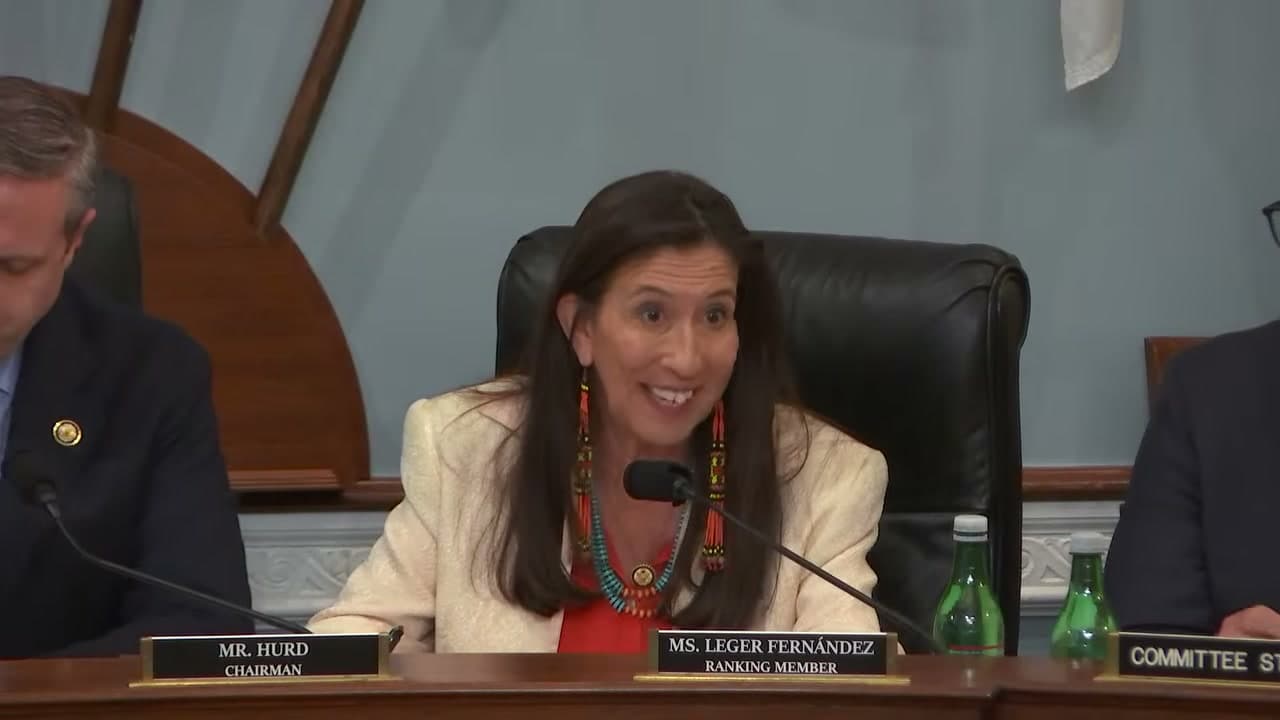
Frame from "House Natural Resources Subcommittee on Indian and Insular Affairs (Begich): Legislative Hearing" · Photo source
House panel hears bill to move tribal regulatory authority to Interior
Alaska is home to 229 federally recognized tribes — more than any other state and roughly 40 percent of the national total — and the federal authority that was supposed to review and recommend removing regulatory barriers for tribal business development has never been convened in the 25 years since Congress created it. The U.S. House Subcommittee on Indian and Insular Affairs heard testimony June 9 on legislation, H.R. 8954, that would move administrative responsibility for that authority from the Department of Commerce, where it has sat dormant since 2000, to the Department of the Interior, where the Bureau of Indian Affairs and its Alaska Regional Office already serve as the lead federal entity for Alaska tribal affairs.
The original 2000 law — the Indian Tribal Regulatory Reform and Business Development Act — created a 21-member authority with 12 tribal seats (a tribal majority), directing it to review federal regulations that impede tribal business development and recommend their removal in a report to Congress within one year. That authority was never seated.
Rodney Butler, chairman of the Mashantucket Pequot Tribal Nation and president of the Native American Finance Officers Association, told the subcommittee the mandate has been unfilled for 25 years, attributing Commerce's failure to lack of funding and institutional priority.
"There wasn't the resources, there wasn't the funding, and in 25 years, absolutely nothing happened," Butler said. "Without resources, I mean, it's just an empty promise."
Rep. Jeff Hurd, who chairs the subcommittee and introduced the bill, said Interior is better positioned than Commerce to lead the work because it already houses the Bureau of Indian Affairs and federal trust responsibilities to tribal nations. "If our goal is tribal economic development, responsibility should rest with the department that works with tribal governments every single day," Hurd said.
Butler urged the committee to ensure the transfer does not sideline Commerce, Treasury or other economic agencies from the review process. "The regulatory barriers facing Indian Country span the entire federal government, and the authority's effectiveness depends on robust interagency engagement," he said.
The ranking member criticized the administration for not sending witnesses to testify, saying it was the third hearing in a row without administration attendance. Interior submitted a written statement supporting H.R. 8954 but did not send witnesses.
The same hearing also took up a bill authorizing Indian Health Service funding for veterinary public health services in tribal communities, with testimony from Brian Berube, senior program manager at the Alaska Native Tribal Health Consortium. Veterinary public health has practical stakes in rural Alaska, where access to veterinarians is limited and zoonotic disease — including rabies in arctic and red foxes — has community-level consequences. A third bill at the hearing would transfer BLM land into trust for the Las Vegas Tribe of Paiute Indians.
This article is based on a public meeting of House Natural Resources Subcommittee on Indian and Insular Affairs (Begich) — House Natural Resources Subcommittee on Indian and Insular Affairs (Begich): Legislative Hearing ().
Made by our human newsroom with AI. How humans and AI work here · Grow with our newsroom Transcript byLucas Brown
Watch key moments from the source meeting. Click to expand.
Stay informed. Support what matters.
Free, permanent access to local news you can verify. Subscribe to support Alaska News and go ad-free.
Related Coverage
Senate panel will take up Native housing bill co-sponsored by both Alaska senators
Alaska News · 1mo ago
Congress weighs $500 million in tribal water money Alaska can't reach
Alaska News · 1mo ago
Senate Indian Affairs Committee advances Native housing rewrite to full Senate
Alaska News · 1mo ago
House panel hears bill to extend confidentiality to tribal victim advocates
Alaska News · 6mo ago
Begich bill would let the Indian Health Service fund rabies shots and spay/neuter in rural Alaska
Alaska News · 4mo ago
Comments
Sign in to leave a comment.
No comments yet. Be the first to share your thoughts.