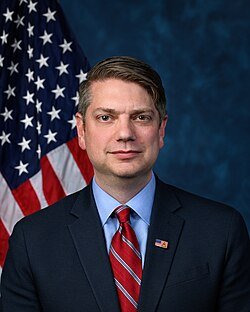
House Natural Resources Subcommittee on Indian and Insular Affairs (Begich): Legislative Hearing
Alaska News • • 103 min
Source
House Natural Resources Subcommittee on Indian and Insular Affairs (Begich): Legislative Hearing
video • Alaska News
Articles from this transcript
House panel hears bill to move tribal regulatory authority to Interior
A House subcommittee took testimony June 9 on legislation that would transfer a dormant 2000 tribal regulatory reform mandate from Commerce to Interior, 25 years after the authority was supposed to convene.
Begich bill would let the Indian Health Service fund rabies shots and spay/neuter in rural Alaska
Rep. Nick Begich's H.R. 8473 would let the Indian Health Service fund rabies vaccination and spay/neuter in rural Alaska, where rabies is endemic in foxes.
No audio detected at 0:00
Good afternoon. The Subcommittee on Indian and Insular Affairs will come to order. Without objection, the chair is authorized to declare recess of the subcommittee at any time. The subcommittee today is meeting to hear testimony on 3 bills that are before us. Under Committee Rule 4, any oral opening statements at hearings are limited to the chairman and ranking minority member.
I therefore ask unanimous consent that all other members' opening statements be made part of the hearing record if they are submitted in accordance with Committee Rule 3.0. Without objection, so ordered. Ask unanimous consent that the gentleman from Alaska, Mr. Begich, the gentlewoman from Nevada, Ms. Titus, be allowed to sit and participate in today's hearing. Without objection, so ordered. I will now recognize myself for an opening statement.
Good afternoon, and thank you to all of our witnesses for being here today as we consider 3 important bills affecting Indian Country. The bills before us address different issues, but they share a common goal: supporting tribal self-determination, improving quality of life in tribal communities, and ensuring that federal policy supports rather than hinders those efforts. First on the docket is H.R. 6917, Introduced by Representative Titus of Nevada., which seeks to transfer 3,156 acres of Bureau of Land Management land into trust for the Las Vegas Tribe of Paiute Indians. The Las Vegas Tribe of Paiute Indians originally resided in parts of the Colorado River region in southeastern Nevada and parts of both Southern California and Utah.
Today, their reservation is located in Las Vegas on approximately 3,850 acres. The National Defense Authorization Act for fiscal year 2015 included a provision that opened up thousands of acres of land adjacent to the tribe's reservation for development. In an effort to mitigate the impacts of this, the tribe worked with the city and the Nevada congressional delegation to craft an intergovernmental agreement between the tribe and the city. H.R. 6917 Codifies the portion of that agreement relating to the reservation's expansion.
I would note that as drafted, there is an error in this legislation that will need to be addressed before it can move beyond today's hearing. Our second bill is H.R. 8473, Introduced by Representative Begich of Alaska, which would authorize HHS to utilize funds for public health veterinary services through direct service care or under Indian Self-Determination and Education Assistance Act contracts and compacts. There's a correlation between unreliable veterinary services and high rates of rabies and zoonotic diseases. In a 5-year span between 2019 and 2024, 24,000 patients received ambulatory care from dog bites throughout IHS service areas.
The lack of veterinary services in rural communities has disproportionately impacted tribal communities, particularly children. In some areas of the United States, communities experience 365 dog bites a year, or essentially one dog bite every day. That alarming number is an unacceptable standard that communities have faced for far too long. Currently, IHS does not have the authority to provide care or funding related to zoonotic disease prevention or veterinary care, despite this care being important to reducing the public's risk of disease transmission or injury. H.R.
8473 Authorizes HHS to use funds for public health veterinary services to address zoonotic diseases. Additionally, IHS would coordinate with the United States Public Health Service, the Centers for Disease Control and Prevention, and the U.S. Department of Agriculture to provide public health veterinary services. Finally, we will consider H.R. 8954, The Tribal Regulatory Reform Implementation Act of 2026, which I am proud to sponsor. This legislation amends the Indian Tribal Regulatory Reform and Business Development Act of of 2000 to transfer administrative responsibility for the Act's regulatory reform authority from the Department of Commerce to the Department of the Interior.
As the subcommittee has seen, economic development opportunities are crucial for continued growth throughout Indian Country. Limited opportunities, systemic barriers, and inadequate infrastructure all contribute to high rates of poverty on many reservations. The Indian Tribal Regulatory Reform and Business Development Act of 2000 was enacted to help identify and remove federal barriers to investment barriers to business development, as well as barriers to wealth creation in Indian Country. Under current law, the Secretary of Commerce was directed to create a 21-member authority to carry out that work, with Interior serving as a supporting role. Today, proponents of this legislation assert that Interior is better suited than Commerce to lead an authority dedicated to tribal economic development.
Those proponents include me. If our goal is tribal economic development, responsibility should rest with the department that works with tribal governments every single day. The Department of the Interior is the central federal agency for government-to-government relations with the tribes, promoting tribal economic development and administering federal programs throughout Indian Country. Transferring this program to DOI simply makes sense. Each of these bills reflects the continued effort of Congress to reduce unnecessary red tape, promote tribal sovereignty, and strengthen tribal communities.
I want to thank each of our witnesses for being with us here today to provide your expertise, time, and leadership for the legislation that is under consideration. I look forward to a bipartisan and productive hearing.
With that, I will yield the remainder of my time back, and I will now recognize the ranking minority member for any statement.
Good afternoon. And thank you all for traveling to D.C. to speak to each of these important bills. Your testimony is critical. It helps illustrate how each of these unique pieces of legislation can strengthen tribal sovereignty and improve the lives of the tribal members and the surrounding community. And I look forward to hearing it.
What we also need, though, is testimony from the administration. This Congress, the administration has sent witnesses to only 5 of our tribal hearings. I am disappointed that this is the 3rd hearing in a row that the administration has failed to attend. The administration should be here today so they can provide their analysis, they can provide their support, or any ideas that we might have. Can they carry out this legislation?
It is both a matter of respect to the tribal legislation that is before us, and it is a matter of transparency so that the public knows where they stand on this legislation, which I hope would be supportive. Let's take Representative Begich's Veterinary Services to Improve Public Health in Rural Communities Act. I agree with Representative Begich. We absolutely need to reduce the number of stray dogs on tribal lands. My congressional district is home to the Navajo Nation, where there are approximately 250,000 stray dogs.
Too many are not vaccinated against rabies. This doesn't— this doesn't just allow the disease to spread, but stray dogs have also killed several individuals of the Navajo Nation, including a 3-year-old boy and a 13-year-old girl. In recent years. That's why I secured $1 million to construct a new animal shelter in Crown Point to spay and neuter, microchip, and importantly, vaccinate those dogs. We should build on this work.
In written testimony, IHS described its work to deal with the zoonotic diseases. This committee should give members the opportunity to ask IHS questions about the current barriers to eliminating rabies. We should get to ask what would be needed to successfully implement the new authority in H.R. 8473. Written testimony from the administration is not a substitute for showing up in person.
Once again, respect and consultation. Chairman Hurd's H.R. 8954, The Tribal Regulatory Reform Regulatory Reform Act takes an important step to boost economic opportunities in Indian Country. It transfers all administrative responsibilities and jurisdiction of the Indian Tribal Regulatory Reform and Business Development Act from the Department of Commerce to the Interior. And I look forward to hearing the testimony that will support why that is important to have this act at a place where where they understand a bit more.
We'd like it for the Commerce Department to understand more, but an agency that understands, because it's part of their job, what does it mean to have economic development? Because when the Department of Commerce originally testified on this bill in— yes, it was 1999— the official stated, since the cost of the authority could be significant, I believe it is important to emphasize that the department cannot currently perform the work required. And at a time when this administration has decimated staff against— across the federal agencies, I want to make sure that the Interior officials are ready to actually do this work. What do they need from us? What can we do to make sure that this transfer is successful?
And finally, Representative Titus's bill, H.R. 6917, Would put 3,156 acres of land into trust for the benefit of the Las Vegas Tribe of Paiute Indians. This legislation is not just important to create economic opportunities for the community, it also protects the tribe's ancestral and sacred lands. Thank you so much for bringing this bill. I really love it when we're able to, in this committee, help to move land into trust.
I do look forward to the sponsor's technical corrections to the bill. To make sure that repeals only the essential sections of the 2015 NDAA. I hope we do not lose sight of the need to provide funding for resources and staff so that administration can carry out the goals of each of these bills. And I look forward to your testimony and our questions today. And with that, I yield back.
Gentlewoman yields back. At this time, the chair recognizes the gentleman from Alaska, Mr. Begich. For 5 minutes to speak on his legislation. Mr. Begich. Thank you, Mr.
Chair. Chairman Hurd, Ranking Member Leger Fernandez, thank you for holding this hearing and for including H.R. 8473, The Veterinary Services to Improve Public Health in Rural Communities Act, on today's agenda. This bill is about a problem hiding in plain sight in rural America, and especially in rural Alaska. In the villages I represent, a child bitten by a dog can be hours from medical care by air.
Rabies is not a historical threat in northern and western Alaska. It's enzoonotic, meaning it is consistently present in the wildlife, and our communities live with the risk of an exposure event every single year. The numbers tell the story. Alaska Native children are hospitalized for dog bites at roughly twice the rate of children nationally. In the Yukon-Kuskokwim Delta, that rate climbs to 7 to 9 times than national per capita average.
Across the Indian Health Service, Alaska has some of the highest dog bite-related hospitalization numbers in the country. The underlying cause is straightforward. IHS does not have explicit statutory authority to provide or fund the basic veterinary services—rabies vaccination, spay and neuter, parasite and disease prevention—that stop zoonotic disease before it reaches a person and prevent the bite that puts a child in an emergency room. H.R. 8473 Fixes that gap.
It authorizes HHS through IHS to fund public health veterinary services directly or through Indian Self-Determination and Education Assistance Act contracts and compacts so that tribes and tribal health organizations can deliver them on their own terms. Plugs IHS into the federal One Health framework alongside CDC and USDA, and it directs Animal and Plant Health Inspection Service Wildlife Services to study oral rabies vaccine delivery to Arctic wildlife, tackling the upstream source of the problem at its source. This is a prevention bill. It protects children, reduces downstream costs to the federal health system, and it honors tribal self-determination. I'm grateful to the chairman for taking it up, and I urge the subcommittee to advance it.
Look forward to the testimony of our witnesses. Thank you very much, and I yield back. The gentleman from Alaska yields. The chair will now recognize All right. The chair will not recognize anyone new at the moment yet.
That person will hopefully be here before long. I would like to now introduce our witnesses. The first is the Honorable Rodney Butler, President of the Board of Directors of the Native American Finance Officers Association here in Washington, D.C. Great to see you, Mr. Chairman. The next witness we have this morning is the Honorable Benny So, Chairman of the Las Vegas Paiute Tribe in Las Vegas, Nevada. Welcome, Mr. Chairman, to you.
The Chair would now like to recognize Mr. Begich for 30 seconds to introduce the witness from his district. Mr. Begich. Thank you, Mr. Chair. Before Mr. Berube Brian delivers his testimony, I want to take a moment to welcome him to Washington and thank him for making the trip from Anchorage.
Brian is the senior program manager for veterinary services at the Alaska Native Tribal Health Consortium. ANTHC is the statewide tribal health organization serving all 229 federally recognized tribes in Alaska and every Alaska Native and American Indian person in our state, providing public health, community health, environmental health, and a wide range of other services across one of the largest and most logistically challenging service areas in the country. There's no organization in Alaska with deeper field experience on rural public health, and there is no one in a better position to tell the subcommittee what an ordinary year looks like in a Yukon-Kuskokwim Delta village when a rabies exposure event happens, or when a child is bitten by a dog at the edge of the village with no veterinarian within hundreds of miles. Brian, welcome. We're glad to have you here today, and we look forward to your testimony.
Thank you, Mr. Bagich. Let me remind our witnesses that under committee rules, they— you must please limit your statements to 5 minutes, but your entire written statement will appear in the hearing record. To begin your testimony, for those of you that haven't done this before, there is a little button in front of you, the talk button. Hit that button. We do use timing lights.
Green means go, yellow means you have 1 minute left, and when the light turns red, I'd ask that you please wrap up your statement, or if you're responding to a question, please wrap up your response as quickly as you can. I will also allow all witnesses on the panel to testify before member questioning begins. And if you all are ready, the chair will now recognize Chairman Butler for 5 minutes. Chairman Butler. Good day, good day, friends.
Chairman Heard, Ranking Member Elijah Fernandez, members of the Subcommittee. Thank you for the opportunity to testify again today in front of this great subcommittee. My name is Rodney Butler, and I am the Chairman of the Mashantucket Pequot Tribal Nation and President of the NFOA Board of Directors. NFOA, founded as the Native American Financial Officers Association, has served Indian Country for over 40 years. Our more than 190-member tribes represents the full diversity of tribal economies, from gaming and energy to agriculture, federal contracting, and much beyond.
No audio detected at 55:30
We appear today in strong support of H.R. 8954, The Tribal Regulatory Reform Implementation Act of 2026. On its surface, H.R. 8954 Is a targeted administrative correction, but its significance runs much deeper. This bill is about keeping a promise made to Indian Country over 25 years ago.
In 2000, in the year 2000, Congress passed the Indian Tribal Regulatory Reform and Business Development Act with a clear mandate to comprehensively review federal regulations that impede investment in business development on Indian lands and recommend their removal. The legislation established a 21-member authority with 12 seats reserved for tribal representatives, and it directed it to report to Congress within one year. That authority was never convened. 25 Years later, the mandate remains unfilled. This legislation originated by the great Senator Ben Nighthorse Campbell of Colorado, a Northern Cheyenne citizen, a former Olympian, and one of the most consequential champions for Indian Country to ever serve in Congress.
Senator Nighthorse Campbell understood that economic sovereignty and political sovereignty are inseparable, and he was clear about what stood in the way. And in his own words stated, laws, regulations, and policies have built up often with good intentions, but have outlived their usefulness and have been repeatedly identified as a barrier to Indian entrepreneurship and business development. Unfortunately, Senator Nighthorse Campbell's words ring just as true today as they did in 1999. H.R. 8954 Gives the Congress the opportunity to finally honor his vision.
NFOA supports locating this authority within the Department of Interior, The Interior Department houses the Bureau of Indian Affairs, the Office of Indian Energy and Economic Development, and the full suite of federal trust responsibilities to tribal nations. It has the institutional knowledge and the relationship to make this work. Consolidating the function at Interior will reduce interagency fragmentation and give the authority the best possible footing to do its job. We do urge the committee to ensure that the transfer does not sideline Commerce, Treasury, or other economic agencies from the review process. The regulatory barriers facing Indian Country span the entire federal government, and the authority's effectiveness depends on robust interagency engagement.
NFOA is proud to serve as a technical advisor to the tribal— to the Treasury Tribal Advisory Committee at the United States Department of Treasury. The success of the TTAC as a model of robust federal-tribal consultation should be highlighted as an example of how matters important to Indian Country can be advanced through intentional tribal consultation and collaboration centered on the voices of tribal leaders. Federal agencies across the government must build comparable structures because the regulatory barriers facing tribal economies do not stop at any single agency's door. Despite the delay in convening this authority, NFOA, our member tribes, the partner tribal organizations that have spent years identifying exactly the kind of barriers The Indian Tribal Regulatory Reform and Business Development Act was designed to surface and proposing concrete solutions. As an example, the Tribal Tax and Investment Reform Act of 2026 contains approximately a dozen provisions, each identified as a barrier to building robust tribal economies.
It advances parity in tax treatment for tribal enterprises and removes structural inequities that no sovereign should be forced to navigate. Tribal nations are already actively identifying barriers to their economic sovereignty that Congress has the tools to address. We see the Tribal Regulatory Reform Implementation Act of 2026 and the Tribal Tax and Investment Reform Act of 2026 as complementary pillars of the same long overdue commitment to building stronger tribal economies. Chairman Heard, the history of federal Indian policy is too often a history of promises made and promises broken. The Indian Tribal Regulatory Reform and Business Development Act was a good law when it was enacted.
H.R. 8954 Does not ask Congress to make a new promise. It asks Congress to keep an old one. The tribal representatives who sit on this authority have waited a quarter century for the seat at the table to guarantee them, guaranteed to them by the statute. It is time to give them their time.
NFOA urges this subcommittee to advance H.R. 8954 Forward without delay, and we stand ready to assist in any way possible. Good tapas. Thank you. Thank you very much, Chairman Butler.
The chair now recognizes the gentleman from Nevada, Ms. Titus, for 5 minutes to speak on her legislation. Ms. Titus. Well, thank you very much for holding this hearing, and, uh, ranking member, uh, it's very important. I'm so I'm glad to see my friend here, Chairman Benny Soh, from the Las Vegas Paiute Tribe, and to speak to this. He's been working on this for such a long time.
We've worked on it together, and the gentleman before him said much more eloquently than I why this is important. I appreciate that. The heart of the legislation is fairness and following through on our commitments to tribal communities. You know, as we'll hear from Chairman Soh later on, it's the culmination of over a decade of work by the Las Vegas Paiute Tribe.
In order to understand the full historical context of the legislation, though, you don't just go back a couple of decades, you have to go back several centuries. Long before the settlers moved to the Las Vegas Valley in the early 1800s, The tribe's ancestors, known as the Tudimu, or desert people, traversed this land. Unfortunately, when the United States took control of the region in 1848, the Las Vegas Paiutes were pushed out of most of their traditional homelands. Congress created the Snow Mountain Reservation in 1983, and I'm sure it'll come as no surprise to anyone that it was only a fraction of the lands that the tribe had once called home. H.R.
6917 Will expand the Snow Mountain Reservation, reinstating 3,150 acres of Bureau of Land Management land back to the Las Vegas Paiute Tribe. That land is of great historical and spiritual importance to the tribe, as their ancestors traveled across it back and forth into the valley each year to escape the oppressive desert winter and later heat. You can also see the Sheep Mountains from the land, a mountain range that is deeply sacred to the tribe. In addition to being spiritually significant, the bill will also support the tribe's efforts to be self-sufficient because it will create considerable economic opportunity. While we can never fully make up for the injustices that have been done to Native people, this legislation will help to do that by returning sacred land that the Las Vegas Pai Tribe has long called home and really has a kind of a sacred claim to.
So I'm very proud to have worked with them over the last decade to now sponsor H.R. 6917, To be leading this effort in Congress. It's meaningful to me personally, and I know to the chairman and to his tribe as well, and he will speak to that. And thank you for your consideration. I yield back.
The gentleman yields. At this time, the chair recognizes Chairman Soh for 5 minutes. Chairman Soh. Good afternoon, Chairman, Ranking Member, members of the subcommittee. Again, my name is Benny Soh.
I'm the chairman of the Las Vegas Paiute Tribe. We're located in Las Vegas Valley of Southern Nevada. Thank you for the opportunity to appear before you today to present testimony on behalf of our tribe. I'm here to support H.R. 6917, A bill that would transfer and place into trust lands currently under the jurisdiction of the Bureau of Land Management and adjacent to our Snow Mountain Reservation.
I'd also like to thank Congressman Dina Titus for introducing this legislation. She has been a longtime friend and a supporter of the tribe, and we appreciate her hard work on our behalf for over many years. That we've been friends and that we've communicated with. The same with her colleague, Congressman Mark Emede, a co-sponsor of this legislation and a member of the Natural Resources Committee. Finally, I extend our appreciation to our Nevada representatives.
Congressman Susie Lee, also a member of the full committee. Congressman Steven Horsford both support us in this effort. This legislation represents more than a decade of work by the tribe to have these approximately 3,200 acres of our ancestral lands added back to our Snow Mountain Reservation. As Congressman Titus stated before me, the Snow Mountain Reservation was created by an act of Congress in 1983 to provide for greater economic growth for our tribe. Beyond the 13 acres downtown Las Vegas originally ceded to us in 1910 by the landowner Helen J. Stewart, to be, quoting here, "a colony for the remnants of our people." Our ancestors were the Tudu Nu, or Desert People.
Our traditional homelands covered our southern eastern Nevada, Southern California, and Utah. Our ancestors relied on spring— springs, mountains, and seasonal camps to support a way of life adapted to the desert heat.
Sadly, the arrival of newcomers to the Las Vegas Valley led to our decline. By the early 1800s, trappers, traders, and then permanent settlers began moving into the valley, disrupting our Paiute movement across to water-rich lands and so forth. After the United States took control of the region in 1848, And settlement expanded, the Las Vegas Paiutes were pushed off most of their traditional homelands. The lands we're seeking now represent a minor portion of what once was. Still, our tribe has endured and created self-sufficiency with our economic development efforts.
Out at Snow Mountain, the tribe has built 3 world-class golf courses which are enjoyed by the residents of Las Vegas as well as numerous visitors to our city. It also employs numerous non-tribal members to the community. There's approximately 320 people that were the tribe employees out there. The lands we're seeking to add are directly adjacent to our Snow Mountain Reservation, and although they will, they will clearly help our tribe grow, these lands are much more than that. The lands outlined in this legislation were part of our lands traversed by our ancestors from Mount Charleston where they spent the hot summers, down to the valley floor during the wintertime.
The route extended to the Sheep Mountains, which are visible from our Snow Mountain Reservation and are sacred to the culture of the Las Vegas Paiute Tribe. Our people lived, died, held ceremonies, and worshiped on these lands.
We currently maintain cooperative management agreements with the BLM for the lands contained in this legislation. To protect them for future generations for our tribe. Taking them into trust on the tribe's behalf is a culmination of the efforts to preserve them. It's important to point out that the transfer of these lands will benefit the entire region. Throughout the decade during which we have sought for this transfer, the tribe has worked with other major stakeholders in Southern Nevada.
For example, the lands to be taken into trust contain an energy transmission corridor that will provide needed electricity to our state. The tribe has entered into agreements with the energy provider to ensure that the project will immediately be granted a full right-of-way consistent to the line currently in place at Snow Mountain Reservation. This agreement is referenced in our legislation. We're also working with the United States Air Force Base to develop support industries on our reservation to serve the logistical needs of the Creech Air Force Base to the north of us. The tribe has gladly supported the Air Force in Nevada, including working together on military land usage near our reservation, protecting cultural assets and land within the Air Force jurisdiction.
As the Las Vegas Valley continues to grow and as new homes fill the valley, the Snow Mountain Reservation represents a living reflection of history, how things once were, how the valley once looked, and how we once lived there. I respectfully urge the committee to support H.R. 6917, Not only for the Las Vegas Paiute people, but the future generation of all Southern Nevadas. And again, thank you for the opportunity to speak for you today. Thank you, Chairman So.
The chair now recognizes Mr. Barabé for 5 minutes. Mr. Barabé. Thank you for this invitation to testify on H.R. 8473, The Veterinary Services to Improve Public Health in Rural Communities Act. And a special thanks to our Congressman Nick Begich for bringing forth this important legislation.
On behalf of the Alaska Native Tribal Health Consortium, I appreciate the opportunity to provide testimony, and ANTHC is in full support of this legislation. As Representative Begich mentioned, ANTHC is a tribal health organization that provides public health, healthcare, sanitation, programming, and services to all 229 tribes in Alaska and all Alaska Native and American Indian people that reside in our state. My name's Brian Bareba, and I've had the good fortune of working for almost 20 years now in tribal environmental public health programs supported by the Indian Health Service. Sufficient access to veterinary care is a critical component of public health. Veterinary services, especially those addressing zoonotic disease prevention and animal population control, have a direct effect on human health in the communities that we serve.
Challenges addressed by this legislation are particularly acute in Alaska, where geographic isolation and limited infrastructure contribute to pretty dramatic health disparities. Besides sporadic services from nonprofit veterinarians, there has never been access to veterinary care in the rural parts of our state. As such, Alaska Native communities and people experience elevated rates of animal-related injury. Alaska Native children are hospitalized for dog bites at approximately twice the rate of the general U.S. population and have the highest rate of dog bite hospitalization in the Indian Health Service system. The rate of dog bites amongst Alaska Native people is 3 times the rate of non-native Alaskans.
In the Yukon-Kuskokwim Delta, the reported dog bite rates among children are 7 to 9 times the per capita average. The rate of fatal dog maulings in Alaska has been found to be almost 16 times the national average. These disparities reflect systemic gaps in access to preventative services. Furthermore, in Alaska, rabies remains an ongoing and ever-present public health issue. Rabies is enzoonotic— excuse me— in our fox populations in northern and western Alaska, meaning it is always present, and it poses a persistent and continual risk of transmission from wildlife to domestic animals and to people.
And communities still face acute exposure events as we sit here today. 40 Of the roughly 450 residents of Marshall, Alaska, are actually undergoing post-exposure treatment after being exposed by a dog who had come in contact with a rabid fox. And this is not a once-off, this is a fairly common occurrence in our state. Such events require a rapid and costly medical response and illustrate a lack of the upstream prevention capacity that we all know is so critical to public health. In ANTHC's view, these challenges are driven by limited access to basic veterinary care, including routine rabies vaccination, spay and neuter services, parasite and pathogenic disease surveillance, uh, and prevention.
Without these services, our communities face large populations of free-roaming animals, increased risk of injury and disease transmission, and recurring public health emergencies. Though these public health challenges are well known, current laws limit the ability of IHS and tribal health organizations to address them. Because IHS lacks explicit authority to provide or fund veterinary public health services, existing tribal rabies prevention programs are limited in scope and efficacy. Communities continue to rely on intermittent and external support. And the root causes of animal overpopulation and disease transmission remain unaddressed.
In Alaska, the direct connection between animals and human health is not theoretical. In this case, it is visible in the elevated rate of dog bite injuries, repeated rabies exposure events, and an ongoing strain on rural health systems. These outcomes are not inevitable. They are the result of a limited access to basic veterinary services and a lack of federal authority to deliver them. This legislation can close these gaps.
It authorizes IHS and tribal health organizations to address the root causes rather than continuing to respond after these events occur. It aligns with tribal self-determination by allowing tribes and tribal organizations to design and implement solutions that reflect local conditions and needs, particularly in remote and high-risk regions like western and northern Alaska. Ultimately, this bill is about prevention, safety, and equity. It is about ensuring that rural tribal communities have the tools needed to protect both human and animal health in a coordinated and sustainable way. In closing, H.R.
8473 Provides a practical and necessary solution to a well-documented public health gap. ANTHC respectfully urges the subcommittee to advance this legislation. Kuyana, thank you for your time. Thank you, Mr. Berube. The chair will now recognize members for 5 minutes for questions, and I will begin by recognizing the gentleman from the state of Alaska, Mr. Begich, for 5 minutes.
Mr. Begich. Thank you, Mr. Chair. Uh, Mr. Berube, as you well know, our district covers 663,000 square miles of some of the most remote terrain in the United States, much of it accessible only by plane or boat, in many villages that have never had a veterinarian visit, let alone a veterinarian reside there.
Status quo is reactive. A child gets bitten or a rabies exposure event happens and the health system scrambles to respond after the fact. Could you walk the subcommittee through what a typical year looks like for a Yukon-Kuskokwim Delta or North Slope village dealing with rabies exposure, dog bites, or animal overpopulation under the current system, and how the authorities provided in H.R. 8473 Would change that picture on the ground?
Sure, thank you. Um, so in our tribal health system in Alaska, we have 7 large regional tribal health organizations, and then, you know, our direct health care in our remote villages is done by health aides. So typically, if a child, or any person, but most of the time it's a child, gets seen at a health clinic with a dog bite, they're going to call the regional environmental health office, and It's an IHS-supported environmental health office. And what that office does is it tries to get a hold of the dog owner because of this risk of rabies transmission, right? Because if a person gets rabies and becomes symptomatic, they're dead.
There's no treatment for it. So I remember when I first moved to Bethel doing this as part of the job, and this is a really significant part of our job, is trying to contact dog owners First, we're checking to see if the dog has rabies vaccinations, 'cause we travel as much as we can to provide rabies vaccinations. And then the goal is to try to get the homeowner to quarantine the dog for 10 days so they could be observed for the signs and symptoms of rabies. And I remember even in my first week on the job thinking, "This is really problematic." We don't have quarantine facilities. The signs and symptoms of rabies are all over the place.
Oftentimes we think of the furious, but there's also, you know, when they just get really lethargic. So, both for our health aides and then our environmental health offices, these dog bites are a really consistent recurring incidence. And then typically, our rabies outbreaks tend to occur in the later parts of winter. You know, it's always in the fox population, and a lot of time what happens is, As winter progresses, fox will move close to villages and start denning up in dumps and things like that, landfills and places like that. And then most dogs in rural Alaska live outdoors.
So the closeness of the fox population and the domestic animal populations are right next door to each other. So when, you know, best case scenario, we know the animal is vaccinated, we can quarantine it, but that is rarely, rarely the case. Case. Uh, so most of the time we work with our state virology people and we arrange for people to get post-exposure treatment. And when that's one person, um, two people, a family, you know, that's not that large of a task.
But when we think about this incident in Marshall, um, that I referenced in this, it was a dog that had puppies. It was attacked by a fox. The dog killed the fox. The puppies were sent to people all over the community. And then the tribal health organization found out about it later.
So it was weeks of contact tracing, you know, and one of those parties is a dog, so they're not able to speak. So there's just a lot of gray area and a lot of room for errors to occur. So thank you. Suffice to say, uh, it, it seems as though these authorities that were provided would, would go, uh, quite a ways to protecting public health in these rural communities? Yes.
Um, our tribal health organizations, um, in western and northern Alaska, we provide rabies shots, but with no access to especially spay and neuter services, there's no way you can keep up. You know, a dog gets a rabies shot in the first year of its life, it needs one the following year, it needs one every 3 years after that. So there's no way for us to keep up with the risk from vaccinating the dog. So in Public health, right? We're always looking to the upstream drivers of our health issues.
So for us, that is access to veterinary care. It's spay and neuter services. Thank you. And I appreciate you making the long trip on short notice to come down to our nation's capital to provide this insightful commentary and testimony. We appreciate your commitment to rural Alaska that you've made as a part of your career.
And we certainly want to, want to advance legislation that's going to make people healthier in Alaska, particularly those who don't have access to the kind of care that we have in Anchorage and other population centers in our state. And with that, I yield back. The gentleman from Alaska yields. At this time, the chair recognizes the ranking member of the subcommittee, the gentlewoman from the state of New Mexico, Ms. Leger Fernandez, for 5 minutes. Ms. Leger Fernandez.
Thank you, Chair and President and Chairman Butler. I think— I thought your testimony was very powerful, especially as you pointed out that the Commerce Department has had way too long to keep the promises that we made in 1999. Can you explain why you think the Commerce Department may have utterly failed in its obligations? Well, you said that, not me. That's my job.
Well, clearly one of the key components is funding and resources, and my understanding is not until recently was there funding that was provided for one of the key provisions of that authority in the Economic Development Office, or I'm paraphrasing what the actual office is titled. But that was key, and, you know, 26 years ago, I was graduating college, so I have no idea, like, at that moment in time, I think Commerce, it wasn't a natural fit. I think that's why we're— the proposal is the way it is, shifting it over to Interior. I think in the world of commerce, there's a lot going on. And so, for them to prioritize tribal nations and our economic priorities, just, I would imagine, fell off the radar.
It just wasn't important to them, quite frankly. And so, and how it then carried on for 25, 26 years until this moment, I really would say that in line with, you know, what we're hearing from this administration and looking at regulations and breaking down barriers to economic advancement, I think that's where this now rises back up to the top. And migrating that over to Interior, where Interior has been very supportive of tribes and understands the nuances of our nations and manages most of our programs, seems like a natural transition to move over there. Well, thank you very much. And I'm glad that you pointed out the importance of funding and resources resources and staffing, because it needs to be available.
It should have been available in the Department of Commerce, and it's our job actually in Congress to make sure that we get that to you. But I'm also concerned about— and you pointed out in your testimony— that you really need to have us consider that the bill should ensure that the authority has adequate resources, including funding and staffing. And I don't know if you want to elaborate on that because I am concerned when we don't adequately maintain staff even after Congress authorizes the funding for it. Do you have any concerns regarding that? Well, no, absolutely.
I mean, just going back to your first question, that's why we're here, right? There wasn't the resources, there wasn't the funding, and in 25 years, absolutely nothing happened. Doesn't mean that's not important. It's clearly— it shows the level of importance Commerce and to various administrations, but that was the main hurdle for it not moving forward. And so without resources, I mean, it's just an empty promise.
Right, and I think that that will be a very important thing for us to do is to make sure that we include the authorization for the resources and then in the appropriation, but I think also in the authorization we need to say you're authorized so that we can actually then appropriate the money. Mr. Barubay, your description of the difficulties in Alaska with regards to veterinary care and the importance of going upstream, I think is really important. And, you know, we actually had a fox bite a member here in— on the Capitol several years ago, and it was really painful for the person who had to go through the treatment. I was wondering, have there been any actual transmissions so that you have a positive? Have there been any individuals who actually contracted rabies?
Uh, no. Thank you. And it's incredible that there hasn't been. Yeah, I think we, we provide the post-exposure treatment. Uh, if there's any question, we provide it.
Well, thank you very much, and I'm, I'm glad to hear that. And, and Chairman, so your description of how what you're doing is not just beneficial and important for your own history and connection that you've had since— I started seeing the mountains as you were describing the migration, but it's also important for your surrounding communities. Can you elaborate on why that is? I know I've run out of time, but the importance to the surrounding communities of the transfer. Land interest?
Sure, I think, you know, being there in the Las Vegas Valley, I think again we have a lot more to offer to our neighbors, you know, to the south of us, you know, in our surrounding communities. So for one, you know, being able to provide, you know, some employment opportunities for non-Natives, what our economic development, you know, what that looks like, you know, providing more jobs, more family wage family wages for, for those communities, and also to help out, you know, the local utilities there that they have there, you know, continuing with the partnerships that we've built and created with the, you know, the Nevada Department of Energy. Also Creech Air Force Base, you know, we've held some meetings with Creech, you know, I've talked to their commanders, you know, and talked to the generals down at Nellis Air Force Base, you know, understanding the need for housing for them, you know, understanding the need for amenities, you know. So being able to provide a certain carve-out of land for them to utilize that for, for their specific need, rather than having them run 20, 30 minutes back into town, you know. We're 15, 20 minutes— we're 15 minutes away, you know.
So having that be— having those amenities for them. And also, you know, again, the, the true government-to-government relationship that we, we can build with those entities, you know, I think that's the benefit. And also, like you mentioned before, you know, preserving our traditional homelands, preserving our culture, the sacredness of that land, you know, that's our creation story and that's our trail. So there's all kinds of benefits, I think, not only for the tribe or the surrounding communities. Thank you.
And with that, I yield back, Mr. Chair. The gentleman's time has expired. At this time, the chair recognizes himself for 5 minutes. Chairman Butler, thanks.
For being here this morning, or this afternoon, I should say. It's great to see you again. I want to reiterate what the ranking member said about your testimony on this legislation. I thought it was very well done, very well crafted. I also appreciate the technical considerations that you proposed as well.
I am a little bit biased in terms of the substance in that Senator Ben Ayers Campbell, before being Senator Campbell, was Congressman Campbell from Colorado's 3rd District. So he was one of my predecessors, a very good man and a giant. In western and southern Colorado and also in Indian Country as well. One of the pieces of your testimony you quote is from Senator Campbell, where he talked about the multi-layered bureaucracies, federal as well as tribal, have been repeatedly identified as a barrier to Indian entrepreneurship and business development in and around Indian lands. Chairman Butler, can you speak to the importance of having tribal voices at the table when removing federal barriers to tribal economic development?
Yeah, I mean, I'm a living example of that. So, one of the many hats that I wear is also a member of the Treasury Tribal Advisory Committee, and, you know, it's 7 members of that committee that represent tribal voices from all over the country, different regions, and having firsthand knowledge of what we're going through and the challenges that we face as tribal government and tribal leaders has been incredibly beneficial for Treasury to reshape the regulation regulations that we've now put in place. I mean, regulations that had been 30 years in the making in some cases, whether it was tribal and tribally chartered entities or general welfare exclusion regulations. And that was because of the benefit of having us all there and speaking to those directly and our lived experiences. Can you give a couple examples, just concrete examples of instances where current regulations or proposed regulations would place unnecessary burdens on economic development in Indian Country?
Well, I think, I mean, an easy one is sitting next to Chairman Soh and what they're fighting for, for their land back in northern Las Vegas. I mean, I challenge any of you to go up to northern Las Vegas. It's not a— in fairness, most of the places, the territories where we've been sent to aren't places where many people want to go, right? And the economy in northern Las Vegas does not exist if it weren't for the success of the Las Vegas Paiute and what they've been able to do with their lands and returning their lands back them. And so the notion that they've been waiting 12, 15-plus years to get this land back, which for one, for cultural reasons and ancestral reasons, is theirs, but also it has the economic benefit, shows that the, the broader challenge of all the, the regulatory hurdles that we have to go through in order to not only advance our economies but advance regional economies.
And so I think that's a great example that we're hearing live in the room of why 8954 is so important. Great. And can you talk for a moment about— I understand the funding issue with respect to Department of Commerce and in terms of dollars being allocated and the priority being in that department or not being in that department. Can you talk a little bit about why, just from a governmental standpoint, from a tribal standpoint, it might be better to locate this office within the Department of the Interior, just given the portfolio of other things that Interior has? I think it's a natural partner for us.
I mean, that's who we're working with in most of our programs to date, but I would say it's certainly not to relieve the other departments of their obligations to Indian Country. I want to make that very, very clear. And so we work with Commerce hand in hand. They're a great partner in various areas, but consolidating the focus under the Department of Interior allows us to look, you know, cross-program and work within the the structure of the existing, I mean, you have the stack structure within Interior that's similar to the TTAC. And so the examples are there and it's working, working well.
And so this just would be an extension of that model that's working. Thank you, Mr. Chairman. Appreciate NFOA's engagement on this issue and so many others. Great to have you as a resource when it comes to these issues in Indian Country. Mr. Berube, quick question for you.
Can you talk about how this bill fulfills the US's commitment to Indian tribes and Alaska Natives. Microphone. Usually I'm pretty loud. I don't need microphone. Under the trust responsibility between the federal government and tribes, starting with the Snyder Act to the Indian Health Care Improvement Act, it specifically said that their role is to identify and reduce health disparities between Native and non-native people.
So I think the case that we have concerning veterinary care and the problems that we have without it are glaringly obvious. And I think in the IHS system, in our tribal health system, we've come up with really inventive and creative ways to approach these problems in the past. And I think this would be a continuing— continuance of that tradition. Great, thank you very much, Mr. Berube. And I see my time has now expired.
At this time, the chair recognizes the gentlewoman from the state of Arizona, Ms. Grijalva, for 5 minutes. Ms. Grijalva. Thank you, Chairman Hurd. Thank you all for being here. The federal government's trust and treaty obligations to tribal nations and the need to make meaningful investments in Native communities have too often been overlooked, whether we are discussing land stewardship, public health, infrastructure, economic development, or regulatory reform, these issues all point to the same reality.
Tribal nations need resources, authority, and partnership necessary to build strong and resilient communities. At a time when tribal communities need greater federal partnership, many tribes in my district are facing the prospect of losing critical federal, federal presence through proposed Indian Health Service consolidations and potential closure of Tucson area IHS office. And the federal government has a responsibility to ensure that tribal communities have access to quality healthcare. The answer to longstanding inequities is not less investment or less local capacity. It is stronger commitment to meeting our trust responsibilities.
That is why the legislation before us today matters. As tribal communities confront the possibility of reduced federal resources and support Congress should be advancing policies that strengthen tribal self-determination, expand access to services, protect tribal lands, and create new economic opportunities. The bills before us today recognize that tribal self-determination depends on more than words. It requires action in order to make upward progress. So I have a few series of questions since we're covering 3 different bills.
So I'll start with Chairman So. How would taking this land into trust help mitigate development pressures near the reservation and support long-term management goals of the tribe? Thank you. Uh, yes, I believe that, you know, taking this land into trust, how it would help and benefit would again, you know, take into the surrounding area, you know, our creation story that we have. You know, we've talked about the Sheep Mountain Range, you know, that's just the closest part of ourselves.
We're surrounded in the Las Vegas Valley by our sacred mountains— Sheep Mountain, Sunrise Mountain, Sloan Canyon— and where our creation story begins, you know, Mount Charleston, what we call Nuvuvakai. That's where our people come from. And then having that area adjacent to us, you know, and providing that land in the trust, I think helps our culture and it helps our identity to to withstand the test of time, you know. And then we had also had— we had the opportunity to, uh, we had the opportunity to, you know, uh, change our enrollment criteria. So now we allowed— we're going from a small 48, uh, tribal member to 89 tribal members now.
So we changed our enrollment criteria, so that would provide, you know, some benefits for, uh, our future citizens. We, we don't consider ourselves members no more because the Las Vegas Paiute Tribe, we're not a club, you know. You know, we consider ourselves citizens of the Las Vegas Paiute Tribe, the Paiute Nation. So we are citizens now. And so I think that will help greatly benefit, you know, the land that taken into trust would greatly benefit, you know, and it'll prolong our existence, you know, for our future generations, our grandkids, great-grandkids.
And then as far as going for, you know, helping out the surrounding areas, again, Like I mentioned before, you know, there's opportunities for business development, there's opportunities for energy corridors, there's opportunities for the Department of Defense to take, you know, to help us out, to help do things that, you know, that we need, you know. And I think that's a great partnership, you know, outside the tribal barrier, so to speak, you know. That's just how we got to progress, you know. Although we live in our traditional ways, we've got to figure out ways that we can commingled 2026 in our traditional way. Thank you, Chairman.
Um, Chairman Butler, your testimony emphasizes the importance of collaboration across federal agencies. Can you expand on why coordination is so important and how it helps the authority identify and address the real regulatory challenges that tribal communities face on the ground? Well, I mean, simply put, in, in a traditional way, it's, it's, it's being in the canoe, right? And if you're in a canoe and everyone's rowing in different directions, you're just going to circle. And that's what we've been doing from a government-to-government perspective, working with the U.S. government for centuries.
And so, having all of those regulatory bodies speaking the same language in the canoe, rowing in the same direction, that's how we're going to make progress. Thank you. Mr. Barabee, you mentioned that many tribal and rural communities face significant systemic gaps in access to veterinary services. Can you help us understand why veterinary care is also a public health issue and why Indian Health Service is well positioned to help address these challenges? Sure.
In the bill, they bring up the term One Health, which is kind of a really popular paradigm in public health right now that just acknowledges the relationship between animals, people, and their environment. And while, like, in Western society, this sounds like a new idea, I mean, this is how indigenous people have always understood their world to work, right? So, I mean, from a public health perspective, we, we talked about the rabies, we talked about the dog bites, um, you know, 60% of diseases people get have origins in animals. Dogs themselves are known to transmit over 70 different illnesses between animals and people. So I think there's this obviously the physical health component of it, but I think when you talk about Alaska Native people in particular, dogs are very, very important members of their family, parts of society, part of their culture and everything.
So I think, you know, this issue really spans community health. It goes from diseases, dog bites, sanitation, feeling safe to walk from one house to the other. So it's a really— it's a community health issue. And I encourage anybody that has any question about this. I mean, if you get off a plane in a rural Alaskan community, and I'm assuming there's communities like this all over the country, you can't miss that this is a major public health issue.
Thank you so much. I also hope that there's funding that goes along with this because, as I mentioned before, the cuts to Indian Health Services are pretty significant. And when we're adding more services, we need more resources. So thank you. I yield back.
Thank you. The gentlewoman's time has expired. At this time, the chair recognizes the gentleman from the state of Montana, Mr. Downing, for 5 minutes. Mr.
Downing. Thank you, Mr. Chair, and thank you to the witnesses for being here. I'm going to start with Chairman Butler. In your testimony, you highlighted how, like all businesses, tribal firms benefit from government structures that are easy to navigate.
So what role do you believe the authority established by the Tribal Regulatory Reform and Business Development Act of 2000 can play in streamlining the federal government for tribal businesses? Well, I think— thank you, Congressman— I think simply identifying those in one location, right? So right now there are challenges that are identified, but it's fragmented across various departments, and there's no consolidation of— so we talked earlier about the Tribal Tax Investment Reform Act. That's a very narrow fix on key financial instrument issues that that have been regulatory burdens for years, but I mean, there's times 10 of that. And so, having one department gather all of that information in one, essentially a resource for all agencies and all tribes to point to and say, these are the regulatory hurdles, and now we can, now that we know what they are, and we're all, again, in the canoe paddling in the same direction, we can now address these issues collectively.
Absolutely. And why do you believe the authority has sat dormant within the Department of Commerce? Just, again, lack of resources, lack of commitment. That's what we talked about earlier. I mean, it's been an unfunded mandate for 25 years, or 24 years.
I think they recently were partially funded to do their job, but essentially there's been no support. Okay. In my home district of central and eastern Montana, tribal enterprises are critical to the economic success of our reservations and our rural counties. Notably, though, tribal business owners in our state and across the country report significantly higher rates of capital access challenges than average. So what are other areas where federal bureaucracy can be streamlined to support tribal small businesses?
Well, and again, you're teaming me up here for the Tribal Tax Investment Reform Act that I've testified in front of this committee previously on. I mean, that is— that focuses on those specific financial hurdles that tribes are facing. I mean, one of them being tax-exempt bonding that's limited based on the essential government function test. That's a regulatory threshold that most other governments and municipalities don't deal with, but it's a burden placed on tribes in particular that would be resolved through that legislation and would be identified in this legislation. Right.
Well, I appreciate that. I have identified many times access to capital being a limiting factor, especially in entrepreneurship, and I'd love to see that. Solved better in Indian Country. Why is entrepreneurship in Indian Country, or why do you believe it is critical to supporting the continued sovereignty of our tribes? Well, I think entrepreneurship is lifeblood to most economies, right?
I mean, that's where innovation comes from, where jobs are created. And so, when you have small communities that have limited economic opportunity, having entrepreneurship and family members and citizens As Chairman points out, bringing those jobs back to our reservations, bringing them back to our territories, and creating the economic base that then provides for additional economic opportunities. I mean, it's a critical component to economies globally. I appreciate your answers there. And thank you all again for being here.
And on that, Mr. Chair, I yield the remainder of my time. The gentleman from Montana yields. I want to thank the witnesses at this time for their valuable testimony. Testimony and my colleagues, uh, from here on the, the dais for their valuable questions.
Members of the committee may have some additional questions for each of you witnesses, and we would ask that you respond to those in writing. Under Committee Rule 3, members of the committee must submit any questions to the committee clerk by 5 PM on Friday, June 12th, 2026. The hearing record will be held open for 10 business days for these responses. If there is no further business, without objection, this subcommittee stands adjourned.