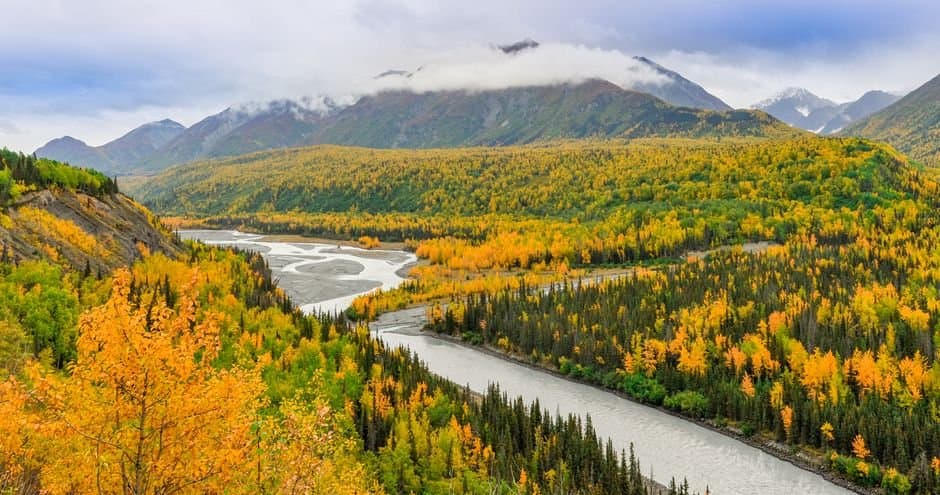
Photo by Zetong Li on Pexels · Source
Fairbanks draft river plan weighs streamside buffers as Chena kings fall to 397
A Fairbanks North Star Borough subcommittee is rewriting the plan governing the Chena riverfront, and the habitat chapters it reviewed June 24 weigh how wide a strip of streamside vegetation the river needs, a question that reaches riverfront property owners. The draft lays out widths from the 15 feet Alaska Department of Fish and Game recommends as a minimum up to 300 feet or more, while noting they "are often not realistic or feasible in urban areas." The plan's fish and wildlife goal says strategies must balance recreation and development against fish habitat rather than restrict private property outright.
The Chena Riverfront Plan Subcommittee met Wednesday at the Juanita Helms Administration Center to continue drafting a plan to replace the existing one, adopted in 1997 and last amended in 2016. Planner III Anduin K. McElroy told the subcommittee to focus on the Chena Riverwalk master plan and how to fold it into the new draft. No member had submitted a chapter draft as of Aug. 19.
Only 198 Chinook salmon had passed the Chena River tower as of July 8, 2026, below the historic average of 379, prompting the department to close Tanana River drainage king salmon sport fishing through September 2026. An estimated 397 Chinook reached Chena River spawning grounds in 2024, well below the state's biological escapement goal of 3,300 to 5,700 fish.
"The Chena River had an estimated escapement of 397 (SE = 1,309) Chinook salmon, which was less than the BEG of 3,300–5,700 for the sixth year in a row," the Alaska Department of Fish and Game said in its 2024 Tanana Management Area report, written by Andrew D. Gryska and Brandy Baker and released in November 2025.
The natural river functions chapter cites a 2017 review finding the Chena hosts the second-largest Chinook spawning run in the Yukon River drainage among similarly sized watersheds, behind only the Salcha River. The draft attaches no funding or regulatory timeline to its strategies, listing timelines only as ongoing or near term.
Harvest restrictions are being handled elsewhere. Alaska and Canada agreed on April 1, 2024, to suspend directed Chinook fisheries in the mainstem Yukon River and Canadian tributaries for one full life cycle, seven years.
The subcommittee's agenda listed public involvement and project scope as discussion items. No comment deadline has been set.
AI-assisted, reviewed by editors. Spot an error?
Stay informed. Support what matters.
Free, permanent access to local news you can verify. Subscribe to support Maggie AlaskaNews and go ad-free.
Related Coverage
Fairbanks subcommittee drafts new Chena River plan with freeze, salmon, and flood goals
Alaska News · 1mo ago · 91% match
Fairbanks draft river plan backs changing wastewater discharge so the Chena can freeze
Alaska News · 6d ago · 86% match
A commission wants tougher riverbank protection than the developers asked for on a proposed Chena RV park
Alaska News · 1w ago · 81% match
Yukon River gillnet closures spread as Chinook and chum run far below average
Alaska News · 1mo ago · 81% match
Fairbanks would keep its 11.2 million gallon Tanana discharge cap
Alaska News · 3d ago · 80% match
Comments
Sign in to leave a comment.
No comments yet. Be the first to share your thoughts.