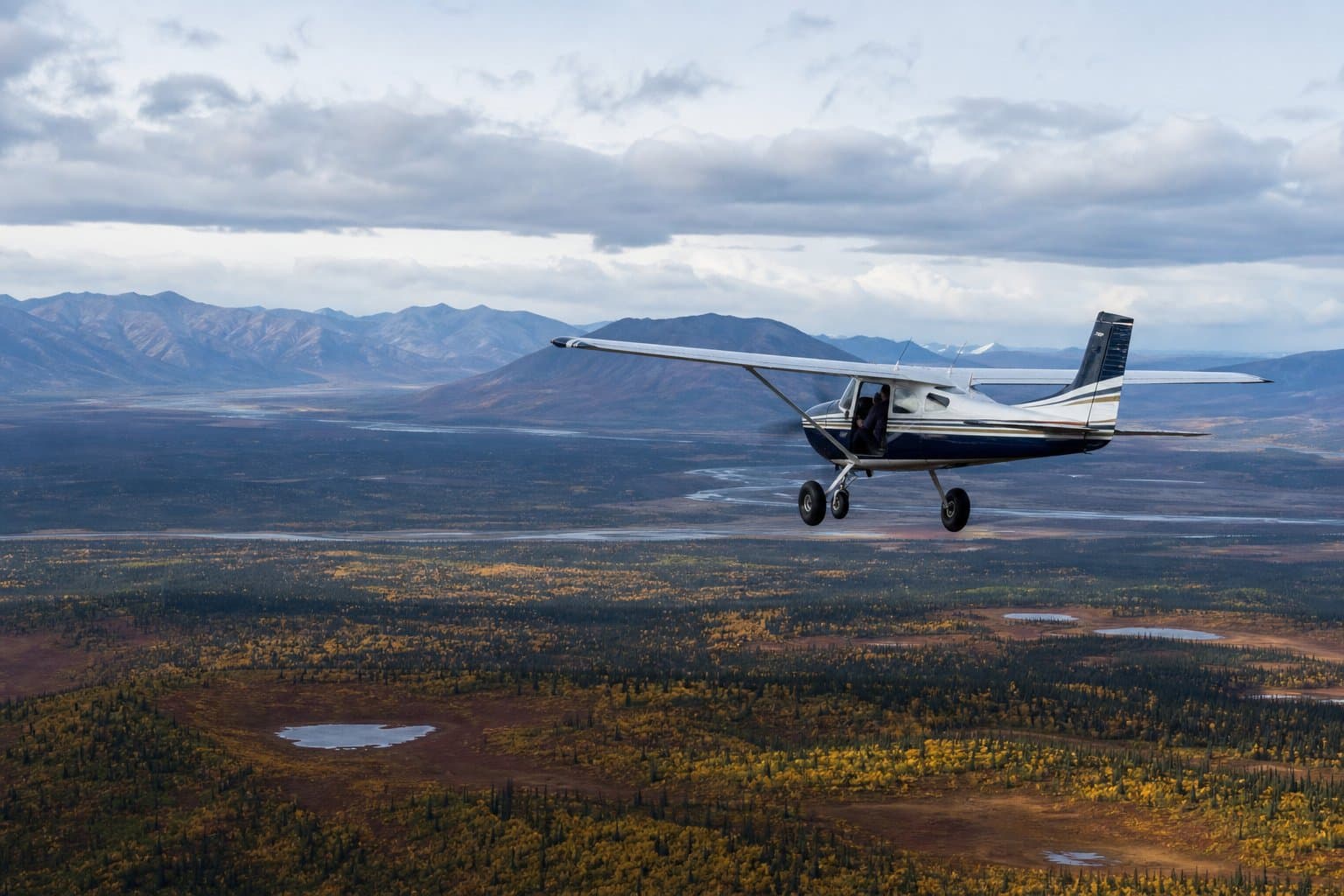
AI image
FAA scales back plan to expand controlled airspace over Alaska after pilot groups object
The Federal Aviation Administration is scaling back a plan to put nearly all of Alaska's sky above 1,200 feet under controlled-airspace rules, after two pilot groups warned the change could push small planes closer to the ground.
A revised proposal, scheduled for publication in the Federal Register on Monday, would keep uncontrolled airspace below 4,000 feet above the ground in four remote regions: along the Canadian border in the northeast, on the southeast coast near the border, in the state's northwest corner and in the central part of southern Alaska. Uncontrolled airspace in those areas now reaches as high as 14,499 feet above sea level. The FAA's June 2025 proposal would have capped it at 1,200 feet above the ground.
Everywhere else in the state, the plan still puts the floor of controlled airspace at 1,200 feet. The FAA says a single statewide area would simplify a patchwork of more than 100 overlapping ones that complicate charts and confuse pilots, and would let controllers steer planes flying on instruments onto direct routes.
Uncontrolled airspace, known as Class G, has looser rules. Pilots flying on instruments can operate there without a clearance from air traffic control, which they need in controlled airspace. For pilots flying by sight, the main difference above 1,200 feet is daytime visibility: federal rules require 3 miles in controlled airspace below 10,000 feet, compared with 1 mile in uncontrolled airspace. Required distances from clouds are the same in both.
The Aircraft Owners and Pilots Association and the Alaska Airmen's Association filed two of the three comments on the 2025 plan. The FAA summarized their warning as a "detriment to safety" if uncontrolled airspace below 14,500 feet disappeared. Their concerns included a greater chance of hitting terrain because of stricter weather rules, higher minimum altitudes for instrument flights, gaps in radio and radar coverage and more exposure to icing.
The groups asked the FAA to keep some areas uncontrolled all the way up to 14,499 feet. The revised plan keeps the four areas uncontrolled only up to 4,000 feet above the ground. The FAA expects little cost to pilots beyond some who choose to fly around the controlled airspace.
Comments are due Nov. 12. They can be filed at regulations.gov under docket FAA-2024-2333 or faxed to 202-493-2251. The FAA's Western Service Center takes questions at 206-231-3460. The agency will do an environmental review before any final rule, and current airspace doesn't change until then.
Source: Federal Aviation Administration, Federal Aviation Administration: Airspace Designations and Reporting Points: Alaska, AK ().
Drafted with AI. Edited by Cale Green (1 revision). Reviewed by Cale Green. Who is accountable.
Stay informed. Support what matters.
Free, permanent access to local news you can verify. Subscribe to support Maggie AlaskaNews and go ad-free.
Related Coverage
Alaska's small planes get until 2034 to upgrade altimeters — if they fly Outside
Alaska News · 1mo ago
FAA plan would give a Cook Inlet oil-field airstrip its first instrument approaches
Alaska News · 1mo ago
FAA retires two Alaska flight routes in a satellite-navigation shift
Alaska News · 1mo ago
The FAA is rewiring Alaska's air routes from beacons to GPS
Alaska News · 1mo ago
Alaska keeps trading its old flight beacons for GPS, one route at a time
Alaska News · 1mo ago
Comments
Sign in to leave a comment.
No comments yet. Be the first to share your thoughts.