Dunleavy vetoes hunting residency bill and university fee bill
Gov. Mike Dunleavy has vetoed a bill that would have tightened residency requirements for hunting, trapping and sport fishing licenses, leaving the current standard in place as fall hunts approach. He also vetoed a separate measure that would have required the University of Alaska to itemize the fees it charges students.
The residency bill, House Bill 93, would have required 180 days of physical presence in Alaska each year to qualify for a resident license — matching the standard for the Permanent Fund Dividend. It cleared both chambers, passing the House 24-16, and wouldn't have taken effect until 2028. Dunleavy said in his veto message that the rules were "unnecessarily restrictive," and that some Alaskans could still lose resident status even with the exceptions the bill carved out for military members and students.
The bill's sponsor had argued the change was backed by the very boards that manage the state's fish and game. "I don't think anyone is more invested in the conservation of Alaska's Fish and Game resources than our Board of Fisheries and our Board of Game," Rep. Rebecca Himschoot told a Senate committee in May, "and those folks also support the bill."
The second vetoed measure, the Student Fee Transparency Act, grew out of years of student complaints about consolidated fees, its sponsor Rep. Ashley Carrick said, arguing they give students little insight into what they're paying for. The university is not currently required to notify students when it creates or raises systemwide or campuswide fees, and the veto leaves that in place.
The governor also let two other bills become law without his signature — including Senate Bill 143, which lets communities set school board term lengths, and a measure on agricultural land and hemp. Overriding a veto would require the Legislature to meet in joint session and muster a two-thirds vote.
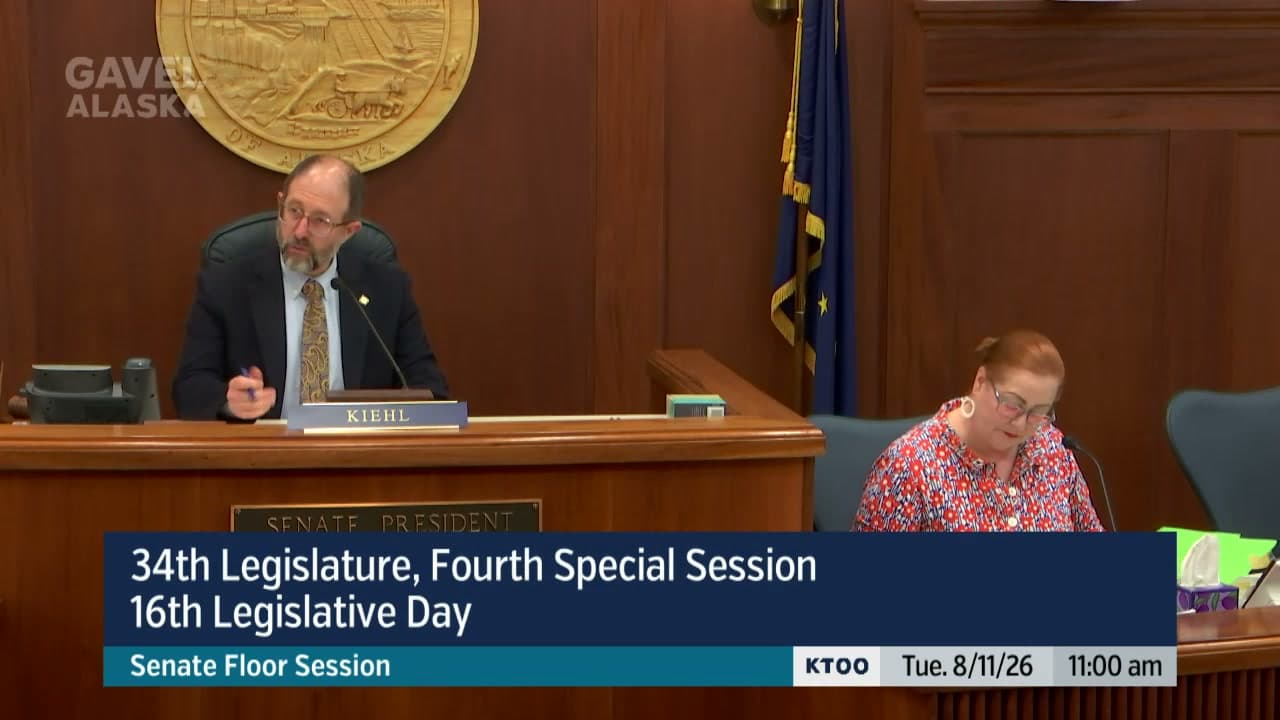
This article is based on a public meeting — Alaska Legislature: Senate Floor Session - August 11, 2026 11:00am ().
Drafted with AI. Edited by Cale Green (1 revision). No full editor review is on record. Who is accountable. Transcript byLucas Brown
Watch key moments from the source meeting. Click to expand.
Stay informed. Support what matters.
Free, permanent access to local news you can verify. Subscribe to support Walter AlaskaNews and go ad-free.
Related Coverage
Dunleavy vetoes six bills, including invasive species and polystyrene measures
Alaska News · 2mo ago
Dunleavy vetoed a faculty seat on the board that governs the University of Alaska
Alaska News · 3w ago
Dunleavy vetoes nearly $90 million but leaves school funding intact
Alaska News · 3mo ago
Wasilla man fined $320 for false residency claim on a fishing and hunting license
Alaska News · 1mo ago
Alaska Senate tightens hunting residency rules to match PFD standards
Alaska News · 4mo ago
Comments
Sign in to leave a comment.
No comments yet. Be the first to share your thoughts.