Alaska Senate tightens hunting residency rules to match PFD standards
The Alaska Senate voted Saturday to require hunters, anglers and trappers to meet Permanent Fund Dividend residency standards to qualify for resident licenses, adding a physical presence requirement to existing domicile and intent rules.
The Senate passed House Bill 93 by a 13-6 vote. The bill changes how Alaska defines residency for hunting, fishing, and trapping privileges by requiring applicants to be in the state for at least 180 days during the 12 months before purchasing a license, or to have an allowable absence under PFD rules.
Current law requires maintaining a domicile in the state for 12 consecutive months and intending to remain. Applicants are expected to be physically present, though most applications are done online. Enforcement has proven difficult because intent and domicile can be hard to verify. The new standard would use the court-tested PFD framework, which allows absences beyond 180 days for military service, education, merchant marine work and other approved reasons.
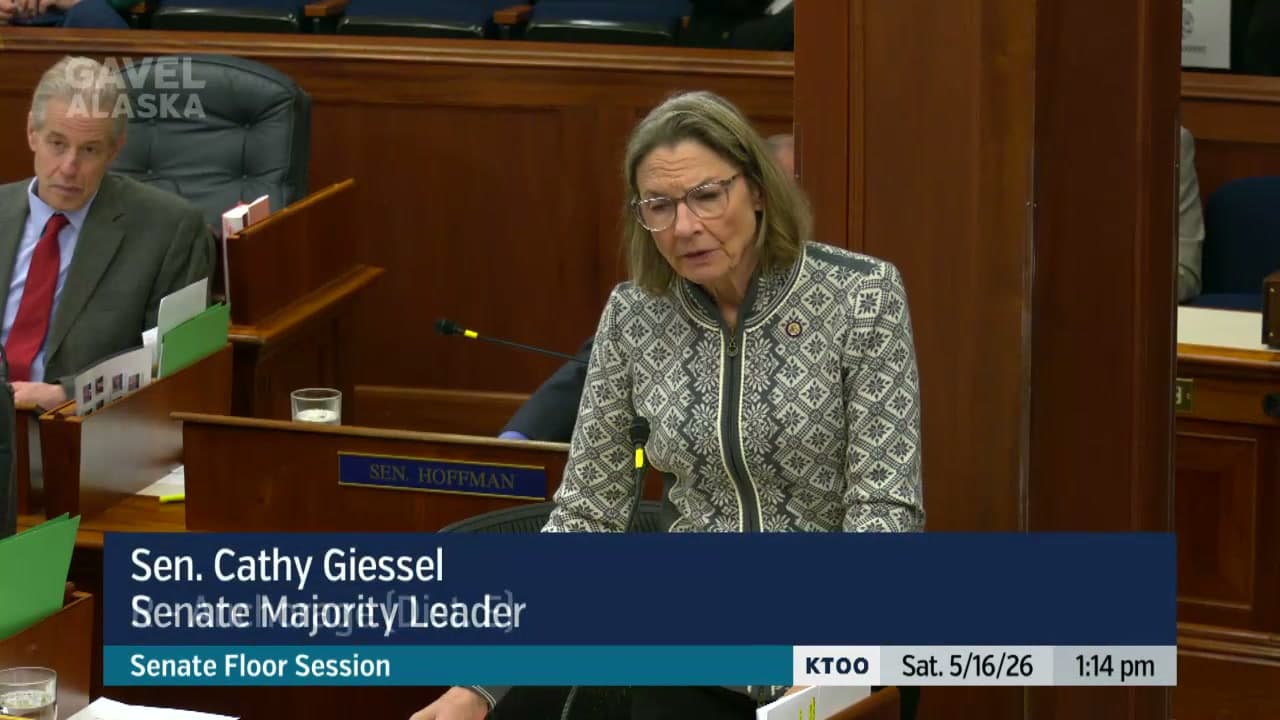
"The current definition of residency allows someone to spend very little time in state and still qualify for a resident license," the bill's floor sponsor said. "This legislation uses the court and time-tested standards of the permanent fund dividend to set enforceable law for residents and troopers to know if they qualify for the higher bag limits that Alaskans enjoy."
The bill drew support from senators representing rural districts where fish and game resources face increasing pressure. "Our resources are getting tighter and tighter," Mike Cronk said. "Social media has certainly not helped Alaska. It has actually brought a lot more people here to hunt and fish."
Cronk said he was reluctantly supporting the bill after hearing from constituents. "I can tell you right now that we have a boat launch there that you literally cannot park in where I live when it comes fall season, and that is resident and non-resident hunters at the same time," he said. "I am going to listen to a majority of my constituents that are asking for something like this."
Supporters said the change protects resident bag limits and reduced-cost licenses and tags for people who spend most of the year in Alaska. One senator who carried similar legislation in a previous session said current residency standards create enforcement problems. "The problem of enforcement is clear because residency is simply an identity. It is one of feelings. It is an emotion in our current law," he said.
Opponents said the bill would strip some Alaskans of resident license eligibility even though they maintain homes and families in the state while working elsewhere. George Rauscher said hundreds of airline pilots and crew members had written his office expressing concern. "Airline pilots who work out of town, like hundreds of the pilots and their pilot crew, have written my office, whether they are cargo or passengers, saying that they are afraid that their rights will be taken away under this program because they may be out for 180 days or more," Rauscher said.
Rauscher argued those workers maintain homes, pay property taxes, and raise families in Alaska even while working elsewhere. "These folks have spouses, they have homes, they pay property taxes, they have home insurance, they buy everything for their families here in Alaska because their families live here," he said. "How do we reward them? We are going to take away their constitutional hunting privileges because they are not in-state."
For some species, the consequences extend beyond higher fees and lower bag limits. Rauscher noted that affected hunters could face guided-hunt requirements costing tens of thousands of dollars. "We are going to reward them with having to get maybe a $20,000 or $30,000 guided hunt," he said.
The bill allows the same exemptions used for the PFD, including absences for military service, education, and merchant marine work. Unlike the PFD's calendar-year requirement, the hunting residency standard applies to any 12 consecutive months before purchasing a license. The bill's floor sponsor noted that there is also a bill this year to add pilots and flight crew to PFD allowable absences, which could address some of the concerns raised during debate.
The measure carries an effective date in January 2028, giving Alaskans time to adjust. The Senate adopted the effective date clause in a separate 17-2 vote after passing the bill.
The measure now returns to the House for consideration of Senate changes. If signed into law, Alaskans who do not meet the new residency standard could still hunt and fish in Alaska, but would pay non-resident license fees and face lower bag limits. Those who meet the standard could still use permanent identification cards for hunting, trapping and sport fishing.
This article is based on a public meeting — SFLR-20260516-1300 ().
AI-assisted. How we use AI Transcript byLucas Brown
Stay informed. Support what matters.
Free, permanent access to local news you can verify. Subscribe to support Alaska News and go ad-free.
Related Coverage
Alaska House bill would tighten hunting, fishing residency to 180 days
Alaska News · 4mo ago
Senate Panel Advances Bill Tying Hunting Rights to 180-Day Residency
Alaska News · 4mo ago
House approves stricter hunting residency rules in divided vote
Alaska News · 4mo ago
Dunleavy vetoes hunting residency bill and university fee bill
Alaska News · 1mo ago
Wasilla man fined $320 for false residency claim on a fishing and hunting license
Alaska News · 1mo ago
Comments
Sign in to leave a comment.
No comments yet. Be the first to share your thoughts.