Sullivan diesel-derate bill advances Senate committee 10-9
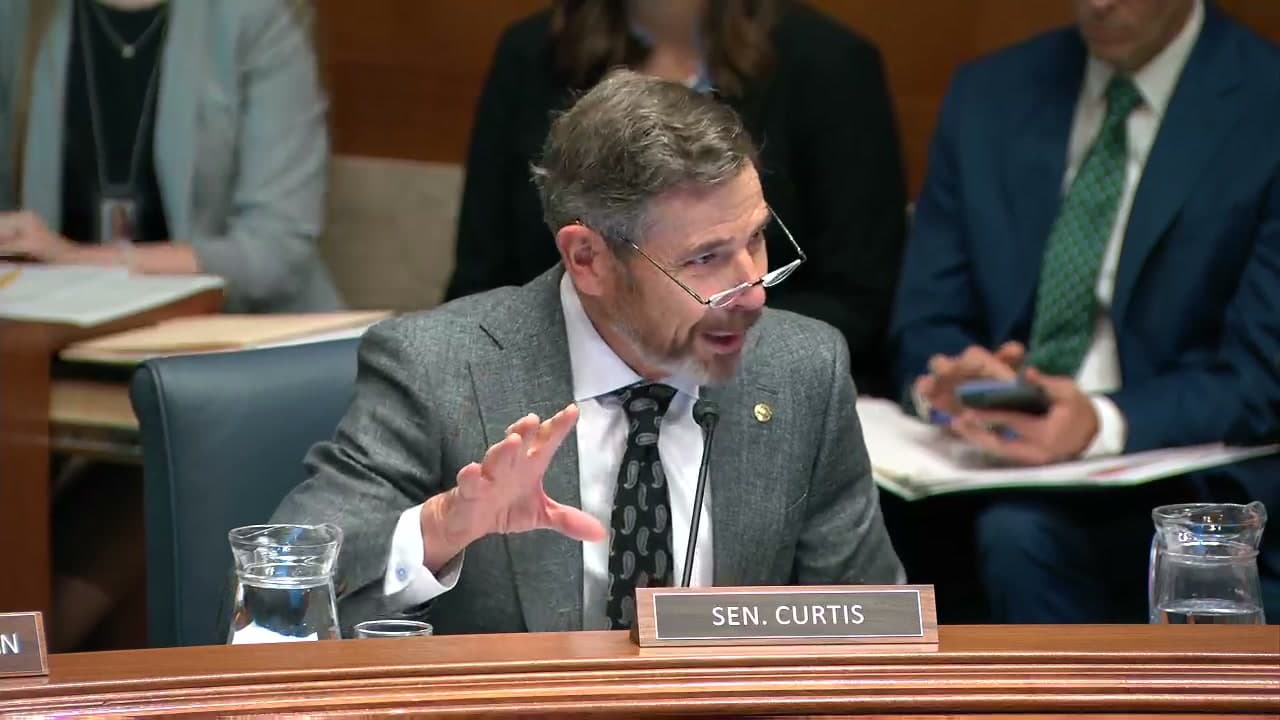
The Senate Environment and Public Works Committee voted 10-9 Wednesday to advance Sen. Dan Sullivan's Cold Weather Diesel Reliability Act to the full Senate.
Diesel engines use diesel exhaust fluid to reduce nitrogen oxides. An engine can derate, or reduce power, when the system detects deficient fluid, a component fault or tampering. The fluid freezes at about 12 degrees Fahrenheit, and extreme cold can cause heater, sensor and thawing failures.
The amended bill would give the Environmental Protection Agency 180 days to authorize manufacturers to suspend emissions-system derates or shutdowns when temperatures are at or below 20 degrees. The engine would return to normal operation above 20 degrees, and only the manufacturer could suspend those functions.
A separate provision permits permanent suspension on agricultural equipment nationwide and vehicles documented as operating primarily north of 59 degrees. The substitute lowered the original 32-degree cold-weather threshold to 20 degrees.
The 59th parallel leaves Southeast Alaska, Kodiak and the Aleutians south of the boundary, while Anchorage, Fairbanks, Bethel and Nome are north. But eligibility follows a vehicle's primary commercial operation, maintenance and dispatch records, not its home city.
Alaska Transportation Commissioner Ryan Anderson testified in March that 70% to 80% of the department's diesel-engine maintenance issues during the previous two years involved emissions-control systems and associated components. He said those faults or repairs may leave about 10% of its heavy-equipment fleet unavailable on a given day.
EPA is already pursuing a broader regulatory change. Its July proposal would replace performance derates with visible or audible warnings for newly manufactured highway and nonroad diesel engines. EPA is also considering guidance for engines already in use. The proposal is not final; Sullivan's bill would impose a statutory deadline and create permanent relief for agricultural equipment and qualifying northern vehicles.
Ranking Member Sheldon Whitehouse voted no, calling the bill too broad and saying the committee had not negotiated it as it had two other measures. The bill says it does not waive Clean Air Act emissions standards. Derates, however, are the mechanism used to push operators to replenish deficient fluid, repair faults or address tampering, so permanently disabling them changes how compliance is enforced.
Sullivan and Sen. Cynthia Lummis introduced the measure in November 2025. Sullivan said he wants a bipartisan path before it reaches the floor.
This article is based on a public meeting of Senate Environment and Public Works (Sullivan) — Senate Environment and Public Works (Sullivan): Business meeting to consider S.5045, to amend the Clean Air Act to modify the handling of air quality monitoring with respect to prescribed fires, S.3135, to require the Administrator of the Environmental Protection Agency to authorize manufacturers of certain vehicles to suspend engine derate or shutdown functions in prolonged cold weather conditions, and S.5249, to amend the Atomic Energy Act of 1954 to align the licensing of uranium enrichment facilities with other fuel cycle facilities under that Act, and 21 Committee resolutions to approve prospectuses from the General Services Administration. ().
Drafted with AI. Edited by Cale Green (2 revisions). No full editor review is on record. Who is accountable. Transcript byWalter AlaskaNews
Watch key moments from the source meeting. Click to expand.
Stay informed. Support what matters.
Free, permanent access to local news you can verify. Subscribe to support Walter AlaskaNews and go ad-free.
Related Coverage
EPA moves to stop Alaska's cold from shutting down diesel engines
Alaska News · 2mo ago
Alaska wants out of a diesel rule that shuts trucks down in the cold
Alaska News · 6mo ago
Sullivan files resolution to overturn EPA decision on California at-berth ship emissions
Alaska News · 1mo ago
Senate committee advances hydropower bill backed by Murkowski
Alaska News · 3mo ago
Senate panel advances water bill with Alaska Native village sanitation, Nome port, and Juneau flood provisions
Alaska News · 2mo ago
Comments
Sign in to leave a comment.
No comments yet. Be the first to share your thoughts.