AI image
Sheep mortality has run near triple its long-term rate in three Alaska ranges, state research finds
In a 2024 symposium paper on Chugach, Talkeetna and North Wrangell mortality, biologist Tom Lohuis reported that mortality rates in recent years have accelerated to nearly triple the study's longer-term rates and have contributed to population declines. The same research reported winter mortality as high as 29% among collared sheep in the Talkeetna Mountains during 2021-2022.
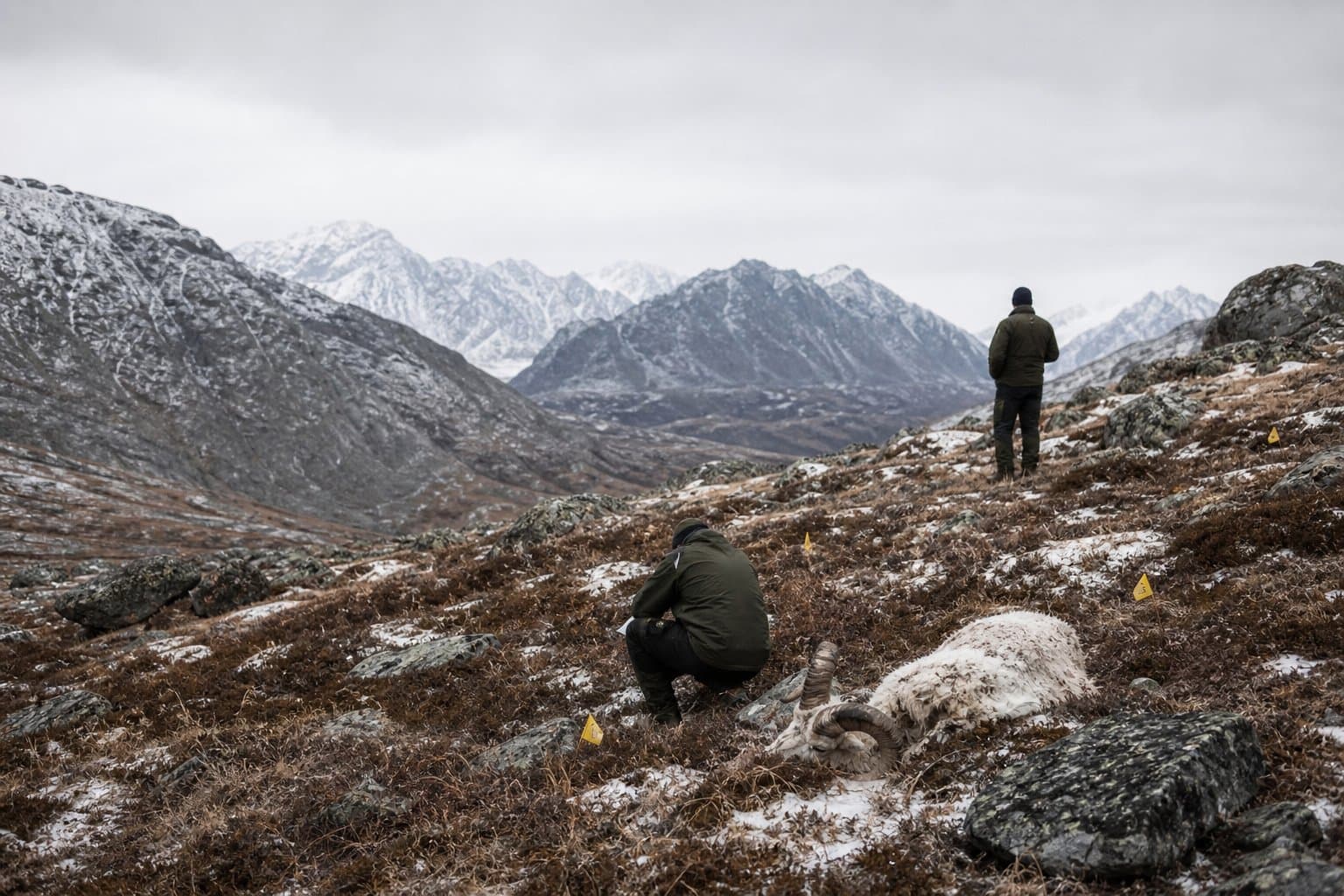
Numbers like those are assembled one animal at a time. A GPS collar on a healthy adult Dall sheep ram in the Alaska Range foothills switched to a mortality signal, sending state biologists flying out of Fairbanks the next day, since scavenging and decomposition erase evidence fast.
Mike Taras details the investigation in Alaska Fish and Wildlife News, published by the Alaska Department of Fish and Game. The carcass carried signs consistent with a bear killing the sheep near cover. "It likely happened quickly as the sheep was only a few yards from where the bear had cover to remain hidden," the department wrote. Collared sheep die from causes including avalanches, predation, disease and falls, with some never assigned.
The full-curl general season opened Aug. 10 and runs through Sept. 20. New this year, the Alaska Board of Game requires every general-season full-curl hunter to complete an online orientation course and score 20 of 20 on its quiz, a one-time lifetime requirement, and carry proof of completion in the field.
That rule began as Proposal 92, submitted by Caleb Martin to the board's statewide regulations meeting, and what it set out to fix was identification rather than predation. The proposal asked for a course and quiz teaching hunters what a legal ram is, citing education requirements for Unit 15 moose that it said had reduced the killing of sub-legal animals. It tied that to the population picture, arguing that with "the increase in sublegal harvest as available surplus continues to decline, this will have a larger impact on the population." That reasoning is the proposer's rather than the board's, which adopted the requirement.
Whether the three ranges where Lohuis measured the decline are open to this general season, or are hunted under drawing permits instead, is not addressed in the department's account.
Based on a press release from ADF&G.
Drafted with AI. Edited by Cale Green (1 revision). No full editor review is on record. Who is accountable.
Stay informed. Support what matters.
Free, permanent access to local news you can verify. Subscribe to support Maggie AlaskaNews and go ad-free.
Related Coverage
Alaska now makes Dall sheep hunters pass a perfect-score test
Alaska News · 2mo ago
Alaska sheep hunters must complete orientation course before Aug. 10 opener
Alaska News · 2mo ago
Southeast wolf hunters will be asked to leave a little of the animal behind
Alaska News · 4w ago
Fish and Wildlife is putting GPS collars on moose in the upper Tanana
Alaska News · 2w ago
ADF&G asks Kenai bull moose hunters for tissue samples within 24 hours of harvest
Alaska News · 1mo ago
Comments
Sign in to leave a comment.
No comments yet. Be the first to share your thoughts.