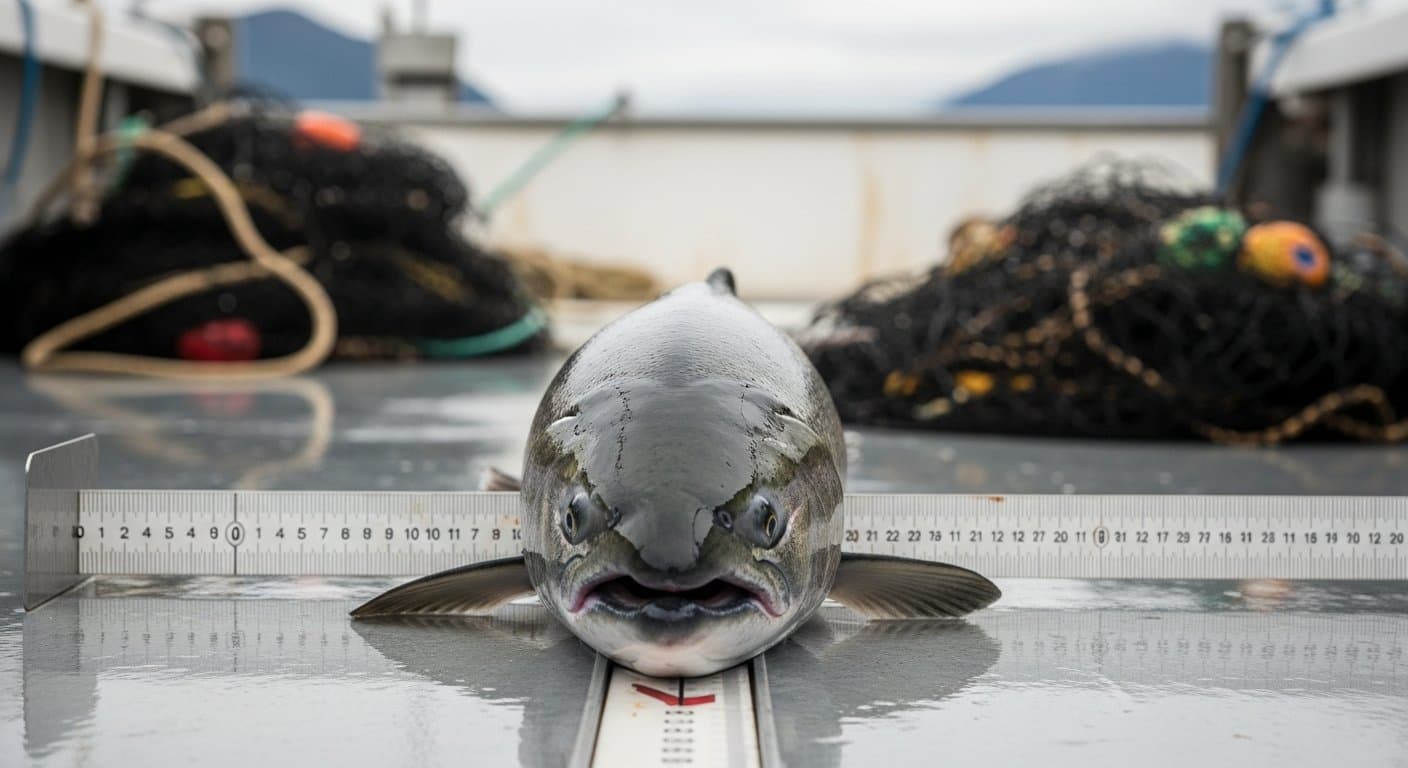
Chignik seiners must release live big kings, retain injured ones
The Chignik purse seine fleet must release Chinook salmon 28 inches or longer this season, returning them to the water unharmed; any visibly injured or dead Chinook must be retained and recorded on a fish ticket. Any statistical area the department finds primarily responsible for more than 1,000 Chinook harvested in a 48-hour period before July 31 shuts down for seven days. The Alaska Department of Fish and Game put those measures in place by emergency order before the fishery opened, along with closed waters in the Chignik Bay Section south of a line running from Oly's Point toward Rocky Point.
The in-season numbers show a sockeye run well ahead of the king salmon picture. Cumulative sockeye escapement at the Chignik River weir through June 17 was 137,906 fish, of which 135,729 were attributed to the early run and 2,177 to the late run. The first commercial fishing period opened for 48 hours at 7 p.m. on June 17 and ran until 7 p.m. on June 19. The department later extended the commercial salmon fishing period for 48 hours, from 11:59 p.m. Monday, June 30, until 11:59 p.m. Wednesday, July 2, in the Eastern District and Central District of the Chignik Management Area.
A run that has missed its goal six of the last seven years
ADF&G imposed the measures after repeated failures to meet the escapement goal. The biological escapement goal for Chignik River Chinook is 1,300 to 2,700 fish, and the run has missed it in six of the last seven years, bottoming out at 731 fish in 2022 and 267 in 2023. Last season's escapement of 1,391 landed inside the goal, above recent five- and 10-year averages, with a commercial Chinook harvest of 2,962 fish.
The Board of Fisheries adopted the Chignik Area King Salmon Stock of Concern Management Plan into regulation, but the new Area L rules were not ready at season start. The department told fishermen on June 1 to keep operating under 2025 regulations, and the changes did not take effect until July 18, after review by the lieutenant governor's office.
Subsistence closure runs alongside commercial restrictions
Federal subsistence restrictions are also in effect. The Federal Subsistence Board closed federal public waters in the Chignik River drainage above the weir to subsistence Chinook fishing from June 20 through Aug. 18. Under that closure, federally qualified rural subsistence users may not retain or possess Chinook salmon, and any fish caught incidentally must be released immediately, cutting off a customary and traditional harvest for the season.
Commercial permit holders face their own constraints under the plan: fishing periods are limited in duration, statistical areas can close for seven days if the Chinook trigger is reached, and the non-retention rule shifts the fleet's catch composition toward sockeye.
AI-assisted, reviewed by editors. Spot an error?
Comments
Sign in to leave a comment.
No comments yet. Be the first to share your thoughts.