AI image
Beaufort Sea nearly ice-locked in early July, a level unseen since before 2001
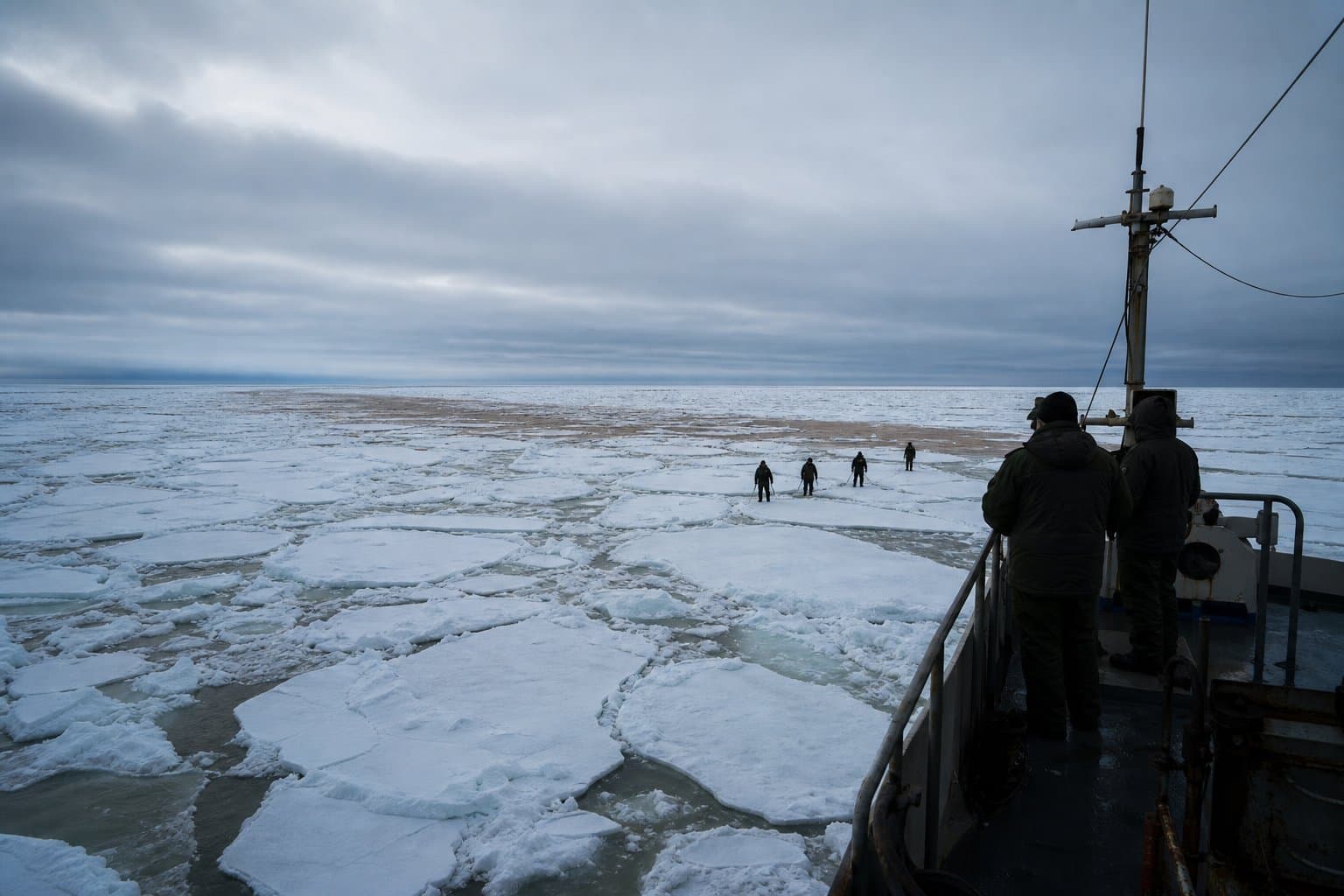
The southern Beaufort Sea is almost entirely locked in ice this week, with independent satellite analyses putting open water at somewhere between 0.1 and 0.3 percent of the sea's surface. Rick Thoman, a climate specialist with the Alaska Center for Climate Assessment and Preparedness, said Beaufort Sea ice extent for the first week of July is the highest since 2000, and that the combined Chukchi and Beaufort extent is also the highest since 2000. Only four years in the satellite record, all before 2001, showed higher ice extent in the Beaufort in early July. In those years, there was no open water at all.
NSIDC analysis as of July 5 placed open water at 0.3 percent. EUMETSAT OSI SAF put the figure at 0.1 percent, with the gap reflecting different methodologies. Both figures indicate that open water in the Beaufort Sea remains near zero.
For subsistence hunters who work the Beaufort's edge in summer, and for vessel traffic planning to move through the southern sea, the near-total ice cover means access conditions remain highly constrained.
A NOAA-21 satellite pass at 10:44 a.m. AKDT Monday produced a rare clear-sky image of the region. The Alaska and Arctic Climate Newsletter noted that clear skies over the ice pack in summer are themselves unusual, since low clouds and fog typically dominate. The newsletter reported that "Polar orbiting satellites captured spectacular clear sky views of the southern Beaufort Sea and adjacent land areas on Monday morning July 6, 2026." The image showed one additional feature: what the newsletter described as "what looks to be water from the Mackenzie River discharging on top of the still intact sea ice in the western delta (the brown silty color and the distinct northwest edge are the tell-tale signs here)."
The eastern Chukchi Sea north of 70 degrees N is also largely solid, though early July 2024 had slightly higher Chukchi extent than the current reading. The Alaska and Arctic Climate Newsletter noted the Chukchi pattern is high relative to 21st-century norms, and Thoman reported this is the third consecutive late June with Chukchi Sea ice extent well above the 1991-2020 median.
ERA5 reanalysis data for June has not yet been released, leaving the full atmospheric picture for last month incomplete.
Assembled from public records the newsroom collected.
AI-assisted. How we use AI
Stay informed. Support what matters.
Free, permanent access to local news you can verify. Subscribe to support Maggie AlaskaNews and go ad-free.
Related Coverage
Chukchi and Beaufort Seas carry most ice in decades, even as Arctic shrinks
Alaska News · 2mo ago
Barents Sea hits record low ice while Beaufort stays locked, splitting Arctic in two
Alaska News · 3mo ago
Heavy sea ice off Alaska's north coast keeps shipping routes shut
Alaska News · 2mo ago
Chukchi Sea ice runs above median for third straight late June
Alaska News · 3mo ago
Much of the Beaufort Sea's ice melted out in August after a cold, late start
Alaska News · 1w ago
Comments
Sign in to leave a comment.
No comments yet. Be the first to share your thoughts.