AI image
Barents Sea hits record low ice while Beaufort stays locked, splitting Arctic in two
Arctic sea ice ended June 2026 with a sharp regional contrast: record lows on the Atlantic side of the Arctic, and barely any melt yet in the seas directly north of Alaska. Sea ice extent fell about 18 percent during the month, ending well below average but above the record low set in June 2024.
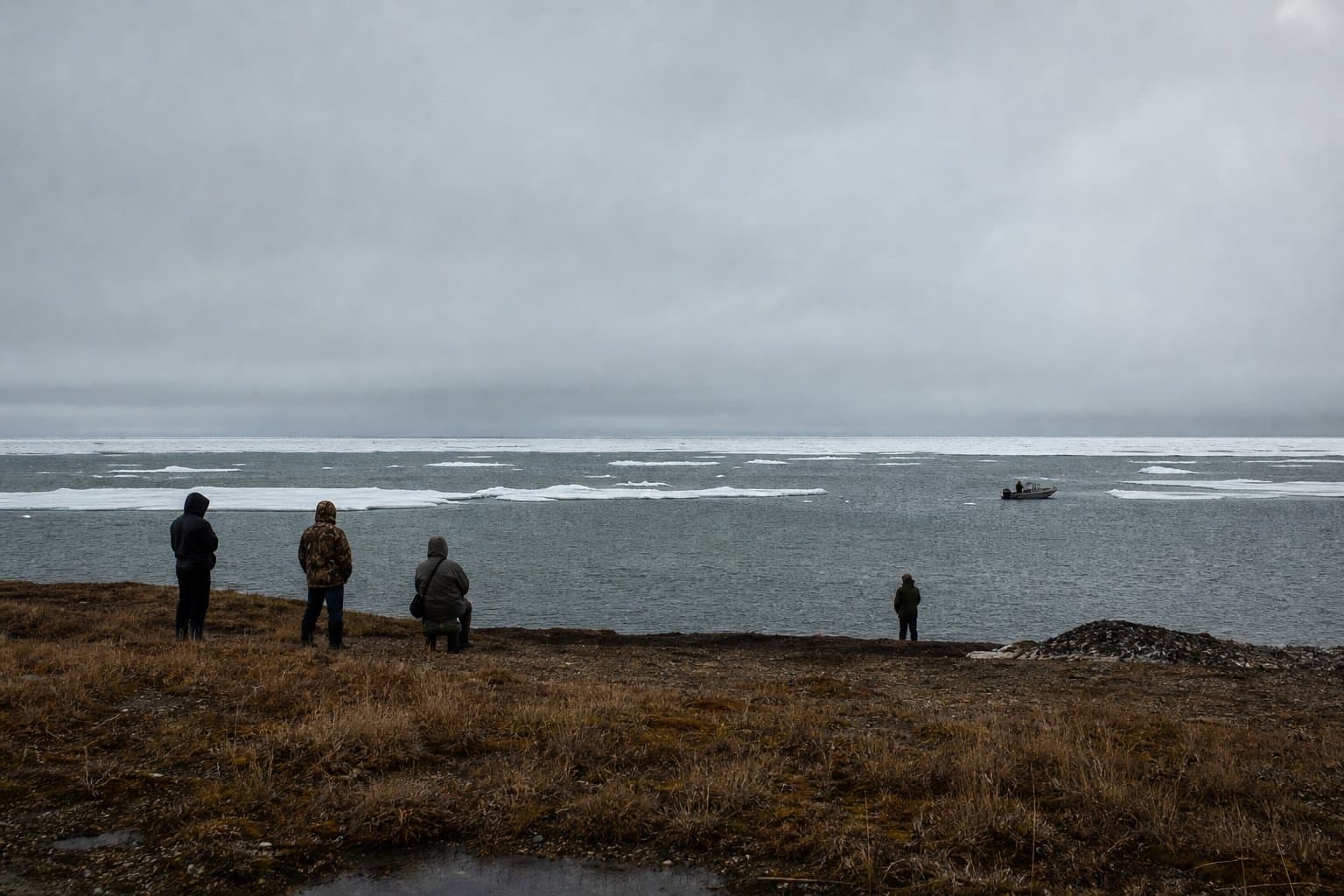
The Barents Sea recorded its lowest June ice extent since satellite monitoring began in 1979, according to data published June 30 by the Alaska and Arctic Climate Newsletter, which draws on analysis from the National Snow and Ice Data Center, the Japanese Aerospace Exploration Agency, and the Danish Meteorological Institute. Baffin Bay came in second lowest for June and the Greenland Sea third lowest. On the Pacific side, sea ice melt had barely started in the Beaufort Sea, north of Alaska and northwest Canada, or in the Chukchi Sea north of 70 degrees N.
A Split Arctic Picture
The overall Arctic-wide picture depends on which dataset you use. JAXA ranked June 30 extent second lowest since 1979. NSIDC's Sea Ice Index version 4 placed it third lowest. EUMETSAT OSI SAF came in at fourth lowest. The U.S. National Ice Center and NSIDC's MASIE analysis was an outlier at seventh lowest. The spread matters: some commentators have argued that official datasets understate the urgency of Arctic ice loss, pointing to specific daily values they characterize as record lows. The institutional analyses above, drawing on multiple independent satellite systems, place June 30 firmly in the bottom tier of the record but short of the June 2024 low.
Danish Meteorological Institute modeled thickness data for June 30 show the thickest remaining ice has contracted to near the northern Canadian Arctic Islands. The data also show a general decrease in moderately thick ice north of the Russian coast, alongside an increase in thicker ice near the northern Alaska and northwest Canadian coasts.
Arctic snow cover also reached a notable low. Excluding the Greenland Ice Sheet, snow covered 1.33 million square kilometers of the Arctic at the end of June, the lowest end-of-June extent since 2019.
What It Means for Alaska
For North Slope communities and offshore operators, the slower melt in the Beaufort and Chukchi Seas is a key factor for summer travel, subsistence access, and operations. "Ice melt has been slower than usual in the Chukchi and Beaufort Seas," the Alaska Climate newsletter said in its mid-June update. That condition affects when marine routes open, when subsistence hunters can safely travel on or near the ice edge, and when offshore industry can move equipment.
This winter set the stage. NASA and NSIDC scientists said in a March 26 statement that Arctic winter sea ice maximum extent on March 15 "matches the lowest peak observed since satellite monitoring began in 1979," running roughly half a million square miles below the 1981-2010 average. A slow-melt summer in the Beaufort does not erase that deficit. It shifts the timeline.
How far the Beaufort opens before freeze-up begins in September will determine whether this year's navigation window widens or stays compressed.
Wildfire: Below Normal in Alaska, Surging in the Northwest Territories
Wildfire activity in northern North America was fairly quiet through the third week of June, but conditions diverged sharply after the solstice. Alaska recorded less than 29,000 acres burned in June 2026, the sixth lowest total since 1993. The Yukon Territory also continued a well-below-normal season.
The Northwest Territories saw a dramatic increase in burning after the solstice, driven by dry fuels and very warm temperatures. A 14,000-hectare wildfire threatened Fort Simpson, a community along the Mackenzie River in the Dehcho region, during the last week of June, coming within a few kilometers of town.
In Alaska, despite the low total area burned, lightning ignited more than 100 wildfires during the month. June 2026 saw approximately 75,000 lightning strikes in and around Alaska, the fourth highest June total since 2012, when the current detection system came online. The June 20 lightning-started Starry wildfire, on the edge of Anderson in the southern Interior, prompted evacuation notices from Denali Borough officials, but quick action by firefighters prevented it from spreading into the community. Rain accompanying the thunderstorms and a lack of sustained hot and dry weather kept fires from growing rapidly.
Source: June 2026 Arctic Ice and Wildfire.
Made by our human newsroom with AI. How humans and AI work here · Grow with our newsroom
Stay informed. Support what matters.
Free, permanent access to local news you can verify. Subscribe to support Maggie AlaskaNews and go ad-free.
Related Coverage
Chukchi and Beaufort Seas carry most ice in decades, even as Arctic shrinks
Alaska News · 2mo ago
Beaufort Sea nearly ice-locked in early July, a level unseen since before 2001
Alaska News · 3mo ago
Much of the Beaufort Sea's ice melted out in August after a cold, late start
Alaska News · 1w ago
Chukchi Sea ice runs above median for third straight late June
Alaska News · 3mo ago
A tale of two Junes at the top of the world
Alaska News · 3mo ago
Comments
Sign in to leave a comment.
No comments yet. Be the first to share your thoughts.